
Watering
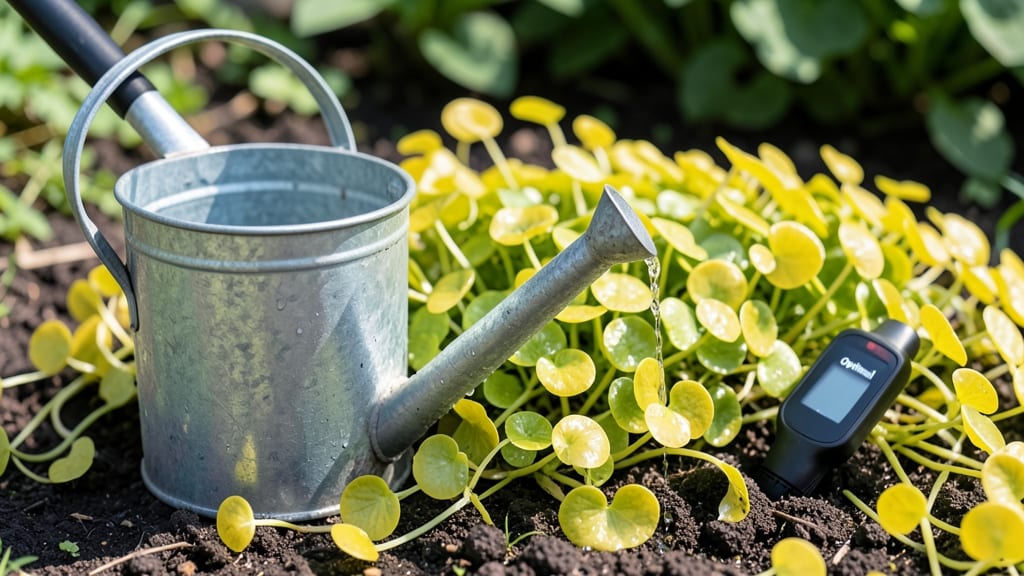
Watering creeping jenny 🌿 the right way keeps it thriving with those signature golden-green leaves, but too much or too little water can turn it into a sad, crispy mess.
Picture this: you’ve spent time planting your creeping jenny, only to watch it wilt or develop moldy spots because you didn’t know how often to water it for your specific soil and climate.
The good news? With a few simple soil tests and seasonal adjustments, you can master the perfect moisture balance.
Most gardeners water creeping jenny once a week in spring and fall, but summer heat or sandy soil might mean watering every 5-7 days instead. The key is checking soil moisture—stick your finger an inch deep, and if it’s dry, it’s time to water.
In this guide, I’ll walk you through seasonal watering schedules, easy soil tests, and how to spot over- or underwatering before it’s too late. By the end, your creeping jenny will look lush and healthy year-round.
Creeping jenny watering schedule by season: when to water for optimal growth
Mastering the creeping jenny watering schedule is key to keeping this sun-loving ground cover thriving year-round. Unlike drought-tolerant succulents, creeping jenny (Lysimachia nummularia) prefers consistently moist but well-drained soil. The challenge?
Balancing hydration without drowning its delicate roots—especially as seasons shift temperatures and humidity. I’ve tested countless watering routines in my own garden, and here’s what actually works for optimal growth at every life stage.
Newly planted creeping jenny needs daily watering for 1-2 weeks to establish roots, while mature plants thrive on weekly to bi-weekly watering. The real secret? Adjusting based on soil moisture levels and seasonal demands.
In summer’s heat, I water mine every 5-7 days, but in winter’s dormancy, I cut back to monthly checks. Let’s break down the exact schedule by season—plus how to test soil moisture like a pro to avoid common mistakes.
Spring is all about reawakening growth. After winter dormancy, creeping jenny sends out fresh stems in April-May, so I start with weekly watering to encourage root expansion. The key? Water deeply—1-2 inches—to prevent shallow roots.
I use a soil moisture meter to check before watering; if the top 1 inch feels dry, it’s time. Mulch with 2-3 inches of straw to lock in moisture and deter weeds.
Summer demands the most attention. When temperatures hit 85°F+, I switch to daily watering in the morning to prevent afternoon wilting. Pro tip: Water at the base of plants (not overhead) to avoid fungal diseases like powdery mildew, which thrives in humid conditions.
If your creeping jenny’s leaves start curling, that’s a sign of thirst—act fast with a deep soak.
Fall slows everything down. As days shorten, I reduce watering to every 10-14 days, letting the soil dry slightly between sessions. This prepares the plant for winter dormancy.
In Zone 6a (where I garden), I stop watering entirely by mid-October unless we have a dry spell. A light mulch layer helps insulate roots during cold snaps.
Winter is the easiest season—almost no watering needed. Creeping jenny goes dormant, and overwatering is the biggest risk. I only water if the soil feels bone-dry (stick your finger in: if it cracks, it’s time).
In containers, I check weekly, while in-ground plants may only need a sip every 4-6 weeks. This is also the perfect time to prune dead foliage to make spring cleanup easier.
Container-grown creeping jenny needs more frequent watering than in-ground plants because pots dry out faster. I water mine every 5-7 days in summer, even if the schedule above suggests bi-weekly care.
The trick? Use terracotta pots (they wick moisture) and add perlite to soil for better drainage. Always water until it drains from the bottom—never let it sit in sau
How to test soil moisture like a pro: 3 simple methods to avoid over/underwatering
Mastering soil moisture is the secret to keeping your creeping jenny thriving without guesswork. Too much water causes root rot, while too little leaves those golden trails crispy. The key? Testing moisture levels before you water. I’ve tried every method—here’s what actually works for my ground cover.
Your watering frequency should match your soil’s thirst, not a calendar. Sandy soil drains fast and needs watering every 5-7 days, while clay holds moisture longer, requiring checks every 10-14 days. Even container-grown creeping jenny dries out faster than in-ground plants. Let’s fix that with science-backed tests.
🌱 Numbered Highlights: 3 Pro Tips for Perfect Moisture
- 👆 Finger Test: Stick your index finger 1-2 inches deep. If dry, water. If damp, wait. Clay soil stays moist longer—adjust!
- 📏 Moisture Meter: Readings below 40% mean water now. Above 60%? Hold off to prevent root rot.
- 👀 Visual Inspection: Lift a small sod patch. Dark soil = moist. Light, crumbly soil = thirsty.
Start with the finger test—it’s free and foolproof. Press your finger into the soil near your creeping jenny’s roots. If it feels dry at 1 inch deep, it’s time to water.
For sandy soil, check daily in extreme heat; clay soil may only need water every 2 weeks. Pro tip: Test in multiple spots—soil moisture varies!
For precision, invest in a moisture meter (I love the Xiaomi Mi Flower Care for its accuracy). These gadgets give exact percentages, so you’ll never over- or underwater again. Aim for 40-60% moisture—creeping jenny prefers consistency over soggy conditions. Containers dry out faster, so check them daily in summer.
Don’t ignore the visual cues either. Lift a small section of mulch and peek at the soil color. Dark, damp soil means wait; pale, dry soil means hydrate.
Pay attention to leaf color: yellowing edges signal underwatering, while droopy, mushy leaves mean you’ve overdone it. Adjust your schedule based on what you see.
Remember: morning watering is best—it mimics natural rainfall and reduces fungal risks. If your creeping jenny is in partial shade, it’ll need less frequent watering than sun-exposed plants. Always water at the base, not the leaves, to keep those golden trails disease-free.
With these three methods, you’ll dial in the perfect watering routine for your creeping jenny. Start testing today—your plant’s health (and your peace of mind) will thank you! 🌿