
Watering
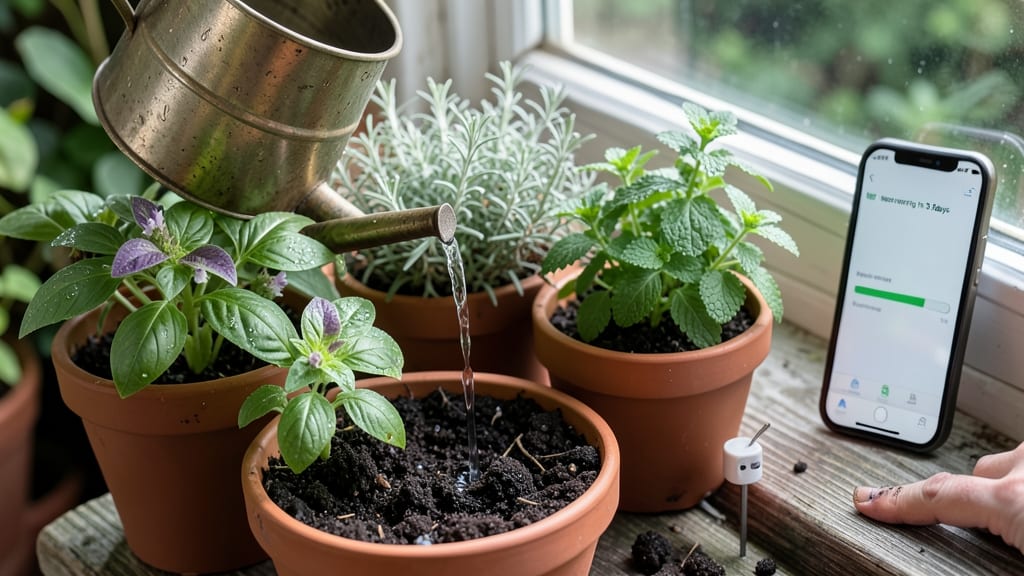
Watering herbs in pots the right way keeps them thriving 🌿 — most need a drink when the top inch of soil feels dry, but the timing changes with heat, pot size, and herb type.
Struggling to keep your potted herbs alive? Overwatering or underwatering can turn your kitchen garden into a sad, wilted mess—but the right watering schedule keeps them thriving. Discover the foolproof finger-dip method to master herb hydration once and for all.
Herbs like basil and parsley dry out faster in small pots, while rosemary and thyme hold moisture longer. Climate plays a role too: summer heat demands more frequent watering, while winter slows evaporation.
Below, I’ll break down the exact schedule you need, plus how to spot when your plants are thirsty—or drowning.
You’ll learn how to check soil moisture like a pro, adjust for your local weather, and keep your herbs lush without the guesswork. Let’s dive in.
The finger-dip watering method: how to check herb moisture levels like a pro
Mastering the art of watering potted herbs isn't about guesswork—it's about reading your plants. The finger-dip method gives you instant feedback on soil moisture, so you can water just enough without drowning roots or letting herbs dry out.
This simple technique works for basil, rosemary, thyme, mint, and parsley, adapting to each herb's unique needs.
Why rely on a schedule when you can test soil moisture daily? Herbs in pots dry out 3x faster than in-ground plants, and overwatering causes root rot faster than you'd think.
The finger-dip method lets you adjust on the fly, especially during summer heat or winter dormancy. Let's dive into the exact steps to get it right every time.
How to Use the Finger-Dip Method
- Step 1: Wait until morning when soil is cool. Stick your index finger 1-2 inches deep into the soil (adjust depth by herb type).
- Step 2: For basil and parsley, check at 1 inch deep—they dry out fastest. For rosemary and thyme, go 2 inches deep (they store water better).
- Step 3: If soil feels dry and crumbly, it's time to water. If it's damp but not soggy, wait 1-2 days. If it's cold and wet, hold off until it dries slightly.
- Step 4: Water until water flows from drainage holes (bottom watering prevents fungal spores from splashing onto leaves).
- Step 5: Adjust frequency by season: daily in summer, every 3-4 days in spring/fall, and every 7-10 days in winter.
Herbs like basil and mint need frequent watering because their shallow roots dry out quickly. These plants thrive when the top ½ inch of soil feels dry to the touch. In contrast, rosemary and thyme prefer slightly drier conditions—wait until the soil is dry 1-2 inches down before watering again.
Seasonal changes drastically alter your watering routine. During summer months, herbs in pots can dry out in 12-24 hours under full sun, while winter slows evaporation, reducing water needs by half. Always check soil moisture before watering—consistency is key to prevent stress.
For container herbs, pot size matters. A 6-inch pot may need watering every 1-2 days, while a 12-inch pot can go 3-4 days between waterings. Larger pots retain moisture longer, but their deeper soil layers can hide dry pockets. Always test multiple spots in the pot for accuracy.
Signs of overwatering include yellowing leaves, moldy soil, or a foul smell—these mean your herbs are drowning. On the flip side, underwatering causes crispy edges, wilting, and stunted growth. The finger-dip method helps you strike the perfect balance, ensuring your herbs stay lush and flavorful all season long.
If you're new to this method, start by testing soil moisture twice daily for a week to understand your herbs' rhythm. Keep a small notebook nearby to track when you water and how the soil feels. Over time, you'll develop an intuition for your plants' needs—no guesswork required!
Remember, morning watering is ideal because it gives roots time to absorb moisture before the heat of the day. Avoid evening watering, as damp foliage can attract pests and fungal diseases. With the finger-dip method, you'll never over- or underwater your herbs again.
Now that you've mastered the finger-dip technique, your potted herbs will thank you with vibrant growth and bold flavors. Happy gardening! 🌿
Watering frequency chart: how often to water 12 common potted herbs
Potted herbs need consistent moisture, but overwatering or underwatering can kill them fast. The key? Understanding each herb's unique needs based on pot size, sun exposure, and local humidity. Below is your go-to chart for 12 popular herbs, with visual cues for soil moisture levels.
Use this chart as your guide, but always adjust for your climate. In hot, dry conditions, water more frequently, while cool, humid weather means less frequent watering. The finger-dip test (1 inch down) is your best tool for real-time checks.
| Herb | Pot Size | Sun Needs | Water Frequency | Soil Moisture Cues | Notes |
|---|---|---|---|---|---|
| Basil | 4-6" | 6+ hours | Every 1-2 days | 🟢 Dry: Top 1" crumbly 🟡 Ideal: Slightly damp 🔴 Over: Soggy, foul smell |
Hates wet roots; use saucer with pebbles |
| Mint | 6-8" | 4-6 hours | Every 2-3 days | 🟢 Dry: Top 2" dry 🟡 Ideal: Moist 1" down 🔴 Over: Yellow leaves |
Aggressive spreader; prune regularly |
| Rosemary | 8-10" | 6+ hours | Every 5-7 days | 🟢 Dry: Bottom 2" dry 🟡 Ideal: Dry 1" down 🔴 Over: Brown tips |
Drought-tolerant; water deeply |
| Thyme | 5-7" | 4-6 hours | Every 4-5 days | 🟢 Dry: Top 1" dry 🟡 Ideal: Slightly dry 🔴 Over: Moldy soil |
Low-maintenance; thrives on neglect |
| Parsley | 6-8" | 4-6 hours | Every 2-3 days | 🟢 Dry: Top 1" dry 🟡 Ideal: Damp 1" down 🔴 Over: Wilting |
Biennial; biennial care |
| Oregano | 6-8" | 6+ hours | Every 5-7 days | 🟢 Dry: Bottom 2" dry 🟡 Ideal: Dry 1" down 🔴 Over: Root rot |
Perennial; hardy once established |
| Chives | 4 |