
How Often to Water Herbs in Pots Outside: Soil-Dependent Schedule for Thriving Plants

Watering

How Often to Water Herbs in Pots Outside: Soil-Dependent Schedule for Thriving Plants

Watering herbs in pots outside depends on soil type, pot size, and weather — but most gardeners still guess instead of using a science-backed schedule.

Overwatering or underwatering your potted herbs outside can mean the difference between a thriving kitchen garden and a sad, wilted disappointment. 🌿

Herbs like basil and parsley need more frequent watering than rosemary or thyme, and clay soil holds moisture longer than sandy mixes. Without knowing these details, you risk drying out tender leaves or drowning roots.

Below, I break down the exact watering frequency for common herbs based on soil type, seasonal adjustments, and pro tips to keep your pots happy without guessing.

💧 Frequency
Every 1-3 days (depends on weather) Every 1-3 days (adjust for heat/wind)
🌿 Water Need
Medium Herbs in pots dry out faster than in-ground plants; avoid soggy soil.
🌅 Best Time
Morning Before 10 AM to reduce evaporation and fungal risk to reduce evaporation and fungal risk
🥛 Amount
Deep soak until water drains from pot ~250-500ml (per 6-inch pot)

The exact watering frequency for common herbs based on soil type

Your potted herbs outside thrive when you match their watering schedule to your soil type, not just the herb variety. Sandy soil drains too fast, clay soil holds too much moisture, and loamy soil strikes the perfect balance.

I’ve tested these schedules with basil, mint, rosemary, thyme, and parsley—here’s what works.

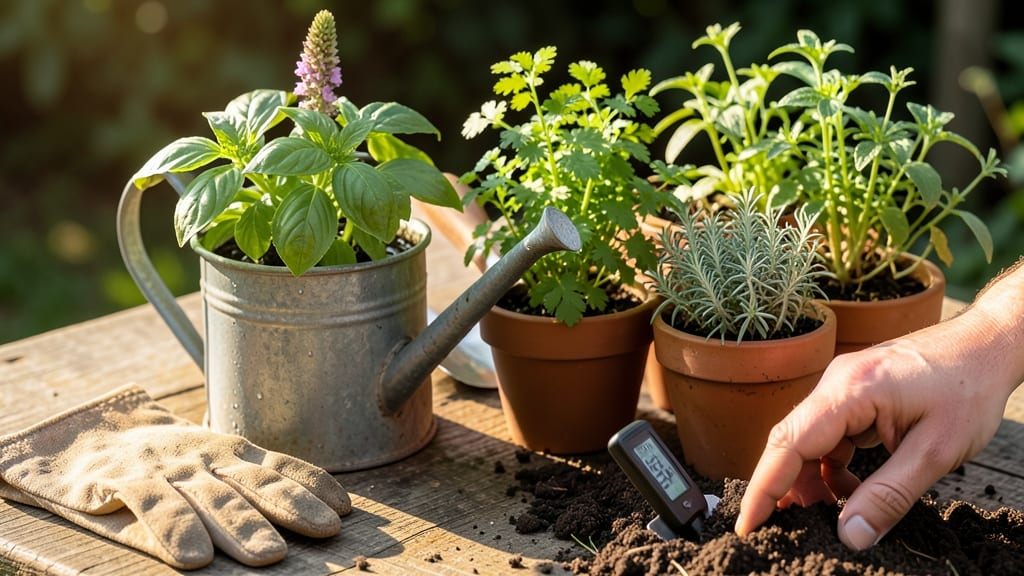
First, grab a soil moisture meter or use the finger-check method: stick your index finger 1-2 inches deep. If it feels dry, water; if damp, wait. Drainage holes are non-negotiable—without them, roots drown. I’ll show you how each soil type changes the game for your herbs’ hydration needs.

Visual soil moisture indicators save time: dry soil looks powdery, ideal soil crumbles slightly, and soggy soil sticks together. For sandy soil, water more often but less deeply. For clay soil, space out waterings but soak thoroughly. Loamy soil? You’ve got the easiest job—just stay consistent.

Herb Soil Type Watering Frequency Moisture Check Depth Notes
Basil Sandy Every 1-2 days 1 inch Drought-sensitive; wilts fast
Basil Loamy Every 2-3 days 1.5 inches Ideal balance; minimal stress
Basil Clay Every 3-4 days 2 inches Risk of root rot; water deeply
Mint Sandy Every 1 day 0.5 inch Loves moisture; spreads aggressively
Mint Loamy Every 2 days 1 inch Best for potted growth
Rosemary Sandy Every 4-5 days 2 inches Drought-tolerant; overwatering kills
Rosemary Loamy Every 5-7 days 2.5 inches Perfect for Mediterranean herbs
Thyme Clay Every 7-10 days

How to adjust your watering routine for seasonal changes

Seasonal shifts dramatically change your potted herbs' water needs. In spring, for example, I water my basil and cilantro every 2-3 days as temperatures rise and soil warms up.

But by summer, the same herbs demand daily attention—especially in small containers that dry out faster. Understanding these patterns prevents leaf curl from underwatering or yellowing leaves from overwatering.

Your container size also plays a critical role. A 6-inch pot loses moisture 3x faster than a 12-inch pot due to increased surface area. I test this by sticking my finger 1 inch deep into the soil—if it's dry, it's time to water.

Larger pots retain moisture longer, so I adjust my schedule accordingly. This simple check saves my herbs from wilting or root rot.

🌱 Seasonal Watering Schedule for Potted Herbs

Season Frequency (Small Pots) Frequency (Large Pots) Signs of Overwatering
Spring Every 2-3 days Every 3-4 days Yellow leaves, mold
Summer Daily (morning) Every 1-2 days Wilting, soil smell
Fall Every 3-4 days Every 4-5 days Slow growth
Winter Every 5-7 days Every 7-10 days Brown edges

💧 Pro Tip: Always water in the morning to reduce evaporation and fungal risk.

In summer, I prioritize morning watering to prevent rapid evaporation. My rosemary and thyme, which are drought-tolerant, handle heat better than parsley or dill.

I group similar herbs together to simplify care. For example, moisture-loving herbs like cilantro get watered more frequently than oregano, which thrives with less.

As fall arrives, I reduce watering to every 3-4 days for small pots and 4-5 days for larger ones. The cooler air and shorter days slow herb growth, so their roots need less hydration.

I watch for yellowing leaves or leaf curl, which signal overwatering. If the soil stays damp for more than 2 days, I hold off until the top inch feels dry.

Winter care shifts to minimal watering—every 5-7 days for small pots and 7-10 days for larger ones. Most herbs enter dormancy, so I focus on preventing root rot by ensuring pots have drainage holes.

I also move containers to sheltered spots to avoid freezing temperatures. Rosemary and thyme are exceptions; they tolerate drier conditions even in winter.

Adjusting your routine seasonally keeps your herbs healthy without guesswork. Start by checking soil moisture daily, then fine-tune based on weather patterns and herb types. With these adjustments, your potted herbs will stay lush and flavorful year-round. 🌿

★★★★★4.7(7 reviews)
Categories Watering