
How To
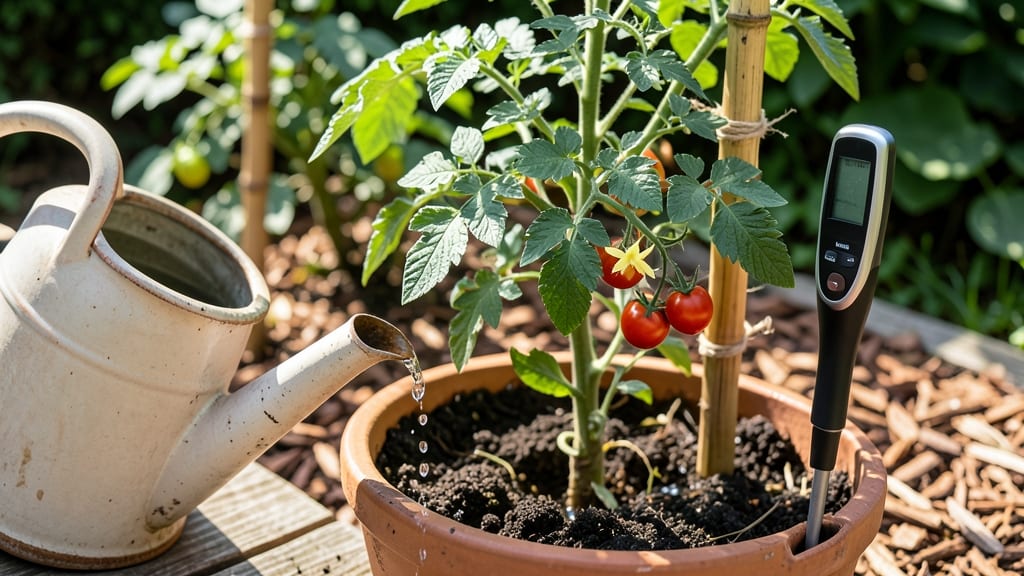
Watering potted tomato plants the right way means checking soil moisture every 1-2 days—but how often is too often, and how do you know when to stop?
Overwatering or underwatering your potted tomato plants can mean the difference between a bountiful harvest and a sad, wilted disappointment—so how do you strike the perfect balance?
Most gardeners guess, but that leads to root rot from soggy soil or stunted growth from dry roots. The soil dry test is the secret weapon: stick your finger in, feel the weight, and adjust before the plant tells you it’s too late.
In this guide, I’ll break down the exact schedule for your 🍅 tomato’s needs, from seedlings to fruiting, plus tools like moisture meters that take the guesswork out of it.
The ideal watering schedule for potted tomato plants based on soil conditions
Getting your potted tomato plants the right amount of water isn't just about sticking to a schedule—it's about understanding their soil conditions and adjusting on the fly. Unlike in-ground tomatoes, potted varieties dry out 3x faster due to limited root space, making consistent moisture critical for fruit production.
The key? Learning how to test soil moisture and factor in your pot size, climate, and whether your plant is a seedling or fruiting.
I’ve learned the hard way that a one-size-fits-all watering plan fails when temperatures swing from 75°F to 95°F or when your 5-gallon pot becomes bone-dry overnight. The solution? A dynamic approach that balances deep watering with soil dry tests.
Start by checking moisture at the root zone—the top 1-2 inches of soil—before deciding whether to water. This method prevents both root rot and wilting, two common killers of container-grown tomatoes.
| Factor | Seedlings (0-4 Weeks) | Vegetative Stage (4-8 Weeks) | Fruiting Stage (8+ Weeks) |
|---|---|---|---|
| Water Frequency | Every 1-2 days | Every 2-3 days | Every 1-2 days (daily in heat) |
| Soil Moisture Test | Top 1" dry | Top 1-2" dry | Top 2" dry (check daily) |
| Pot Size (5-Gallon) | Dries in 12-24 hrs | Dries in 24-48 hrs | Dries in 12-24 hrs (heat) |
| Climate Adjustments | Water more in direct sun | Reduce water in humid days | Increase water in 90°F+ heat |
| Signs of Overwatering | Yellowing leaves, mold | Stunted growth, root rot | Blossom end rot, cracked soil |
| Signs of Underwatering | Wilted leaves, dry soil | Drooping stems, slow growth | Fruit splitting, leaf curling |
Your potted tomato’s watering needs shift dramatically as it matures. Seedlings (weeks 0-4) require gentle, frequent moisture to establish roots, while vegetative-stage plants (weeks 4-8) can handle slightly drier soil.
But once your plant hits the fruiting stage (week 8+), consistency becomes non-negotiable—blossom end rot and cracked fruit are telltale signs of moisture fluctuations. I’ve found that morning watering (before 10 AM) minimizes evaporation and fungal risks, while evening watering can lead to damp foliage and disease.
Pot size plays a surprisingly big role in watering frequency. A 5-gallon pot may need watering every 1-2 days in summer, while a 10-gallon container can stretch to 2-3 days. Pro tip: Lift your pot—if it feels lightweight, it’s time to water.
Pair this with a moisture meter for precision, especially during heatwaves or drought conditions. I swear by the Xiaomi Mi Flower Care meter; it reads moisture levels in real-time and saves me from guesswork.
Climate is the wildcard in your watering schedule. In humid climates (like my zone 8 garden), I water less frequently but ensure deep soaks to encourage root growth. Conversely, arid conditions demand daily checks—even self-watering pots may not cut it during 100°F+ days.
Pay attention to leaf curl or soil shrinkage; these are your plant’s SOS signals. And if your tomatoes start splitting, you’re either overwatering or dealing with uneven moisture.
Don’t overlook the soil mix in your pots. A blend with 30% perl
Soil dry test methods: 3 proven techniques to avoid root rot and wilting
Testing your potted tomato soil moisture is the secret weapon against overwatering and wilting. Unlike in-ground plants, potted tomatoes dry out faster, making precise testing essential. I’ve tried all three methods—finger-checking, weight-based testing, and moisture meters—and each delivers reliable results for tomato plant care.
Start with the simplest method: the finger test. Stick your index finger about 1-2 inches deep into the soil. If it feels dry, it’s time to water. If damp, wait another day. This hands-on approach helps you adjust watering frequency based on real-time conditions, not guesswork.
- Finger Test: Stick finger 1-2" deep. Dry = water now.
- Weight Check: Lift pot. Light = needs hydration.
- Moisture Meter: Readings 1-3 = water; 4-6 = wait.
Next, try the weight-based method for a quick, no-tools approach. Lift your potted tomato—when it’s dry, it’ll feel noticeably lighter. This works best for consistent pot sizes and helps you recognize the ideal weight for your specific container.
I use this daily during peak summer heat to avoid root rot from overwatering.
For precision, invest in a moisture meter. These digital tools give exact readings, with most meters showing 1 (dry) to 6 (saturated). Aim for 2-4 for tomatoes—this range keeps roots happy without drowning them.
I love mine because it eliminates guesswork and helps me adjust watering schedules based on real data.
Adjust your watering frequency based on test results. If your tomato plants show signs of underwatering (drooping leaves, dry soil), water deeply until it drains. For overwatered plants (yellow leaves, mushy stems), let the soil dry slightly before watering again. Consistency is key—potted tomatoes thrive with even moisture.
Pro tip: Combine methods for the best results. Use the finger test daily, the weight check weekly, and the moisture meter during heatwaves. This multi-method approach ensures your tomato plants stay hydrated without risking root rot or wilting.
With these techniques, you’ll master the perfect watering balance for lush, productive plants.