
Flowers
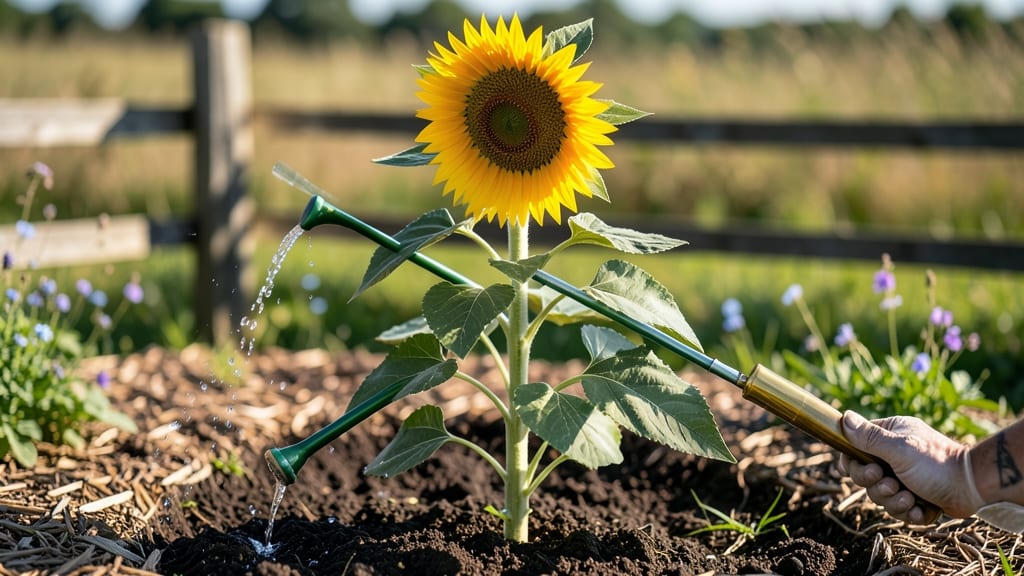
Watering sunflowers the right way means giving them deep, infrequent drinks—not light sips every day—that keep their roots happy without drowning them.
Picture this: you’ve spent weeks nurturing your towering 🌻, only for them to wilt or snap under the weight of their own stems. The fix? A simple soil dry test that adjusts for your climate, soil, and growth stage.
Too much water rots roots; too little stunts growth. I’ll walk you through the exact 1-2 inch soil check for seedlings and 3-4 inch test for mature plants, plus how to tweak your schedule for heatwaves or drought.
By the end, you’ll know when to water, how much to give, and what to watch for—so your sunflowers grow strong, not stressed.
The soil dry test method: how deep to check for proper sunflower watering
Sunflowers need consistent moisture to grow their iconic stems and blooms, but guessing your watering schedule can lead to wasted water or stressed plants. The soil dry test is the most reliable way to determine when your sunflowers need hydration.
Unlike rigid schedules, this method adapts to your climate, soil type, and growth stage, ensuring your plants thrive without guesswork.
For young seedlings, check moisture at 1-2 inches deep—this shallow layer is where their delicate roots absorb water. As your sunflowers mature and develop deeper root systems, shift to testing 3-4 inches deep.
This deeper check prevents surface drying while ensuring their extensive roots get the moisture they crave.
Here’s how to perform the test correctly, along with adjustments for different conditions:
Step-by-Step Soil Dry Test for Sunflowers
- 1 Choose the right depth: Use a soil moisture meter or stick your finger into the soil. Seedlings: 1-2 inches, mature plants: 3-4 inches.
- 2 Assess moisture level: If the soil feels dry and crumbly, it’s time to water. If it’s damp or sticky, wait another day.
- 3 Adjust for climate: In hot, dry climates, test daily and water deeply. In cool, humid areas, reduce frequency to every 3-4 days.
- 4 Water deeply: Soak the soil until water runs out the bottom of the root zone. Avoid shallow watering, which encourages weak roots.
- 5 Mulch to retain moisture: Apply 2-3 inches of mulch around the base to slow evaporation and keep roots cool.
Pay attention to your soil type—sandy soil drains quickly and may need daily checks, while clay soil holds moisture longer and can go 2-3 days between waterings. If your sunflowers are in containers, they’ll dry out faster than in-ground plants, so monitor them more frequently.
Overwatering is just as harmful as underwatering. If the soil feels soggy or smells foul, your sunflowers are drowning. Yellowing leaves or wilting despite moist soil are red flags to cut back on water. Aim for soil that’s damp but not waterlogged—this balance is key to healthy growth.
Morning is the best time to water sunflowers. Watering in the early hours reduces evaporation and gives plants time to absorb moisture before the heat of the day. Avoid evening watering, as damp foliage can attract pests and fungal diseases like powdery mildew.
As your sunflowers mature, their water needs shift. Seedlings require frequent, light watering to keep the soil consistently moist, while mature plants develop deeper roots and can handle longer intervals between waterings.
By the time your sunflowers reach 3-4 feet tall, they may only need watering every 7-10 days, depending on rainfall.
Use a soil moisture meter for accuracy, especially if you’re new to gardening. These tools take the guesswork out of the soil dry test and help you build confidence in your watering routine. Over time, you’ll develop a feel for when your sunflowers need hydration just by touching the soil.
Remember, sunflowers are drought-tolerant once established, but they won’t reach their full potential without consistent care. By mastering the soil dry test, you’ll ensure your sunflowers grow tall, strong, and ready to bloom into those stunning faces of summer.
Sunflower watering schedule by growth stage: seedlings vs. mature plants
Sunflowers have two distinct watering phases that change dramatically as they grow. Seedlings need gentle, frequent moisture to establish roots, while mature plants develop deeper drought tolerance.
Understanding these shifts prevents common issues like damping-off in young plants or stem rot in adults. The key? Adjusting your watering rhythm with their growth rate.
For seedlings (first 4-6 weeks), I recommend a daily misting schedule using a spray bottle or fine rose attachment. The soil should stay consistently moist but never soggy.
This mimics their natural environment and encourages strong root development. Giant varieties like 'Mammoth' need slightly more frequent watering than dwarf types like 'Teddy Bear' during this stage.
| Growth Stage | Watering Frequency | Watering Method | Variety Needs |
|---|---|---|---|
| Seedlings (0-4 weeks) | Daily (morning) | Light misting (1-2 min) | Giant: More frequent |
| Young Plants (4-8 weeks) | Every 2-3 days | Deep watering (1 inch) | Dwarf: Less water |
| Mature Plants (8+ weeks) | 2-3 times/week | Soaker hose (2-3 inches) | All equal needs |
| Extreme Heat | Daily (evening) | Drip irrigation | All increase needs |
Once sunflowers reach 8+ weeks old, I switch to a deep watering schedule of 2-3 times per week. The goal is to encourage roots to grow downward rather than staying shallow.
Use a soaker hose or drip irrigation to deliver water slowly at the base, avoiding wet foliage which can attract pests. Mulch heavily around plants to retain moisture and regulate soil temperature.
During summer heatwaves, I adjust my schedule to daily watering in the evening to prevent stress. Giant varieties like 'Russian Giant' may need up to 3 gallons per plant during peak heat, while dwarf varieties like 'Sunspot' require about half that amount.
Always check soil moisture by sticking your finger 3-4 inches deep—if it feels dry, water thoroughly.
In drought conditions, sunflowers reveal their resilience by slowing growth rather than wilting dramatically. This is their survival mechanism, but don't let them go completely dry. For established plants, one deep watering per week is often sufficient if rainfall is minimal.
Always water before 10 AM to allow foliage to dry quickly, reducing fungal risks.
Remember that container-grown sunflowers dry out faster than those in the ground. These need daily watering during hot weather, regardless of growth stage. The key to success is consistency—whether you're nurturing seedlings or maintaining mature plants, a predictable schedule keeps your sunflowers reaching for the sky.