
Companion Plants
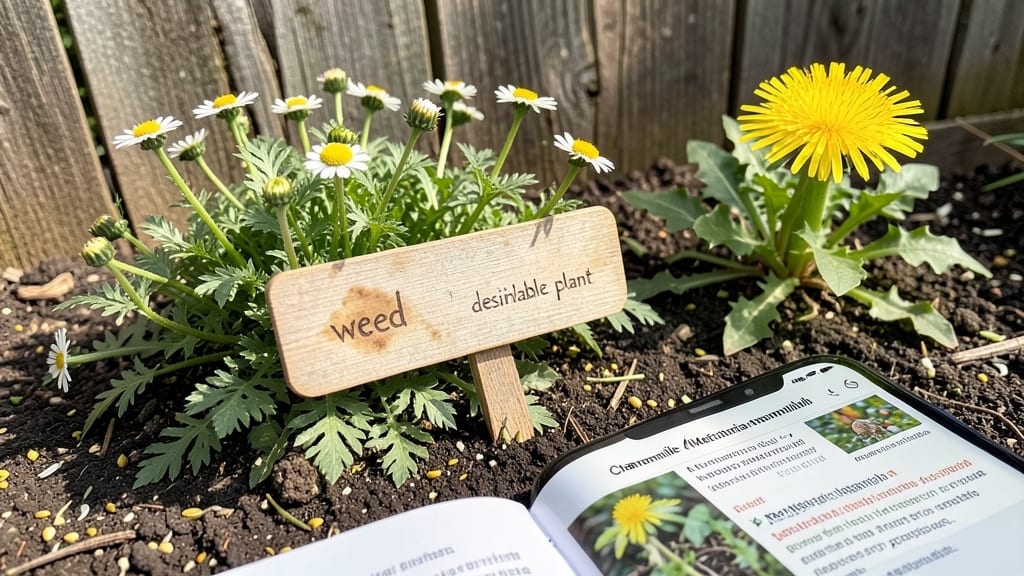
Chamomile is not a weed but a beneficial flowering plant often classified as a wildflower or herb, prized for its medicinal properties and ornamental appeal in gardens.
Chamomile's classification as a weed is a common misconception rooted in its ability to self-seed prolifically in gardens. 🌼 Botanically, it belongs to the Asteraceae family alongside daisies and sunflowers, and while it may spread easily, its delicate white-and-yellow blooms and soothing properties make it a valuable addition to any landscape.
Many gardeners intentionally cultivate chamomile for its calming tea, pest-repelling qualities, and ability to attract beneficial pollinators like bees and butterflies.
What sets chamomile apart from true weeds is its intentional cultivation in herbal gardens and its role as a companion plant. Unlike invasive species that disrupt ecosystems, chamomile enhances soil health and deters pests like aphids and nematodes.
Its dual-purpose nature—both medicinal and ornamental—makes it a favorite among organic gardeners seeking natural solutions.
💡 In This Article
- Botanical Classification of Chamomile: Wildflower or Weed?
- Garden Uses for Chamomile: Beyond Medicinal Benefits
Botanical classification of chamomile: wildflower or weed?
Chamomile belongs to the Asteraceae family, sharing its lineage with sunflowers and daisies, but its classification as a "weed" stems from its tendency to self-seed aggressively. 🌱 The two most common varieties—German chamomile (Matricaria chamomilla) and Roman chamomile (Chamaemelum nobile)—are often mistaken for weeds because they spread easily in disturbed soils.
However, botanists classify them as wildflowers or herbs due to their cultivated uses rather than invasive behavior. True weeds typically lack economic or ecological value, whereas chamomile has been used medicinally for centuries.
The confusion arises because chamomile’s delicate, daisy-like flowers produce thousands of tiny seeds that disperse via wind or water. A single plant can generate up to 20,000 seeds, which explains why it may appear "uncontrolled" in gardens.
Yet, unlike invasive species, chamomile doesn’t outcompete native plants or disrupt ecosystems—it actually improves soil structure by attracting beneficial microbes. Its roots release compounds that suppress harmful pathogens, a trait shared with other companion plants like marigolds.
What truly defines chamomile as a beneficial plant is its chemical composition. The flowers contain apigenin, an antioxidant that gives chamomile tea its calming effects, and bisabolol, a compound with anti-inflammatory properties. 💫 These bioactive elements are harnessed in herbal remedies, skincare, and even aromatherapy.
Unlike weeds, which are often defined by their negative impact, chamomile’s presence in gardens is actively encouraged for its dual role as a medicinal herb and pollinator magnet.
Scientifically, chamomile’s classification hinges on human perception rather than botanical fact. The term "weed" is subjective—it describes any plant growing where it’s unwanted, not its inherent qualities. Chamomile’s wildflower status is reinforced by its inclusion in the USDA’s National Seed Herbarium and its cultivation in permaculture systems worldwide.
Even its Latin name, Matricaria, reflects its historical use in herbal medicine ("matricaria" meaning "little mother" in Latin).
Consider this: chamomile’s spread is a natural adaptation to thrive in disturbed soils, much like clover or dandelions. However, while those plants may be labeled weeds, chamomile’s intentional cultivation in herbal gardens, tea plantations, and even culinary kitchens elevates it beyond that classification.
Its ability to grow in poor soil conditions—even cracking pavement—makes it resilient, but its value lies in how humans utilize it rather than its growth habits alone.
To put it simply, chamomile’s reputation as a weed is a misnomer rooted in its prolific seeding rather than its ecological or economic contributions. 🌿 Gardeners who embrace its spread often do so knowing they’re fostering a plant with centuries of medicinal and agricultural benefits—a far cry from the destructive traits associated with true weeds.