
How To
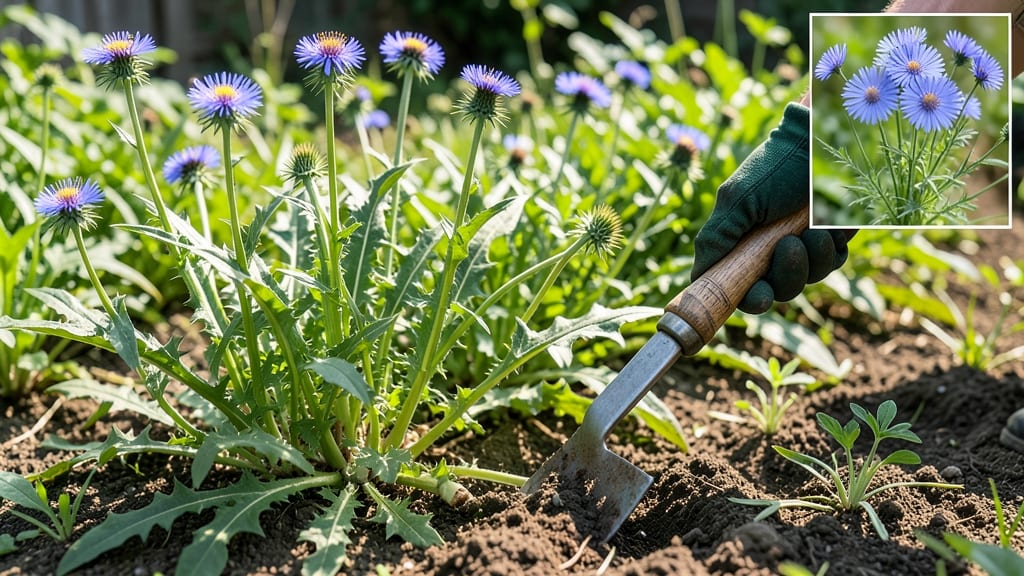
Chicory is not a weed but a cultivated perennial plant valued for its edible roots, leaves, and flowers, even though its hardy growth can dominate garden spaces if left unchecked.
Chicory's reputation as a weed stems from its tenacious growth habits—it thrives in poor soil, spreads rapidly through self-seeding, and develops deep roots that make removal difficult. 🌱 Yet its culinary and medicinal value is undeniable, from roasted roots used as a coffee substitute to bitter greens in salads.
The key difference lies in intent: while it behaves like a weed in lawns, gardeners intentionally cultivate specific varieties for their edible benefits.
What sets chicory apart is its dual nature—it's both a garden staple and a wild colonizer. When grown intentionally, it produces tender leaves and vibrant blue flowers; when left uncontrolled, it can crowd out other plants. This duality explains why many gardeners love it while others consider it invasive.
The plant's aggressive growth isn't just about space—its deep taproot system makes it drought-resistant and hardy, which is why it often appears in disturbed soils. However, this same resilience makes chicory valuable in permaculture designs, where its deep roots help break up compacted soil.
💡 In This Article
- Chicory’s Botanical Classification and Garden Behavior
- Culinary and Medicinal Uses of Chicory as a Valuable Plant
Chicory’s botanical classification and garden behavior
Chicory (Cichorium intybus) belongs to the daisy family (Asteraceae) and is classified as a perennial herb, not a weed—though its growth habits can certainly mimic those of invasive species.
The confusion arises from its deep taproot system, which can extend up to 3 feet underground, making it difficult to eradicate once established.
This root structure also allows chicory to thrive in poor, compacted soils where many garden plants would struggle, giving it a competitive edge in disturbed or neglected areas.
The plant’s rapid spread comes from its prolific self-seeding nature. A single chicory plant can produce hundreds of seeds that remain viable in the soil for years, germinating when conditions are favorable. In lawns or gardens, this leads to dense patches that can outcompete grass or desired crops.
The leaves also grow in a rosette pattern close to the ground, forming a thick mat that blocks sunlight from reaching other plants—a classic weed-like behavior. However, this same trait makes chicory an excellent ground cover in permaculture systems where its deep roots help aerate and enrich the soil.
What truly sets chicory apart from weeds is its intentional cultivation in agriculture and horticulture. Gardeners select specific varieties for their edible qualities—like the Palla Rossa variety with bright red stems or the Frisee type with tender, curly leaves.
These cultivated forms are bred to be less aggressive than wild types, though they still retain the hardy growth characteristics that make them resilient in challenging environments. The key difference is control: in a managed garden, chicory is a prized crop; in an unmanaged space, it behaves like a weed.
Chicory’s growth cycle further explains its dual reputation. In its first year, it produces a rosette of leaves, while in the second year, it sends up a tall flowering stalk that can reach 5 feet in height.
The flowers are vibrant blue and attract pollinators, but the seed heads that follow can scatter widely, contributing to its reputation as a nuisance.
This biennial growth pattern means chicory can dominate a space quickly if not managed, but it also makes it a valuable plant for rotational cropping in farms where its deep roots help break up compacted soil before being plowed under.
The plant’s ability to thrive in poor conditions is due to its deep roots accessing water and nutrients that shallow-rooted plants can’t reach.
This drought resistance makes chicory a survivor in marginal soils, but it also explains why it often appears in cracks in pavement or along roadsides—environments where few other plants can establish themselves.
The same resilience that makes chicory a tough weed in lawns is what makes it a hardy crop in fields where other plants might fail.
Understanding chicory’s growth mechanics helps gardeners decide whether to embrace or eradicate it. In a vegetable garden, you might welcome its deep roots for soil improvement, while in a manicured lawn, you’d likely consider it a pest.
The plant’s adaptability is both its greatest strength and its biggest challenge—making it a fascinating study in how intent shapes perception. 🌱