
Advice
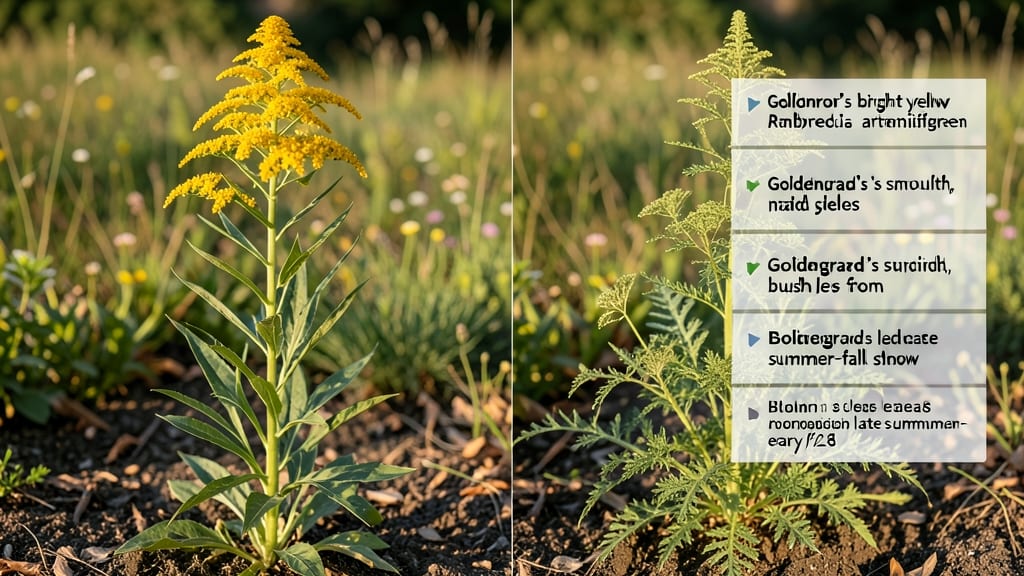
Goldenrod and ragweed are not the same thing: goldenrod produces non-allergic pollen, while ragweed is a common allergen with fine, airborne pollen that triggers seasonal allergies. Their flowers, growth habits, and ecological roles differ significantly despite similar appearances.
Many people blame goldenrod for their seasonal allergies, but the real culprit is ragweed. 🌼 The key difference lies in their pollen: goldenrod's heavy, sticky pollen stays on its flowers, while ragweed's lightweight pollen spreads easily through the air.
Ragweed blooms later in the season, typically from August to October, when allergy sufferers notice their symptoms worsening. Goldenrod, on the other hand, blooms earlier and supports pollinators like bees and butterflies without causing irritation.
Another way to tell them apart is by looking at their growth patterns. Goldenrod has bright yellow plumes and grows in dense clusters, while ragweed features smaller greenish flowers and grows more sparsely.
If you're trying to create a pollinator-friendly garden, goldenrod is an excellent choice—it attracts beneficial insects without the allergy risks.
💡 In This Article
- Botanical and Pollen Differences Between Goldenrod and Ragweed
- Identifying Goldenrod vs Ragweed in Gardens and Landscapes
Botanical and pollen differences between goldenrod and ragweed
The most critical distinction between goldenrod and ragweed lies in their pollen characteristics. Goldenrod produces pollen grains that are heavy and sticky, measuring about 30-50 microns in diameter—far too large to become airborne.
These grains cling to the plant's bright yellow flower clusters, which bees and other pollinators actively visit.
Ragweed, however, releases lightweight pollen grains (10-20 microns) that easily become airborne, traveling up to 400 miles in ideal wind conditions. 🌬️ This size difference explains why goldenrod rarely triggers allergies while ragweed causes widespread symptoms.
Another key difference is their bloom timing and flower structure. Goldenrod typically blooms from late summer to early fall (July-September), but its flowers are dense, plume-like clusters that remain upright. Ragweed blooms slightly later (August-October) with small, greenish flowers arranged in loose spikes.
The ragweed's pollen production is also staggering—each plant can release 1 billion pollen grains per season, while goldenrod produces far less and retains it on its flowers. This structural difference means goldenrod supports pollinators without spreading allergens.
The ecological roles of these plants further highlight their differences. Goldenrod is a native perennial that thrives in prairies and meadows, providing nectar for bees, butterflies, and even goldfinches. Its deep root system helps prevent soil erosion and improves water filtration.
Ragweed, however, is an aggressive annual weed that spreads rapidly in disturbed soils, often outcompeting native plants. Its pollen's allergenic properties make it a public health concern, while goldenrod's ecological benefits make it a valuable addition to pollinator gardens. 🐝
Many people confuse the two because they bloom at similar times and share a yellowish appearance. However, goldenrod's vibrant yellow plumes stand out against its hairy, upright stems, while ragweed's flowers are less showy and grow on rough, branching stems.
The leaf shapes also differ: goldenrod has alternate, lance-shaped leaves, while ragweed features opposite, coarsely toothed leaves. These visual cues help gardeners and ecologists quickly distinguish between them in the field.
Understanding these differences is crucial for allergy sufferers and gardeners alike. Ragweed's pollen is the primary trigger for seasonal allergies, while goldenrod's pollen remains harmlessly on its flowers. The misconception likely stems from their overlapping bloom periods and similar appearances, but their botanical and ecological traits couldn't be more different.
For those seeking to reduce allergens in their landscape, removing ragweed while preserving goldenrod can create a beautiful, pollinator-friendly garden without the allergy risks. 🌿