
How To
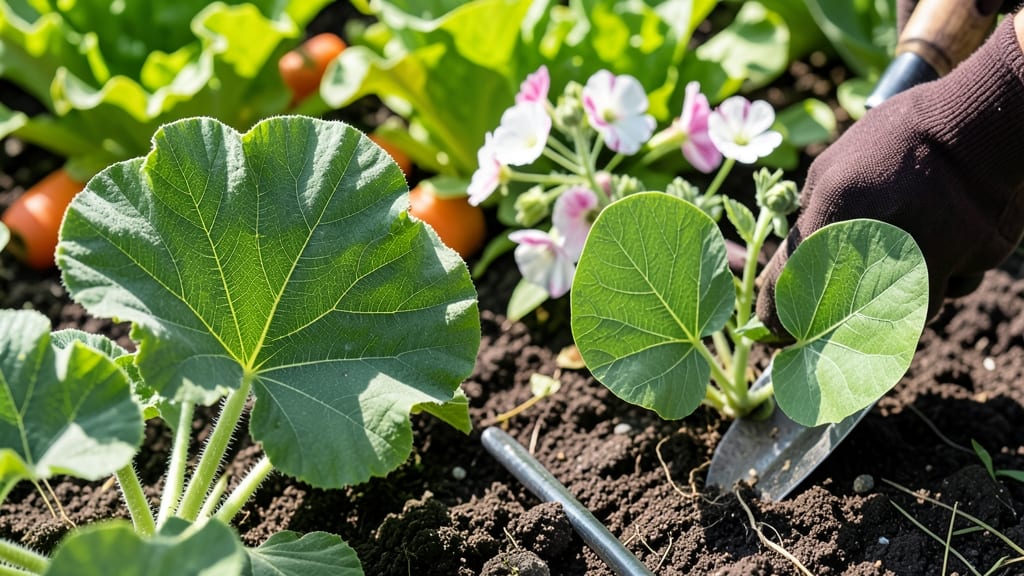
Mallow isn't a weed—it's a hardy, beneficial plant with edible leaves and roots that gardeners often confuse with invasive species. Varieties like common mallow provide culinary and medicinal benefits while supporting pollinators and improving soil health.
Mallow plants actually play a positive role in ecosystems, unlike true weeds that disrupt growth. 🌱 Their deep roots prevent erosion and attract bees, making them valuable garden allies. Many varieties, such as tree mallow, produce beautiful flowers while remaining non-aggressive—unlike dandelions or crabgrass, which spread uncontrollably.
The confusion likely stems from their fast growth and ability to thrive in poor soil, traits often associated with weeds.
Beyond their ecological benefits, mallows offer practical uses in the kitchen. Young leaves can be cooked like spinach, while roots make a soothing tea. 💛 The key difference between mallow and weeds lies in their purpose: mallows contribute to gardens rather than competing with cultivated plants.
This makes them an excellent choice for permaculture designs or edible landscapes.
💡 In This Article
- Botanical Differences Between Mallow and True Weeds
- Edible Mallow Varieties and Their Garden Uses
Botanical differences between mallow and true weeds
Mallow plants belong to the Malvaceae family, which includes over 240 species known for their ecological benefits rather than their invasive tendencies. Unlike true weeds like crabgrass or bindweed, mallows don't spread through aggressive underground rhizomes or prolific seed production.
Their growth is controlled—common mallow (Malva neglecta) produces seeds but only in limited quantities, while tree mallow (Lavatera arborea) grows as a perennial shrub that doesn't crowd out other plants. 🌿 This controlled spread is the key botanical difference: weeds disrupt ecosystems by outcompeting native species, whereas mallows coexist harmoniously.
The root systems of mallows actually improve soil health by preventing erosion and aerating compacted soil. Their deep taproots (reaching up to 3 feet in some varieties) break up hardpan layers, allowing water and nutrients to penetrate deeper—something aggressive weeds like dandelions (Taraxacum officinale) cannot match.
Additionally, mallow flowers serve as pollinator magnets, attracting bees and butterflies with their nectar-rich blooms, while weeds often lack this ecological function. The confusion arises because mallows thrive in disturbed soils, just like weeds, but their growth habit remains non-competitive.
True weeds exhibit three defining traits that mallows lack: rapid, uncontrolled spread, negative impact on agriculture, and persistence through multiple life cycles.
For example, crabgrass (Digitaria sanguinalis) spreads via stolons and smothers lawns, while mallows grow upright with minimal lateral expansion. 🌱 Even when mallows self-seed, their seedlings don't form dense monocultures like cheatgrass (Bromus tectorum).
This fundamental difference in growth strategy explains why botanists classify mallows as beneficial wild plants rather than weeds—despite their hardy nature, they don't behave like ecological invaders.
Another critical distinction lies in their reproductive biology. Most mallows produce seeds only when mature, requiring 2-3 years to reach full flowering stage, while weeds like pigweed (Amaranthus) mature in as little as 6 weeks and produce thousands of seeds per plant.
Mallow seeds also lack the wind-dispersal mechanisms of weed seeds, which explains why they don't become airborne nuisances. The seed pods of mallows actually split open when dry, releasing seeds near the parent plant—a behavior that prevents long-distance colonization, a hallmark of invasive weeds.
Consider the case of musk mallow (Malva moschata), which produces fragrant flowers and edible leaves but grows at a moderate pace compared to weeds.
Its leaves contain mucilage that helps retain moisture in dry conditions, a trait that actually benefits garden ecosystems rather than harming them. 💧 This moisture-retaining ability contrasts sharply with weeds like purslane (Portulaca oleracea), which thrive by outcompeting other plants for water—a behavior that mallows avoid entirely.
The botanical evidence clearly shows that mallows are ecological allies, not antagonists.
For gardeners, this distinction matters because mallows can be cultivated intentionally. Unlike weeds that require removal, mallows can be incorporated into edible landscapes or pollinator gardens.
Their non-invasive growth makes them ideal for companion planting with vegetables, where they improve soil structure without competing for resources. 🌱 The key takeaway is that what appears "weedy" growth in mallows is actually a controlled, beneficial presence in the right context—something true weeds never achieve.