
Advice
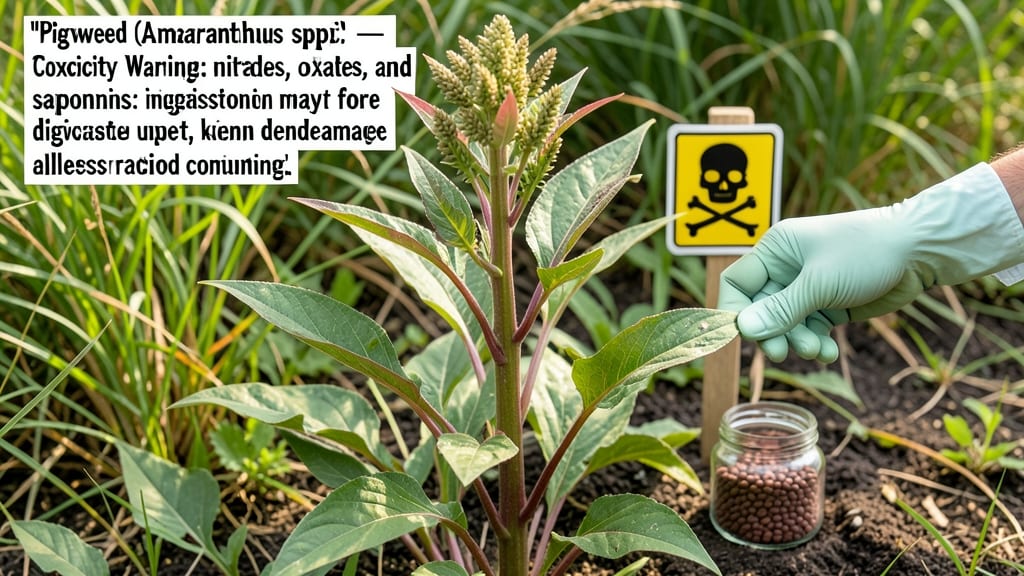
Pigweed is not inherently poisonous to humans, but its oxalate content can cause mild digestive upset or kidney irritation in large amounts. Rare allergic reactions may occur with direct contact or excessive consumption.
Pigweed's reputation as a "weed" often overshadows its complex biochemistry. 🌱 The plant's oxalates serve as a natural defense mechanism against herbivores, but humans typically metabolize them without issue unless consumed in very large quantities.
Studies show that most people tolerate small amounts—like those found in wild greens—without problems, though those with pre-existing kidney conditions should exercise caution. The key is moderation: what might be safe for one person could trigger discomfort in another.
What's particularly interesting is how oxalates behave differently in cooked versus raw pigweed. 🔥 Heat breaks down some oxalates, reducing their potential irritant effects. This is why many traditional cuisines that incorporate wild greens recommend quick cooking methods.
Always wash thoroughly before preparation, and consider soaking in water for 30 minutes to further reduce oxalate levels if you're particularly sensitive.
💡 In This Article
- Understanding Pigweed Toxicity: Oxalates and Plant Defense Mechanisms
- Safety Precautions When Handling Pigweed in Gardens
Understanding pigweed toxicity: oxalates and plant defense mechanisms
Pigweed's toxicity isn't from poisonous compounds but from natural oxalates—organic acids that act as chemical deterrents against herbivores. These compounds bind to minerals like calcium in animal digestive systems, forming sharp crystals that irritate tissues.
In pigweed, oxalate levels typically range between 0.5% to 1.5% dry weight, which is lower than in spinach (0.5% to 1.8%) but higher than lettuce (0.1% to 0.4%). 🌱 The plant evolved this defense because its high moisture content and tender leaves make it an appealing snack for insects and small mammals.
Human tolerance varies dramatically based on kidney function and oxalate metabolism. Most healthy individuals can process 50-100mg of oxalates daily without issues, but pigweed's oxalates are water-soluble—meaning they leach out during cooking.
Studies show that boiling reduces oxalate content by 30-50%, while fermenting can decrease it by up to 70%. The crystals form when oxalates combine with calcium, which is why they're more problematic for those with kidney stones or compromised kidney function.
What makes pigweed unique is its dual role in ecosystems. While oxalates deter most animals, some traditional cultures have developed methods to safely consume it. For example, in parts of Africa, pigweed is cooked with leafy vegetables where its oxalates are diluted by other ingredients.
The key is preparation: soaking in water for 2-4 hours before cooking removes 20-30% of oxalates, while proper cooking techniques further reduce risks. 💫
Allergic reactions are exceedingly rare but can occur with direct skin contact or ingestion of large quantities. The plant contains small amounts of saponins, which may trigger mild skin irritation in sensitive individuals.
Unlike true poisonous plants (such as poison ivy), pigweed lacks toxic alkaloids or glycosides, making it non-lethal even in large doses. The confusion often arises from misidentification with toxic lookalikes like lambsquarters, which contain different chemical profiles.
Scientific research on oxalate toxicity distinguishes between acute and chronic exposure. Acute cases—like eating 1-2 cups of raw pigweed in one sitting—might cause mild stomach upset, nausea, or diarrhea. Chronic exposure over weeks could contribute to kidney strain, particularly in individuals with pre-existing conditions.
The World Health Organization considers 200mg of oxalates per day the safe upper limit for adults, which translates to roughly 10-15 cups of cooked pigweed—far more than most people would consume. ✨
Interestingly, oxalates aren't all bad—they play a role in plant physiology by strengthening cell walls and deterring pests. In human nutrition, moderate oxalate intake might even have benefits, like supporting bone health by binding to calcium in the gut.
The challenge lies in balancing these potential benefits against the risks for sensitive individuals. Always consult a healthcare provider if you're unsure about incorporating pigweed into your diet, especially with existing kidney concerns.