
Neem Oil
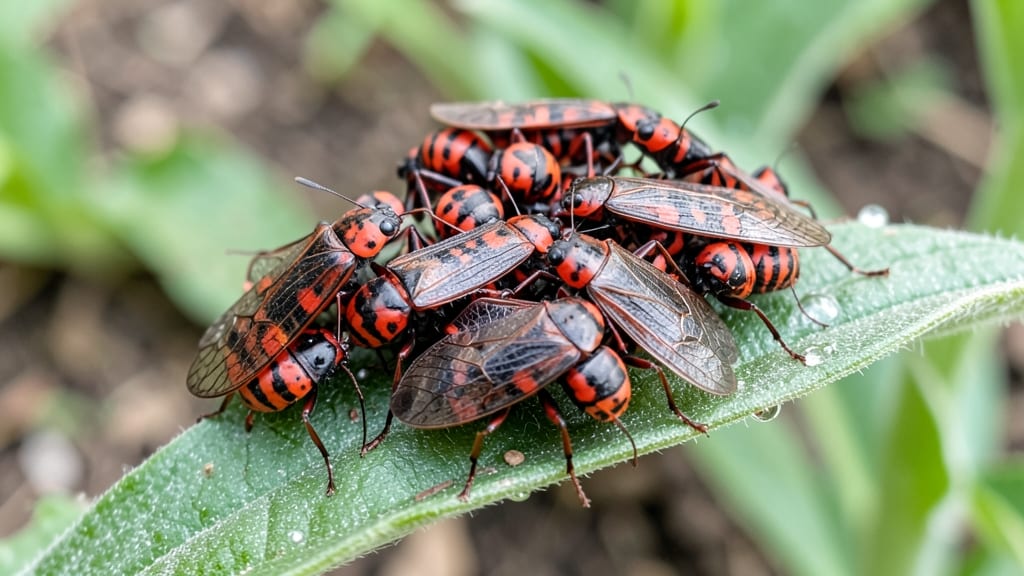
Identifying a milkweed bug clutch means spotting their 15–30 eggs arranged in neat oval clusters on milkweed leaves, usually yellowish-green and translucent. These clusters are strategically placed on leaf undersides to shield them from predators and harsh weather.
A milkweed bug clutch is a fascinating example of nature's protective instincts. 🔥 These egg clusters aren't just randomly placed—they're carefully positioned on the undersides of milkweed leaves, where they're less visible to predators like birds and spiders.
The translucent quality lets sunlight filter through, providing warmth while maintaining visibility for the mother bug to monitor her offspring. Interestingly, the color can shift slightly as they develop, becoming more opaque just before hatching.
What makes these clutches particularly noteworthy is their timing. The eggs typically hatch in 5–7 days, but this can vary dramatically based on temperature and humidity.
In warmer climates, you might see the entire life cycle complete in just 2–3 weeks, while cooler conditions can stretch this out to nearly a month. This adaptability helps explain why milkweed bugs thrive in such diverse environments, from desert gardens to temperate meadows.
For gardeners, distinguishing these clutches from other insect eggs is crucial. Unlike aphid eggs, which are often tiny and scattered, milkweed bug clutches form distinct oval patterns. Monarch caterpillar eggs, meanwhile, are solitary and more rounded.
The size difference is also telling—milkweed bug eggs are noticeably larger, about 1mm in length, making them easier to spot with a magnifying glass if you're examining leaves closely.
💡 In This Article
- Milkweed Bug Egg Clutch Development Stages
- Identifying Milkweed Bug Clutches in Gardens
Milkweed bug egg clutch development stages
The development of a milkweed bug clutch begins with the eggs' initial 5–7 day incubation period, during which the translucent yellowish-green hue gradually deepens. This color change isn't just cosmetic—it indicates the developing embryos' increasing density as they prepare for hatching.
Under ideal conditions (75–85°F and 60–70% humidity), you'll notice tiny black specks forming inside the eggs about 3 days before hatching, which are the developing larvae's eye spots.
Once hatched, the larvae undergo 5 distinct molting phases over 10–14 days, each time shedding their exoskeleton to accommodate growth. The first instar larvae are pale yellow with black markings, while later stages develop the characteristic red and black coloration.
Temperature plays a critical role here—each degree above 80°F can accelerate development by 10–15%, while cooler conditions (65°F) may extend the larval stage by nearly 50%. This thermal sensitivity explains why milkweed bugs thrive in southern climates but struggle in northern regions.
What's particularly fascinating is how the mother bug's behavior changes during this period. She'll often remain nearby, emitting pheromones that deter predators from approaching the clutch.
Some studies show that female milkweed bugs will even abandon their own eggs if they detect potential threats like ants or wasps within 24 hours of laying. This self-preservation instinct highlights the clutch's vulnerability during the early stages when the eggs lack protective armor.
Visual cues become especially important during the late larval stages. As the nymphs near adulthood, you'll notice their antennae elongating and their legs developing the distinctive 3-segmented structure.
The final molt reveals the adult's characteristic red body with black spots and legs, marking the transition from egg to reproductive adult capable of forming new clutches. This entire process demonstrates nature's precise timing mechanism, where environmental conditions directly influence developmental speed without compromising survival rates.
For gardeners monitoring these stages, it's crucial to recognize that the eggs' translucency makes them particularly vulnerable to desiccation. During dry spells, you might observe some eggs shrinking slightly—a clear sign they're losing moisture. In such cases, providing light shade over milkweed plants can maintain the necessary 70%+ humidity levels.
The opposite problem occurs in consistently damp conditions, where fungal infections may develop on the egg surfaces, turning them grayish—a sure sign of environmental stress.
Understanding these stages helps explain why milkweed bugs are such effective pollinators. Their synchronized development ensures a steady supply of adults during peak milkweed flowering periods, creating a mutually beneficial relationship with the plant. This ecological harmony is what makes observing milkweed bug clutches so rewarding for nature enthusiasts.