
Aphids
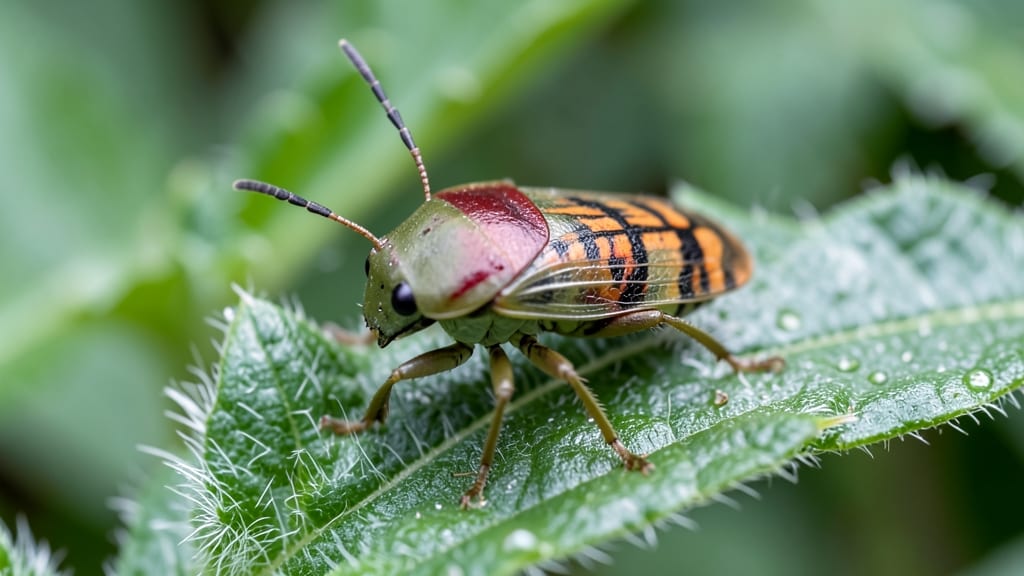
The milkweed bug's life cycle spans four distinct phases—egg, five nymph stages, and adulthood—completing its transformation in 30-60 days. Females deposit eggs directly on milkweed pods, while nymphs undergo five molts before emerging as striking red-and-black adults that feed on milkweed seeds, playing a crucial role in pollination and seed dispersal that benefits monarch butterflies.
The milkweed bug's rapid development is a fascinating example of nature's efficiency. 🔥 Unlike monarch butterflies, which rely on milkweed for their caterpillars, these bugs thrive as adults by feeding on the plant's seeds—an adaptation that prevents direct competition.
Their vibrant coloration isn't just for show; it serves as a warning to predators about their toxic milkweed-based diet. What's particularly interesting is how their population dynamics can actually enhance monarch habitats by controlling seed dispersal, ensuring fresh milkweed growth for future generations.
This dual role makes milkweed bugs an unexpected ally in garden ecosystems. While they may seem like pests at first glance, their presence often signals a healthy milkweed population—one that's equally beneficial to monarchs.
Understanding their life cycle helps gardeners make informed decisions about when to introduce milkweed plants or how to manage populations without harming the broader ecosystem.
💡 In This Article
- Milkweed Bug Development Stages and Biological Adaptations
- Gardening Tips for Managing Milkweed Bug Populations
Milkweed bug development stages and biological adaptations
The milkweed bug's life cycle begins with eggs laid in precise locations on milkweed pods, where females deposit 10-20 eggs at a time using their specialized ovipositor. These tiny, oval eggs (about 1mm long) are white with a slight translucent quality, allowing you to see the developing embryo inside.
The eggs hatch in 5-7 days under ideal conditions, releasing first-instar nymphs that immediately begin feeding on milkweed seeds. 🔥
During the five nymph stages, each molt reveals increasingly larger and more robust versions of the adult form. First-instar nymphs are pale yellow with minimal black markings, while later instars develop the characteristic red-and-black coloration.
This color change isn't just aesthetic—it serves as aposematic coloration, warning predators about the toxic cardenolides they've absorbed from milkweed sap. The final nymph stage lasts 7-10 days before the adult emerges, with wings that initially appear crumpled but harden within 24 hours.
Adult milkweed bugs exhibit fascinating behavioral adaptations that minimize competition with monarch butterflies. While monarch caterpillars feed on milkweed leaves, adults consume only the seeds—an ecological niche that prevents resource overlap. Their feeding habits actually benefit monarchs by promoting new milkweed growth through seed dispersal.
The bugs' strong flight allows them to travel up to 2 miles daily, ensuring seeds spread widely across habitats. 💫
Temperature plays a crucial role in their development speed. At 75°F, the complete life cycle takes about 30 days, but at 85°F, it shortens to 25 days.
This rapid reproduction allows multiple generations per season, with populations peaking during late summer when milkweed seed production is highest. The bugs' ability to thrive in these conditions makes them excellent bioindicators of healthy milkweed ecosystems.
What's particularly intriguing is their chemical defense system. When threatened, milkweed bugs exude a foul-smelling, milky fluid containing toxic compounds from their milkweed diet. This defense mechanism, combined with their bright coloration, makes them highly effective at deterring predators like birds and spiders.
The same toxins that protect them also make their bodies unpalatable, creating a natural deterrent that reinforces their survival strategy. 🌟
Their life cycle timing is perfectly synchronized with milkweed's seasonal growth patterns. Eggs are laid when pods begin forming, nymphs develop as seeds mature, and adults emerge just as seeds are ready for dispersal.
This precise alignment ensures milkweed bugs play their ecological role at exactly the right moment—when monarch butterflies are also most active in the garden ecosystem.