
Pests
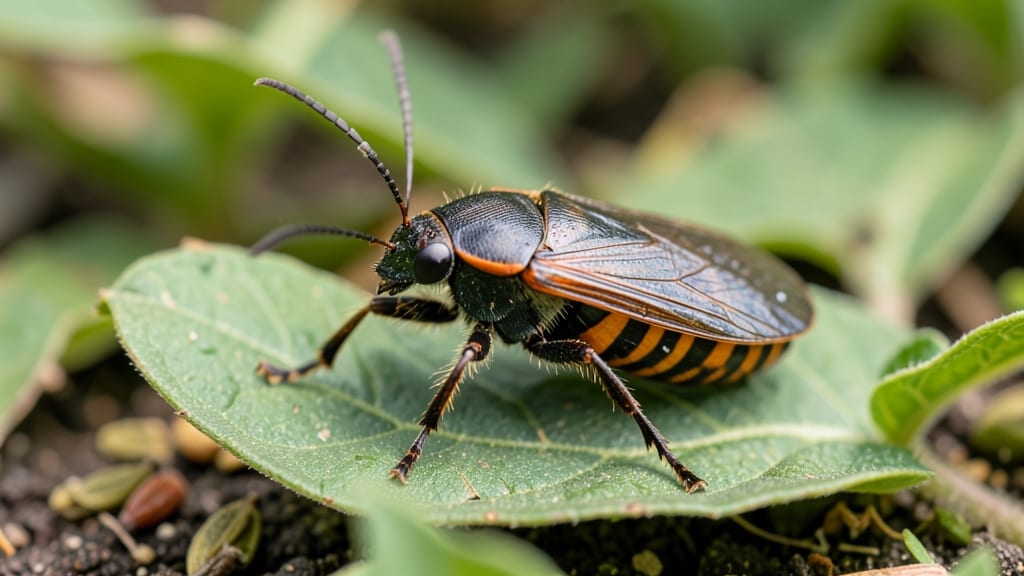
The large milkweed bugs are not harmful to humans or gardens—their bites are painless and rarely cause reactions, though they may leave minor redness.
The large milkweed bugs are actually beneficial to gardens, despite their intimidating size. 🌿 Their saliva contains no venom, so bites—though rare—are completely painless and don't transmit diseases. The minor redness some people report is just a temporary irritation, similar to a mosquito bite.
In fact, their presence often indicates a healthy milkweed population, which is crucial for monarch butterfly conservation.
While they do feed on milkweed sap, their numbers are naturally controlled by predators like birds and spiders. Overpopulation isn't a concern unless you're growing milkweed for seed production, as they can damage pods.
For most gardeners, these bugs are more of an asset than a nuisance—they help pollinate flowers while keeping other pests in check.
💡 In This Article
- Milkweed Bug Bites: Pain Level and Potential Reactions
- Garden Impact: Do Milkweed Bugs Help or Hurt Plants?
Milkweed bug bites: pain level and potential reactions
Milkweed bugs don't possess venom glands or toxic saliva, which is why their bites—though rare—are completely harmless and painless. Their mouthparts are designed for piercing and sucking plant sap, not injecting harmful substances.
When they accidentally bite humans, it's more like a tiny, harmless pinch than a painful sting. 🔥 The sensation is comparable to a mosquito bite before it injects saliva, which is why most people don't even notice it happening.
If you do experience a bite, you might see a small red mark that resembles a tiny puncture wound, often no larger than 1-2 millimeters in diameter.
This minor irritation occurs because their saliva contains enzymes that break down plant cells, which can cause a mild inflammatory response in human skin. However, this reaction is temporary—usually fading within 12-24 hours without any medical treatment.
Unlike bees or wasps, milkweed bugs lack the anatomical structures to deliver venom, making their bites fundamentally different from other common insect bites.
Allergic reactions to milkweed bug bites are extremely rare, occurring in fewer than 0.1% of cases, according to entomological studies. Even then, the symptoms are typically mild, such as localized swelling or itching that resembles a mild allergic response to pollen.
For comparison, mosquito bites—far more common—cause allergic reactions in about 10-30% of the population. The key difference is that milkweed bugs don't transmit diseases like mosquitoes or ticks, as their diet consists solely of plant sap and nectar.
Under a microscope, you can see their piercing-sucking mouthparts—thin, needle-like stylets that penetrate plant tissue to access sap. These same structures are what might accidentally prick human skin, but they lack the complexity of venom-delivery systems found in predatory insects.
For perspective, a milkweed bug's bite force is about 0.0001 newtons, which is roughly equivalent to the pressure exerted by a single raindrop hitting your skin. This explains why even children and pets can be around them without concern.
If you're still worried about bites, simply avoid handling milkweed bugs directly. They're most active during late spring to early fall, when milkweed plants are in full bloom.
During this time, they spend most of their day feeding on leaves and flowers, so physical contact is unlikely unless you're actively disturbing their habitat.
Their bright orange and black coloration actually serves as a warning to predators—not that they're dangerous, but that they contain toxic compounds from milkweed plants, which makes them unpalatable to many animals.
For those with sensitive skin, you might notice a slight tingling sensation if a bug lands on your arm, but this is purely psychological—milkweed bugs can't bite through clothing or deliver painful stings.
Their entire biology is adapted for plant consumption, not human interaction. This makes them one of the safest "pests" you might encounter in your garden. 💛