
Pests
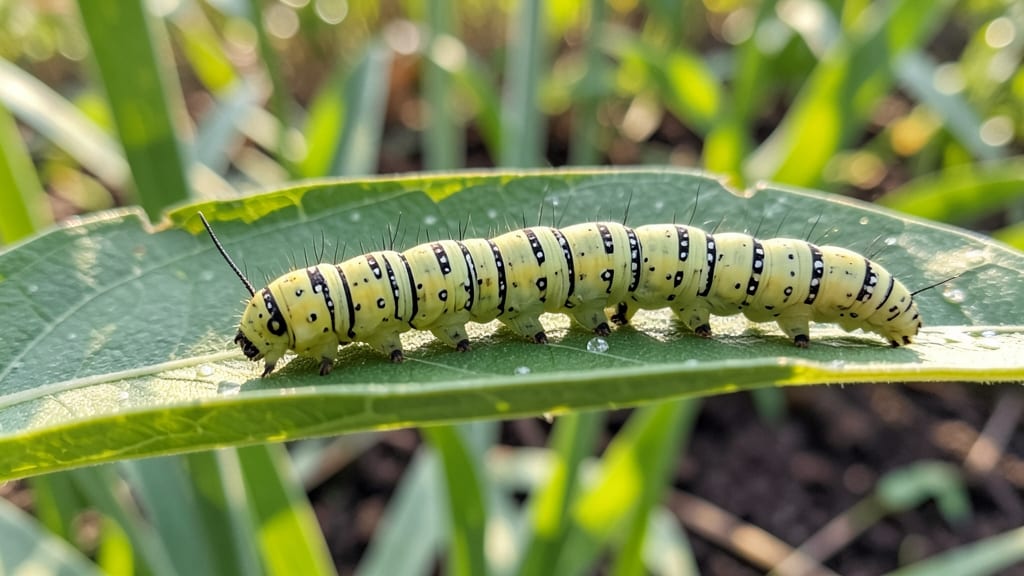
Milkweed butterfly caterpillars thrive by feeding exclusively on milkweed plants, developing bright orange-black stripes as a warning to predators, and undergoing four distinct life stages—egg, larva, pupa, and adult butterfly—each with unique survival adaptations.
These striped larvae aren't just picky eaters—they've evolved alongside milkweed for millions of years, developing resistance to its toxic sap, which would poison most insects. 🔥 The bold black-and-orange stripes serve as a visual "warning label" to predators like birds, signaling that their meal would be toxic.
What's fascinating is how each stage of their life cycle builds on these adaptations, from the microscopic eggs laid on milkweed leaves to the fully formed butterflies that carry these toxins into adulthood.
Understanding their life cycle helps explain why they're such specialized survivors. The caterpillars' spines aren't just for show—they make them harder to swallow, while their bright coloration acts as nature's version of a poison warning sign.
This entire process creates a perfect example of evolutionary arms races in action, where both plant and insect have developed increasingly sophisticated survival strategies over time.
💡 In This Article
- How Milkweed Butterfly Caterpillars Adapt to Their Host Plant
- Gardening Tips to Attract and Support Milkweed Butterfly Caterpillars
How milkweed butterfly caterpillars adapt to their host plant
The milkweed plant's chemical arsenal begins with cardenolides, a group of heart-damaging toxins that would kill most herbivores. These compounds disrupt sodium-potassium pumps in animal cells, causing fatal cardiac arrhythmias.
Yet milkweed caterpillars not only tolerate these toxins but actually sequester them in their own bodies, storing them in specialized cells called uricoid glands along their backs. This chemical storage system makes them unpalatable to predators while simultaneously providing a survival advantage during their larval stage.
The caterpillars' bright orange-black striped pattern serves as a visual warning system called aposematism, a survival strategy where toxic animals advertise their danger through conspicuous coloration. Studies show that birds exposed to just one toxic meal will remember and avoid similarly marked prey.
The caterpillars' spiny projections add another layer of defense—these tiny hooks make them difficult to swallow whole, giving predators additional time to reconsider their meal choice. Interestingly, these spines aren't venomous but create physical discomfort that reinforces the chemical warning.
The evolutionary relationship between milkweed and its caterpillars represents a classic example of coevolution, where two species drive each other's adaptations. Milkweed has developed increasingly potent toxins over time, while caterpillars have evolved specialized enzymes like P450 monooxygenases to metabolize these compounds.
This biochemical arms race has led to milkweed species producing over 100 different cardenolides, each requiring specific detoxification pathways in the caterpillars. The result is a host-plant relationship so specialized that most monarch caterpillars will starve if deprived of milkweed.
What's particularly fascinating is how these adaptations persist through metamorphosis. The toxins stored during the larval stage are transferred to the adult butterfly, where they continue to serve as a deterrent.
This means even the adult monarch butterfly carries the same chemical warnings it developed as a caterpillar, creating a continuous cycle of protection across its entire life cycle.
The caterpillars' ability to process milkweed's toxins at concentrations 100 times higher than would be lethal to other insects demonstrates an extraordinary biochemical specialization.
This symbiotic relationship extends beyond just survival—it creates a feedback loop where milkweed plants benefit from caterpillar activity. While feeding, caterpillars stimulate plant growth through mechanical damage, and their eventual death as pupae returns nutrients to the soil.
Some milkweed species even produce higher toxin levels when caterpillars are present, suggesting the plant can detect and respond to herbivore activity. This two-way adaptation explains why milkweed and monarch butterflies are found nowhere else in the world except in regions where they've coevolved for millions of years.