
Planting
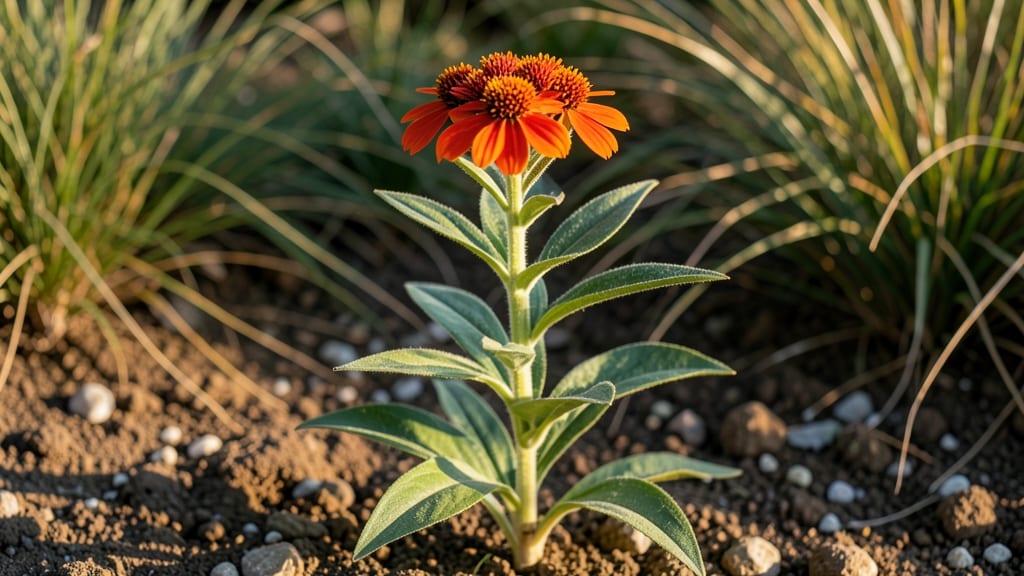
A milkweed plant looks like a tall, fuzzy-stemmed perennial with broad, oval leaves and showy clusters of pink, purple, or white blooms. Its signature spiky seed pods burst open to release fluffy white seeds, and the plant often stands 1-5 feet high with a milky sap when damaged.
A milkweed plant's most recognizable features are its hairy stems and distinctive leaves, which are usually 3-8 inches long with a slightly waxy finish. 🌿 The flowers—often clustered in rounded groups—attract monarch butterflies, while the seed pods develop into iconic spiky spheres that split open when mature.
Unlike many plants, milkweed's milky sap is a dead giveaway when you brush against it, leaving a sticky residue on your fingers. These traits make it easy to spot in meadows, roadsides, or butterfly gardens during late spring to summer.
The plant's height varies by species, with common milkweed reaching 3-5 feet and swamp milkweed sometimes towering up to 5 feet.
Each leaf has a unique vein pattern that looks almost like a network of tiny rivers, and the stems often have a downy texture that feels soft to the touch.
This combination of fuzzy stems, broad leaves, and fluffy seed pods creates a look that's hard to confuse with other wildflowers.
💡 In This Article
- Identifying Milkweed by Leaf, Flower, and Stem Characteristics
- Milkweed Seed Pods and Their Role in Butterfly Gardens
Identifying milkweed by leaf, flower, and stem characteristics
Milkweed leaves are the plant's most distinctive feature, typically 3-8 inches long with a lance-shaped form that tapers to a pointed tip.
The edges often have a subtle, wavy texture, and the surface feels slightly waxy when you run your fingers along them. 🌿 What sets them apart is the prominent parallel venation—thick, raised veins that run from the base to the tip, creating a striking pattern that resembles a network of tiny rivers.
These veins give the leaves their signature strength, allowing them to support the plant's weight even in windy conditions.
The flower clusters are another key identifier, growing in umbel-shaped groups (like an umbrella) at the top of the stem. These blooms appear in shades of pink, purple, or white, depending on the species, and each flower has a hooded shape with five petal-like structures.
Common milkweed flowers, for example, have a soft pink hue with a slightly fuzzy texture, while butterfly milkweed flowers are more vibrant, often with a yellowish-green center. The flowers emit a faint, sweet fragrance that attracts pollinators like bees and monarch butterflies.
The stems are equally telling, covered in fine, downy hairs that give them a fuzzy appearance. When you touch them, you'll notice a soft, velvety texture that contrasts with the smoother leaves.
This fuzz isn't just for show—it helps protect the plant from herbivores and reduces water loss. 🌱 The milky sap, which oozes from any broken stem or leaf, is another dead giveaway.
This latex-like substance contains cardiac glycosides, a natural toxin that deters most animals from eating the plant, though monarch butterflies have evolved to tolerate it.
Different milkweed species have subtle variations in these features. For instance, swamp milkweed tends to have broader leaves and taller stems, often reaching 4-5 feet, while butterfly milkweed has smaller, more clustered flowers with a stronger orange tint.
Pay attention to the leaf arrangement—milkweed leaves grow in a whorled pattern around the stem, meaning three or more leaves emerge from the same point, creating a circular effect when viewed from above.
One of the easiest ways to confirm you've spotted milkweed is to look for the combination of these traits: fuzzy stems, waxy leaves with parallel veins, umbel-shaped flowers, and milky sap.
These features work together like a puzzle, making milkweed unmistakable once you know what to look for. 🌸 If you're still unsure, check for the presence of monarch butterfly caterpillars—they only feed on milkweed, so their presence is a foolproof sign you've found the right plant.
Here’s a quick visual checklist to help you identify milkweed in the wild:
- Leaves: Lance-shaped, 3-8 inches long, waxy with parallel veins
- Flowers: Umbel-shaped clusters in pink, purple, or white, hooded petals
- Stems: Fuzzy or downy, milky sap when cut or damaged
- Growth habit: 1-5 feet tall, leaves arranged in whorls