
Landscaping
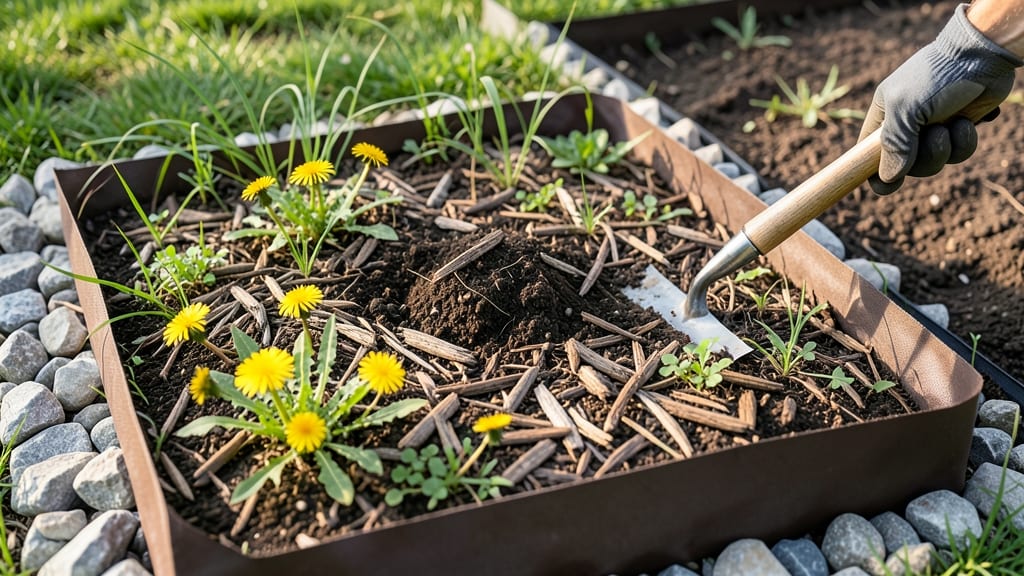
Mulching effectively stops weeds by smothering sunlight to prevent seed germination, suffocating young weeds, and creating a physical barrier that disrupts their growth while maintaining soil moisture for your plants. Organic mulches further improve soil health as they break down.
Weed suppression works through three key mechanisms: light deprivation, physical obstruction, and moisture regulation.
When you apply a 2-4 inch layer of mulch, it blocks 90% of sunlight that weeds need for photosynthesis, effectively starving them. 🌱 The dense layer also prevents weed seeds from reaching the soil surface, while organic options like wood chips or straw slowly decompose, adding nutrients back to the soil.
For maximum effectiveness, combine mulching with regular garden maintenance—removing any weeds that do emerge before they seed.
Unlike herbicides that kill existing weeds, mulch focuses on prevention by creating an inhospitable environment for weed seeds to sprout and grow. This approach is particularly effective in garden beds where you want to maintain a clean, weed-free appearance with minimal chemical intervention.
The right mulch choice depends on your specific needs—organic options like straw or wood chips are ideal for vegetable gardens, while inorganic options such as rubber mulch or landscape fabric work better in high-traffic areas where decomposition isn't desired.
💡 In This Article
- How Mulch Physically and Chemically Blocks Weed Growth
- Best Mulch Types for Weed Prevention in Gardens
How mulch physically and chemically blocks weed growth
Mulch creates a multi-layered defense against weeds by targeting their fundamental needs: sunlight and soil contact. When spread at a 3-inch thickness, organic mulches like wood chips or straw block 95% of sunlight that weed seeds require for germination.
This light deprivation prevents photosynthesis, effectively starving young weeds before they emerge. The dense layer also disrupts weed growth cycles by creating a physical barrier that prevents seeds from making direct contact with soil, where they need moisture and nutrients to sprout. 🌱
The chemical aspect comes into play with organic mulches, which slowly decompose and release natural compounds that inhibit weed seed germination. For example, wood chips release tannins that suppress weed growth, while straw contains allelopathic chemicals that deter weed establishment.
Inorganic mulches like black plastic or landscape fabric work differently—they create a physical barrier that reflects sunlight and raises soil temperatures, creating an environment too hostile for most weed species. Studies show that maintaining 4-inch mulch layers can reduce weed emergence by up to 80% compared to bare soil.
Moisture regulation plays a crucial role in weed suppression. Mulch acts like a protective blanket, reducing soil temperature fluctuations and preventing moisture evaporation. This creates conditions where weeds struggle to establish roots while your desired plants thrive.
Organic mulches like pine straw or shredded leaves improve soil structure over time, adding organic matter that enhances water retention and nutrient availability. The contrast between organic and inorganic mulches is striking: organic options decompose and enrich soil, while inorganic options provide long-term suppression without soil benefits. 🌿
Temperature control is another key factor. Mulch moderates soil temperature swings, keeping it cooler in summer and warmer in winter. Weed seeds often require specific temperature ranges to germinate—typically 60-85°F—and mulch helps maintain temperatures outside these optimal ranges.
For instance, dark-colored inorganic mulches can raise soil temperatures by 5-10°F compared to bare soil, creating conditions that discourage weed seed activation. This thermal regulation effect is particularly effective in regions with extreme seasonal temperature variations.
Consider the practical implications: organic mulches like wood chips or compost provide a 3-5 year weed suppression window as they decompose, while inorganic options like rubber mulch offer 2-3 years of weed control without decomposition.
The choice depends on your garden's specific needs—organic mulches are ideal for vegetable gardens where soil health matters, while inorganic mulches suit high-traffic areas where maintenance is a priority. The key is maintaining consistent mulch depth throughout the growing season to maximize weed suppression effectiveness. 💫
What most gardeners don't realize is that mulch works best when combined with proper soil preparation. Weed seeds already present in the soil can still germinate if they reach the surface, so combining mulch with a pre-emergent herbicide or thorough soil cultivation before mulching creates a more effective weed barrier.
This layered approach ensures that even dormant weed seeds in the soil have minimal chances of sprouting. The science shows that this combination can achieve 90%+ weed suppression in well-maintained garden beds. 🌱