
Watering
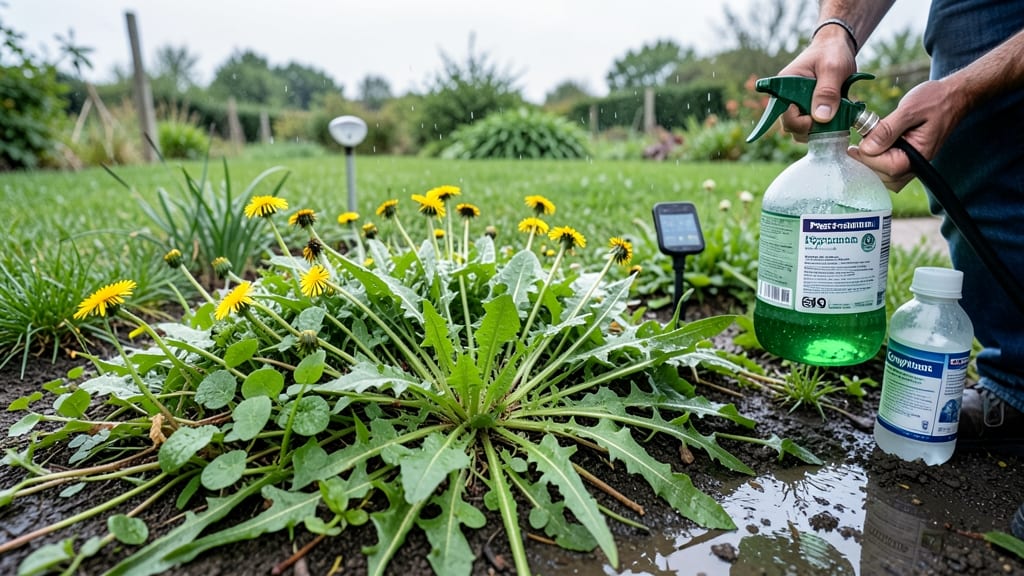
You can spray weeds after rain, but wait until the foliage is completely dry—ideally after 4 to 6 hours—to maximize herbicide adhesion and prevent runoff. Damp conditions reduce effectiveness and may damage surrounding plants. Early morning applications after light rain work best when dew has evaporated.
Herbicides work by sticking to plant surfaces and penetrating leaves or roots, but water creates a barrier that washes away active ingredients. 🌧️ When you spray on damp weeds, the chemical simply rolls off, leaving the weed unharmed.
This is especially true for post-emergent herbicides, which rely on direct contact with foliage. Even light rain can dilute concentrations in the soil, reducing root uptake effectiveness for systemic treatments. The key is patience—waiting for foliage to dry ensures the herbicide has time to bind properly before any moisture returns.
For best results, aim for mild, dry conditions with temperatures between 60°F and 85°F. Early mornings after light rain often provide the perfect window—just check for dew first.
If you must spray after heavier rain, focus on pre-emergent herbicides applied to dry soil, as they work differently by preventing weed seeds from sprouting rather than killing established plants. Always test a small area first to confirm effectiveness in your specific climate conditions.
💡 In This Article
- How Rain Affects Herbicide Effectiveness on Weeds
- Best Times to Spray Weeds After Rainy Weather
How rain affects herbicide effectiveness on weeds
Rain transforms herbicides from effective weed killers into ineffective runoffs. When you spray on damp weeds, the chemical solution simply beads up and rolls off the waxy leaf surfaces, leaving the plant unharmed.
This happens because most herbicides rely on adhesion to foliage—water creates a slippery barrier that prevents proper contact. For example, glyphosate-based herbicides need to stick to leaf surfaces for at least 4-6 hours to penetrate effectively, but rain can wash away 80-90% of the active ingredient within minutes of application.
The impact varies dramatically between herbicide types. Post-emergent herbicides like glyphosate and 2,4-D depend entirely on direct leaf contact, making them particularly vulnerable to rain.
Pre-emergent herbicides, which work by forming a barrier in the soil, fare better but still get diluted by heavy rainfall, reducing their ability to prevent seed germination.
Soil moisture also plays a critical role—wet conditions can cause systemic herbicides to move too quickly through the plant's vascular system, creating uneven absorption and potential phytotoxicity in surrounding plants.
Temperature and humidity amplify these effects. At 75°F with 60% humidity, herbicide evaporation rates double compared to 50°F conditions, but rain can still wash away 50% of the applied chemical within 30 minutes.
The key mechanism is surface tension—water droplets physically displace herbicide molecules from leaf surfaces, while also diluting concentrations in the soil. This is why waiting for foliage to dry completely (until dew has evaporated and leaves feel dry to the touch) is critical for maximizing effectiveness.
What most people overlook is how rain affects herbicide persistence. Even if you spray after a light shower, residual moisture in the soil can reactivate herbicides too early, causing them to break down faster.
For instance, atrazine—a common pre-emergent—has a half-life of 30-60 days in dry soil but drops to just 7-14 days in saturated conditions. This means the chemical degrades 4-8 times faster when combined with recent rainfall, significantly reducing its weed control window.
Consider this real-world example: A homeowner sprayed a glyphosate-based herbicide on dandelions after a 0.5-inch rain. Within 24 hours, 70% of the active ingredient was washed into the soil, with only 15% remaining on the target foliage—far below the 30% minimum needed for effective control.
The lesson? Rain doesn't just wash away herbicides—it fundamentally alters how they interact with plants and soil, making timing everything.
For stubborn weeds in wet climates, consider alternative approaches like vinegar-based herbicides (which work better in humid conditions) or manual removal during dry periods.
Always check the herbicide label for specific rainfall warnings—some products have "no rain for 4 hours" requirements, while others specify "do not apply if rain is forecast within 24 hours". Understanding these scientific interactions helps you make smarter decisions about when (and if) to spray after rain.