
Watering
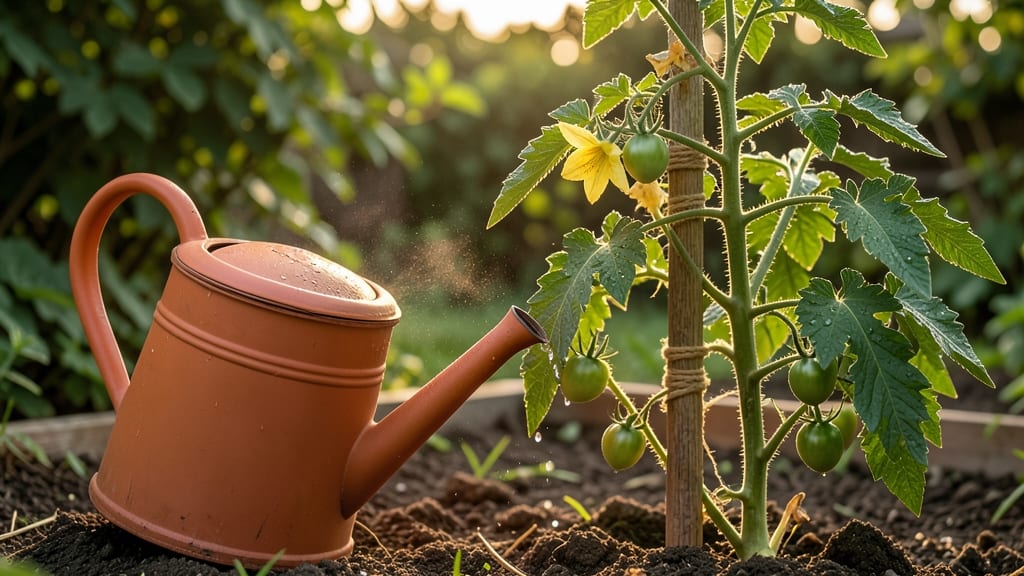
Watering tomato plants every day is a common mistake that can actually stunt their growth and reduce your harvest 🍅 — the key lies in understanding when and how much moisture they truly need.
Overwatering tomato plants is one of the fastest ways to kill your harvest—yet many gardeners still debate whether daily watering is necessary. The truth lies in science, not guesswork, and understanding your plant’s hydration needs can mean the difference between a thriving vine and a wilted disappointment.
Tomatoes need consistent moisture, but not every day. In fact, daily watering can lead to root rot, nutrient leaching, and even blossom-end rot, which ruins your fruit before it ripens. Instead, focus on deep, infrequent watering that encourages strong roots and healthy growth.
In this guide, I’ll break down the science of tomato watering, share a stage-by-stage schedule for optimal hydration, and reveal the most common mistakes that kill plants—so you can keep yours thriving from seedling to harvest.
The science behind tomato plant watering: how often is too often?
Tomato plants thrive on consistent moisture, but daily watering isn't always the answer. The key lies in understanding the root zone dynamics—where roots absorb water and nutrients. When you overwater, you disrupt this balance, leading to oxygen deprivation and harmful conditions like root rot.
Meanwhile, underwatering stresses plants, causing blossom-end rot and stunted growth. The science shows most gardeners water too frequently, not too little.
Your tomato plant’s root system needs space to breathe. Shallow watering encourages roots to stay near the surface, making them vulnerable to drying out. Deep watering, however, promotes roots to grow downward, accessing moisture and nutrients efficiently.
This is why 1-2 inches of water per week (or more in extreme heat) is ideal, not daily sprinkles. Think of it like a sponge—soak it thoroughly, then let it dry slightly before the next drink.
Soil moisture testing is your best friend. Stick your finger 2 inches deep into the soil. If it feels dry, it’s time to water. If it’s damp, hold off. A moisture meter (around $15) takes the guesswork out of it. Overwatering isn’t just about too much water—it’s also about poor drainage. If water pools around your plants, you’ve got a problem. Raised beds or containers with drainage holes solve this issue beautifully.
Daily watering can also leach nutrients from the soil, leaving your tomatoes malnourished. When water evaporates too quickly (like in full sun), it pulls dissolved nutrients away, making them unavailable to your plants. This is why mulching is a game-changer.
A 2-3 inch layer of straw or wood chips keeps soil moist, regulates temperature, and reduces evaporation. It’s like giving your tomatoes a cozy blanket to retain their hydration and nutrients.
Now, let’s talk about the signs of overwatering vs. underwatering. Overwatered tomatoes show yellowing leaves, mushy stems, or a foul smell around the base.
Underwatered plants, on the other hand, have crispy leaf edges, wilting even when watered, and blossom-end rot (a telltale dark spot on the fruit’s bottom). Both extremes stress your plant, but overwatering is the silent killer—it’s easier to spot wilting than root rot creeping underground.
Here’s the hard truth: Daily watering is only necessary in extreme heat (above 90°F) or for container-grown tomatoes. For most gardeners, every other day is sufficient, especially if you’re using mulch. The goal is to keep the root zone consistently moist, not soggy.
Imagine your tomato plant’s roots as a network of straws—if they’re always submerged, they can’t suck up water efficiently. They need a balance of moisture and air.
| Scenario | Frequency | Ideal Soil Moisture | Risks |
|---|---|---|---|
| Daily Watering (General Climate) | Every 24 hours | Consistently damp | Root rot, nutrient leaching, fungal diseases |
| Daily Watering (Extreme Heat) | Every 24 hours (morning only) | Deeply moist | Blossom-end rot if inconsistent |
| Every Other Day (Moderate Climate) | Every 48 hours | Moist 2-3 inches deep | Minimal stress, optimal growth |
| Weekly Watering (Cool Weather) | Every 7 days | Damp but not soggy | Underwatering, stunted growth |
| Container Tomatoes | Every 1-2 days | Consistently moist | Dries out faster; risk of over/underwatering |
The ideal moisture level for tomato roots is like a well-wrung sponge—squeeze it, and a few drops come out, but it’s not dripping. This balance ensures roots have access to water and oxygen. To achieve this, water deeply and infrequently.
Use a soaker hose or drip irrigation to deliver water directly to the root zone, avoiding wet leaves (which promotes disease). Early morning is the best time to water—it gives foliage time to dry before evening, reducing the risk of fungal infections like early blight.
Let’s debunk a common myth: Tomatoes need daily watering to produce fruit. In reality, consistent moisture (not daily watering) triggers fruit set. When soil dries out too much, flowers drop off before setting fruit—a phenomenon called blossom drop.
This is why maintaining even moisture is critical during flowering. If you’re in a drought-prone area, consider installing a rainwater collection system or using hydrogels to slowly release moisture into the soil.
Finally, pay attention to your tomato variety. Determinate tomatoes (like Roma or Celebrity) have shorter growing seasons and need less frequent watering than indeterminate varieties (like Cherry or Beefsteak). Indeterminates keep producing fruit all season, so their water needs are higher.
Adjust your schedule based on your plant’s growth habits and the stage of development. Seedlings need less water than flowering
Optimal watering schedule for tomato plants: frequency by growth stage
Tomato plants don’t need daily watering—consistency matters more than frequency. Their root systems thrive with deep, infrequent watering that encourages strong growth, not shallow, frequent soaks. I’ve learned that overwatering causes root rot and blossom-end rot, while underwatering leads to stunted fruit.
The key is matching your watering to the plant’s growth stage and climate.
Your tomato’s watering needs change dramatically from seedling to fruiting. Seedlings need gentle moisture to avoid damping off, while flowering plants demand steady hydration for pollination success. During fruiting, deep watering ensures juicy tomatoes without cracking.
Adjusting for your climate zone—whether arid or humid—fine-tunes this schedule further. Let’s break it down by stage so you can water with confidence.
- 1 Seedling Stage (0-3 weeks): Water every 1-2 days with 1/4 inch of water. Use a spray bottle or gentle stream to keep soil moist but not soggy.
- 2 Vegetative Stage (3-6 weeks): Increase to 1-2 inches per week, watering deeply every 2-3 days. Focus on the root zone to encourage downward growth.
- 3 Flowering Stage (6-8 weeks): Water every 1-2 days with 1-2 inches to support pollination. Avoid wetting flowers to prevent disease.
- 4 Fruiting Stage (8+ weeks): Provide 1.5-2 inches per week, watering deeply every 2-3 days. Mulch to retain moisture and prevent fruit cracking.
- 5 Climate Adjustments: In arid zones, water daily in peak heat; in humid areas, reduce to every 3-4 days to prevent fungal issues.
For deep-watering, use a soaker hose or water at the base until moisture reaches 6-8 inches deep. I’ve found that mulching with straw or grass clippings reduces evaporation by 30-50%, cutting water needs.
Test soil moisture by sticking your finger 2 inches deep—if it’s dry, it’s time to water. In containers, check daily since pots dry out faster.
Adjust your schedule based on weather patterns. After heavy rain, skip watering for 2-3 days to avoid waterlogged soil. In extreme heat (above 90°F), increase frequency to every other day to prevent wilting.
I’ve seen blossom-end rot disappear within a week when I corrected inconsistent watering during fruiting. Stay consistent, and your tomatoes will reward you with plump, flavorful fruit.
Remember, morning watering is ideal—it gives foliage time to dry, reducing fungal diseases like early blight. If you’re unsure, observe your plants: wilted leaves signal underwatering, while yellowing leaves and mushy stems mean overwatering. With this stage-by-stage approach, you’ll master the art of tomato watering in no time.