
How To
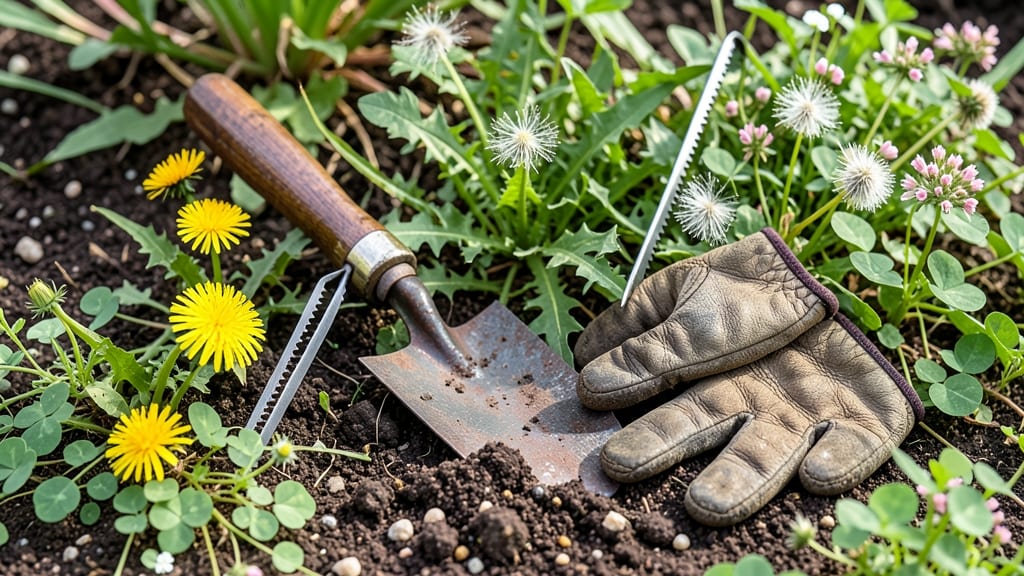
Clearing soil with weeds naturally requires smothering them with thick layers of cardboard, newspaper, or mulch for 2-3 weeks to block sunlight and retain moisture, killing roots without chemicals. This method works best in warm, dry conditions.
This approach works by cutting off weeds' sunlight supply, which disrupts photosynthesis and eventually kills them.
The trapped moisture speeds up decomposition of both weeds and organic layers, turning them into nutrient-rich compost over time. 🌱 I've found that combining this with a thick layer of straw or wood chips helps maintain moisture levels and prevents new weeds from sprouting.
For best results, apply this method in late spring or early summer when weeds are actively growing.
Unlike chemical herbicides, smothering is completely safe for pets, children, and beneficial insects like bees and earthworms. The process also improves soil structure by adding organic matter as materials break down. Just be sure to remove any non-recyclable materials like plastic before layering, as they won't decompose.
💡 In This Article
- How Smothering Works to Eliminate Weeds Permanently
- Best Organic Materials to Smother Weeds in Garden Beds
How smothering works to eliminate weeds permanently
Weeds rely entirely on photosynthesis to produce energy, and smothering cuts off their lifeline by blocking 90-95% of sunlight from reaching their leaves. When you cover weeds with thick layers of organic material, you create a dark, oxygen-deprived environment that disrupts their cellular respiration.
Within 3-5 days, the chlorophyll in weed leaves begins to degrade, turning them yellow—a clear sign photosynthesis has stopped. This process is called "etiolation," where plants stretch toward light but eventually exhaust their energy reserves.
The real magic happens below ground. Without sunlight, weeds can't produce glucose, forcing them to rely on stored energy in their roots. The trapped moisture from the smothering layer accelerates root decay through microbial activity in the soil.
In 2-3 weeks, most weed roots will decompose completely, leaving behind nutrient-rich compost. This contrasts sharply with synthetic herbicides, which often leave toxic residues that can persist for months and harm soil microbes essential for plant growth.
Temperature plays a critical role in how quickly smothering works. In warm conditions (70-85°F), organic materials decompose faster, creating a warmer microclimate that speeds up weed death. The trapped heat also helps break down cellulose in the weed stems, making them softer and easier to remove.
Conversely, in cooler climates, the process may take 4-6 weeks as microbial activity slows down. This is why late spring or early summer is ideal—weeds are actively growing, and soil temperatures are perfect for decomposition.
One common misconception is that smothering only kills the visible parts of weeds. In reality, the entire plant—roots and all—must be eliminated to prevent regrowth. The key is maintaining consistent moisture in the smothering layer. If it dries out, weeds may develop new shoots through gaps.
I've found that adding 2-3 inches of straw on top of cardboard or newspaper helps retain moisture while preventing new weeds from sprouting. This dual action makes smothering far more effective than simply pulling weeds by hand.
For comparison, chemical herbicides like glyphosate work by mimicking amino acids in plants, disrupting their growth at a cellular level. While effective, they can harm non-target plants and soil organisms. Smothering, however, is a passive, non-toxic method that improves soil health over time.
The organic materials you use break down into humus, enhancing soil structure and water retention. This makes smothering not just a weed control method, but a soil enrichment technique—something chemical alternatives can't match.
If you're dealing with particularly tough weeds like bindweed or nutsedge, you may need to extend the smothering period to 4-6 weeks or even use a black plastic tarp for a more aggressive approach. However, for most garden weeds, the standard 2-3 week smothering with organic materials is sufficient.
The beauty of this method is its versatility—it works in flower beds, vegetable gardens, and even between patio stones where weeds are persistent.