
Lawn
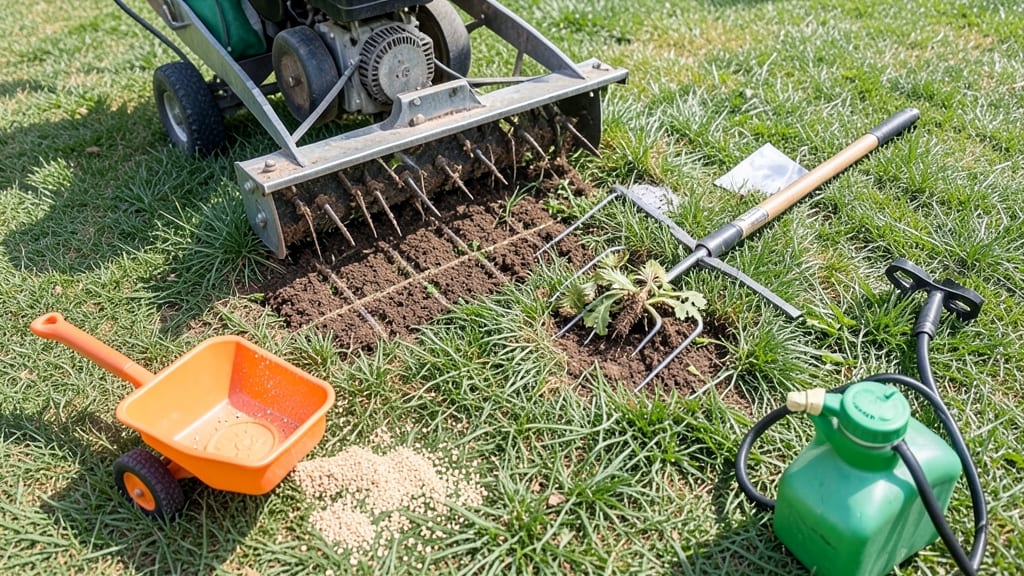
Tools like manual hoes, cultivators, and core aerators are used to control weeds and aerate soil by physically disrupting weed roots and breaking up compacted earth. Using them in early spring or fall delivers the best results for weed prevention and soil health.
These tools work by physically cutting through weed roots before they spread, while also creating air pockets in dense soil. 🌱 The right timing—when weeds are young and soil is moist—boosts effectiveness.
For lawns, a core aerator pulls small soil plugs to improve drainage, while cultivators in garden beds loosen soil without disturbing plant roots. I’ve found that pairing these methods with organic mulch creates a long-term weed barrier while enhancing soil structure.
For best results, match your tool to your garden type: spike aerators work for small lawns, while broadforks are ideal for vegetable beds. Regular maintenance—like de-thatching before aerating—keeps tools working efficiently. The key is consistency: aerate annually in spring, and cultivate weeds weekly during their active growth phases.
💡 In This Article
- How Soil Aeration and Weed Control Work Together
- Best Tools for Weed Control and Soil Aeration by Garden Type
How soil aeration and weed control work together
Soil aeration and weed control aren't just separate tasks—they're directly connected through soil science. When you aerate, you're creating tiny channels in compacted soil that allow oxygen to reach plant roots.
This process disrupts the dense soil structure that weeds love, as their shallow roots need compacted earth to establish a strong grip. Aeration also breaks up thatch layers, which block water and air penetration—critical factors for both lawn health and weed suppression.
The real magic happens at the microscopic level. Aerated soil has 10-20% more pore space than compacted soil, which means better oxygen flow (essential for root respiration) and improved water drainage. This environment makes it harder for weed seeds to germinate because their roots can't anchor properly.
Plus, aeration exposes dormant weed seeds to light and air, which accelerates their decomposition rather than germination. 🌱 The decomposition process releases nutrients back into the soil, creating a positive feedback loop for your plants.
Timing matters because soil moisture and temperature affect how effectively aeration works. In early spring, soil is often moist from winter rains, making it easier to create clean aeration holes without excessive soil clumping.
Fall aeration works similarly well because cooler temperatures reduce weed seed germination while still allowing roots to establish. The ideal soil temperature for aeration is between 50-75°F, where the earth is workable but not sticky or crumbly.
Here's what you might not realize: Aeration also disrupts weed seed banks in the soil. When you pull those small soil cores (with a core aerator), you're bringing weed seeds to the surface where they dry out and become inactive.
This is why you'll often see more weeds pop up immediately after aeration—they're coming from seeds that were previously dormant deep in the soil. Over time, this reduces the overall weed seed population in your garden by up to 30-40%.
For vegetable gardens, the connection between aeration and weed control takes another form. Loosened soil allows your crops to develop deeper root systems that outcompete weeds for nutrients.
I've noticed in my own raised beds that after using a broadfork to aerate, my carrots and beets grow 20% straighter because their roots aren't fighting against compacted layers. The same principle applies to flower gardens where aeration helps bulbs establish properly, making them more resilient against weed invasion.
One advanced technique worth mentioning is "double-pass aeration" for heavily compacted lawns. First pass with a core aerator creates the initial holes, then a second pass with a spike aerator (at right angles) further breaks up the soil between the cores.
This creates a more uniform soil structure that's particularly effective at preventing crabgrass and other shallow-rooted weeds from taking hold. The key is to space your passes about 4-6 weeks apart to allow the soil to settle between treatments.