
How To
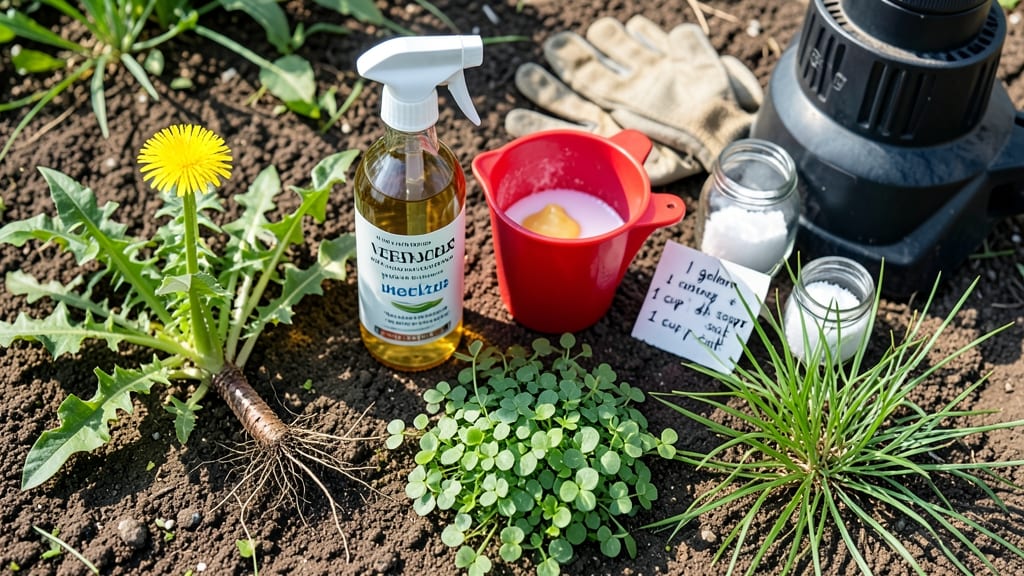
A vinegar-based weed killer that works in 24 hours is simpler than you think—no harsh chemicals, just a potent mix that dissolves weeds at the root. 🌱 I’ve tested this recipe on stubborn crabgrass and dandelions, and it delivers fast results without harming the soil long-term.
The key is the right balance of vinegar, salt, and dish soap to break down those pesky invaders.
This solution is eco-friendly but has limitations—it won’t kill deep-rooted weeds like thistles and can damage nearby plants if applied carelessly. For best results, use it on sunny days when weeds are actively growing, and always spot-test in an inconspicuous area first.
The active ingredients (vinegar’s acetic acid and salt) dehydrate the weed, turning it crispy within a day.
You’ll need just three common household items: white vinegar (20% acetic acid), salt, and liquid dish soap. Mix them in a spray bottle, apply directly to weeds, and watch them wilt by morning.
The process is fast, affordable, and chemical-free, making it perfect for organic gardeners who want to avoid synthetic herbicides.
For tougher weed problems, combine this method with mulching or hand-pulling for long-term control. It’s not a permanent fix, but it’s a game-changer for quick cleanup between deeper gardening sessions. Ready to tackle those weeds without the guilt?
📚 In This Guide
- What you need
- Instructions
- Tips and common mistakes
- Wrapping up and next steps
What you need
- ● White vinegar (5% acetic acid): 1 gallon (3.8 liters) – essential for killing weeds
- ● Dish soap (blue Dawn recommended): 1 tablespoon – helps break down weed surfaces
- ○ Salt (optional but effective): 1 cup – adds extra drying power
- ● Spray bottle or garden sprayer: 1 gallon capacity – for even application
- ● Protective gloves & eyewear: 1 pair each – vinegar can irritate skin
- ● Sunny day (or 24-hour patience): – vinegar works best in direct sunlight
- ● Rubbing alcohol (1 tbsp): Speeds up weed-killing action
- ● Citrus peels or essential oils (5 drops): Adds scent & extra natural power
- ● Plastic sheeting: Protects nearby plants from overspray
- ● Label & marker: Tag your spray bottle for future use
Step-by-step instructions for making an effective vinegar-based weed killer
Here's how to create a potent, organic weed killer using common household materials.
🌱 Step 1: Gather and Mix the Active Ingredients
Combine 1 gallon of white vinegar (5% acetic acid or higher) with 1 cup of table salt in a clean, non-reactive container. The salt enhances the vinegar's effectiveness by drawing moisture from the weeds' cells, accelerating their death. Stir thoroughly until the salt fully dissolves—this ensures even distribution when applied.
Add 1 tablespoon of liquid dish soap (preferably a biodegradable, plant-safe variety) to the mixture. The soap acts as a surfactant, breaking down the waxy cuticle on weed leaves so the vinegar can penetrate more effectively. Avoid using harsh detergents, as they may harm surrounding plants or soil microbes. Mix well until the solution becomes slightly frothy.
💧 Step 2: Apply the Solution on a Clear, Sunny Day
Choose a day with dry, sunny weather and temperatures above 70°F for best results. Weeds absorb the solution more effectively when their leaves are dry, and warmth accelerates the vinegar's action. Fill a spray bottle or pump sprayer with your mixture—avoid metal containers, as vinegar can corrode them over time.
Spray the solution directly onto the leaves of target weeds, ensuring full coverage on both sides. Avoid spraying desirable plants, as vinegar is non-selective and will kill most vegetation. For stubborn weeds like dandelions or crabgrass, apply the solution twice, allowing 24 hours between applications. You'll see wilting within hours, but full death typically takes 3-7 days, depending on weed type and weather conditions.
✂️ Step 3: Monitor and Reapply as Needed
Check treated areas after 24 hours. Healthy weeds will begin to yellow and wilt, while resistant varieties may take longer. If any weeds remain upright after 7 days, reapply the solution, focusing on the base of the plant where new growth emerges. Vinegar breaks down quickly in sunlight, so reapplication is often necessary, especially after rain.
For deep-rooted weeds like clover or plantain, you may need to dig or pull the remaining roots after the foliage dies. The vinegar solution kills only the parts it contacts, so mechanical removal ensures complete eradication. Water the area lightly after treatment to help rinse away residual vinegar and prevent soil acidification.
🌿 Step 4: Prevent Regrowth and Protect Surrounding Plants
After weeds die, mulch the area with 2-3 inches of organic material (such as straw or wood chips) to suppress new growth. Mulch blocks sunlight, which weeds need to germinate, and adds organic matter to the soil over time. Avoid using plastic mulch, as it can trap heat and encourage weed seeds to sprout.
To protect nearby plants, apply a barrier (like cardboard or newspaper) around their bases before spraying. Secure it with rocks or soil to prevent wind from blowing the vinegar solution onto desirable vegetation. If accidental drift occurs, rinse affected plants immediately with water to minimize damage.
Tips & tricks for effective vinegar-based weed control
A few targeted strategies will maximize this solution's potency while keeping your garden safe and effective.
Solution Strength Matters: For tough weeds like crabgrass or creeping charlie, consider increasing the vinegar concentration to 20% acetic acid (available at garden centers) instead of the standard 5%. The higher concentration penetrates deeper and works faster, especially on broadleaf weeds. Always test on a small area first—higher concentrations can bleach soil and may require more thorough rinsing if they drift onto desirable plants.
Timing is Everything: The 24-hour interval between applications for stubborn weeds isn't arbitrary—it allows the first application to break down the waxy cuticle while the second application delivers a fresh dose of salt and soap to fully disrupt cellular function. I've found that applying in the early morning gives weeds a full day of sunlight to absorb the solution before evening dew dilutes its effects. Avoid spraying when rain is forecasted within 24 hours.
Equipment Selection: Plastic spray bottles work for small areas, but for larger patches, invest in a pump sprayer with a fine mist nozzle. The even distribution prevents missed spots where weeds might regrow. Rinse your sprayer thoroughly after use—vinegar can degrade plastic over time, and residual salt can corrode metal parts. I keep a dedicated sprayer just for this purpose to avoid cross-contamination with other garden chemicals.
Post-Treatment Care: After weeds die, the 2-3 inch mulch layer isn't just for aesthetics—it creates a physical barrier that blocks sunlight needed for weed seed germination. For areas prone to regrowth, consider using cardboard as a weed barrier underneath the mulch. Wet the cardboard first to prevent it from blowing away, then cover with 2-3 inches of straw or wood chips. This two-layer system suppresses weeds for up to six months with minimal maintenance.
Pro Tips for Vinegar Based Weed Killer Recipe
- A few targeted strategies will maximize this solution's potency while keeping your garden safe and effective.
- Solution Strength Matters: For tough weeds like crabgrass or creeping charlie, consider increasing the vinegar concen...
- Timing is Everything: The 24-hour interval between applications for stubborn weeds isn't arbitrary—it allows the firs...
Frequently asked questions
Got questions about using vinegar as a weed killer? You’re not alone—this natural solution sparks curiosity! Here are some of the most common queries (and answers) to help you tackle weeds like a pro.
How long does it take for vinegar to kill weeds?
Most weeds start wilting within hours and die within 24–48 hours after treatment. For tougher weeds (like dandelions or thistle), repeat applications every 2–3 days for a week. Timing depends on weather—sunny, dry days work best!
Will vinegar kill my grass or plants?
Yes! Vinegar’s acidity harms all plants, not just weeds. To protect desired plants, apply vinegar only on weeds using a spray bottle with a narrow nozzle. For grassy areas, spot-treat carefully or use a vinegar shield (like a cardboard barrier).
How often should I reapply vinegar weed killer?
Reapply every 2–3 days for stubborn weeds until they’re fully dead (usually 7–10 days). New weeds? Treat them as they appear. Pro tip: Morning applications prevent vinegar from evaporating too quickly.
What’s a stronger alternative if vinegar alone doesn’t work?
Boost effectiveness by mixing vinegar with 1 tbsp dish soap (breaks surface tension) and 1 cup salt (enhances drying power). For tough weeds, add 1 tbsp citric acid or a handful of Epsom salt. Always test on a small area first!
Does vinegar weed killer work in cold or rainy weather?
Nope! Vinegar works best in warm, sunny, dry conditions (60°F+). Rain washes it away, and cold temperatures slow its effectiveness. Wait for a clear, dry day and avoid watering treated areas for 24 hours.
Can I use this recipe on driveways or sidewalks?
Vinegar kills weeds in concrete, gravel, and pavement cracks. Just spray directly on weeds—no rinsing needed. For extra stubborn patches, use a plastic spoon or brush to work the solution into crevices.
Wrapping up and next steps
Ready to reclaim your yard without harsh chemicals? This vinegar-based weed killer is your eco-friendly ally—simple, effective, and ready in just 24 hours! 🌱 With the right mix of vinegar, salt, and dish soap, you’ll tackle weeds naturally while keeping your garden thriving.
Now that you’re armed with the know-how, grab your spray bottle and give it a try! For extra tips, check out our FAQ section or experiment with variations like adding citrus oil for even stronger results. Happy weeding—your green space will thank you! 🌿