
Watering
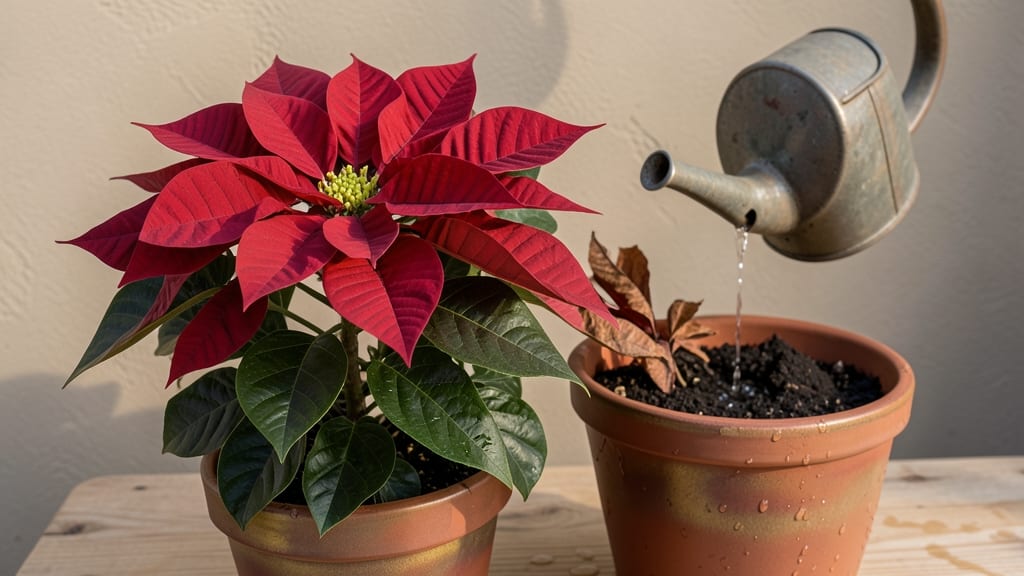
Watering a poinsettia 🎄 is all about balance—too much or too little, and those glossy leaves start to droop faster than holiday decorations after New Year’s.
Struggling with droopy poinsettia leaves? The secret isn't just how much you water—it's when and how you do it. Mastering this holiday plant's hydration needs keeps it vibrant all season long.
Most of us overthink it, but the real trick is simple: check the soil before you water. Stick your finger an inch deep—if it feels dry, it’s time.
If it’s still damp, wait a few more days. This small habit saves your poinsettia from the two biggest killers: root rot and thirst.
Below, I’ll walk you through the exact watering schedule, seasonal tweaks, and what those droopy leaves are really trying to tell you—so you can keep your poinsettia looking fresh from Thanksgiving through Valentine’s Day.
How often to water poinsettias for healthy growth
Poinsettias thrive when their watering routine matches their natural needs—not when you follow a rigid schedule. These vibrant holiday plants prefer consistent moisture without soggy soil, which can lead to root rot or wilting.
The key is understanding seasonal adjustments and soil moisture tests to keep your poinsettia lush and healthy year-round. Unlike outdoor plants, poinsettias rely entirely on you for hydration, so getting this right makes all the difference in their longevity.
Most gardeners make the mistake of watering on a strict weekly schedule, but poinsettias need flexibility. Indoor environments—especially during winter—can dry out soil faster than you think, while summer humidity may slow evaporation. The solution? Check the top inch of soil before watering.
If it feels dry, it's time; if it's still damp, wait a few days. This simple test prevents both overwatering and underwatering, two common culprits behind droopy leaves.
🌱 Did You Know? Poinsettias store water in their stems, which helps them survive brief dry spells. However, this adaptation doesn’t mean they’re drought-tolerant—consistent moisture is still critical for vibrant foliage and blooms. Over time, I’ve learned that morning watering is ideal because it allows excess moisture to evaporate during the day, reducing the risk of fungal issues. Avoid watering at night, as damp leaves can attract pests like spider mites.
| Season | Watering Frequency | Soil Moisture Test | Signs of Stress |
|---|---|---|---|
| Spring | Every 5-7 days | Top inch dry | Yellow leaves = overwatering |
| Summer | Every 7-10 days | Top 1-2 inches dry | Crispy leaf edges = underwatering |
| Fall | Every 7-10 days | Top inch dry | Stem wilting = dehydration |
| Winter | Every 10-14 days | Top 1-2 inches dry | Brown patches = overwatering |
During spring and summer, poinsettias enter their active growth phase, which means they’ll drink more water. This is when you’ll notice the soil drying out faster, often within 5-7 days.
Use your finger to check moisture levels—if the soil feels dry up to your first knuckle, it’s time to water. For deep watering, pour enough water until it runs out the drainage holes. This ensures the roots get the hydration they need without sitting in standing water.
As temperatures drop in fall and winter, poinsettias slow their growth, reducing their water needs. This is a common pitfall for gardeners who don’t adjust their routine. In winter, the soil may stay moist for 10-14 days, so check it carefully before watering.
Overwatering during this dormant period can lead to root rot, which is often fatal. If you notice yellowing leaves or a foul smell from the soil, your poinsettia is crying out for help—reduce watering immediately and repot it in fresh, well-draining soil.
Another pro tip I’ve picked up over the years is to use room-temperature water. Cold water can shock the roots, causing stress and stunted growth. Always let tap water sit out for a few hours before using it, especially in winter when pipes deliver frigid water.
Additionally, avoid getting water on the leaves and bracts, as this can cause unsightly spots and encourage fungal growth. Watering at the base of the plant keeps everything clean and healthy.
Signs of overwatering include yellowing leaves, mushy stems, and a musty smell from the soil. If you see these, stop watering for a few days and let the soil dry out. For underwatering, look for crispy leaf edges, wilting, and soil that pulls away from the pot’s sides.
In both cases, adjust your watering schedule and monitor the plant closely. Remember, poinsettias are resilient, but they need your attention to bounce back from stress.
To keep track of your poinsettia’s hydration needs, I recommend keeping a simple garden journal. Note the date, how much you watered, and any changes in the plant’s appearance. Over time, you’ll recognize patterns—like how your poinsettia reacts to humidity levels or indoor heating.
This personal record becomes your best tool for maintaining a thriving plant. With a little practice, you’ll master the art of watering and enjoy your poinsettia’s vibrant colors for years to come.
Finally, don’t forget that <
Common poinsettia watering mistakes that cause drooping
When your poinsettia starts looking sad with droopy leaves, it's often a cry for help—not from pests or diseases, but from watering mistakes. These vibrant holiday plants are surprisingly sensitive to hydration habits that seem harmless at first glance.
The key is understanding the subtle differences between root rot, dehydration, and temperature-induced stress, all of which mimic each other with wilting symptoms.
I've seen gardeners accidentally turn their poinsettia into a science experiment by guessing water needs. The truth? These plants thrive on consistency, not guesswork. A quick soil check with your finger can prevent 90% of drooping problems before they start.
Let's uncover the most common watering errors and how to spot them early.
⚠️ Warning: Poinsettia Watering Red Flags
Yellowing leaves + mushy stems = overwatering (root rot risk). Crispy edges + dry soil = underwatering. Sudden droop after drafts = temperature shock. Each requires different fixes!
Let's start with the silent killer: overwatering. Most people assume poinsettias need constant moisture like tropical plants, but their roots suffocate in soggy soil. The classic mistake? Using decorative pots without drainage holes.
I've had clients repot their plants mid-season after noticing blackened stems and moldy soil—clear signs of root rot. Always check for drainage holes before buying a new pot.
On the flip side, underwatering creates its own drama. Your poinsettia might look fine until you go on vacation for a week. Return to find crispy leaf edges and soil pulling away from the pot edges.
The fix? Water deeply until it runs out the drainage hole, then wait until the top 1-2 inches of soil feel dry. Pro tip: Use a moisture meter for accuracy—no more guessing!
Temperature shocks often get blamed on watering problems, but they're completely separate. Place your poinsettia near heating vents or drafty windows? The sudden temperature swings cause leaves to wilt overnight.
I've seen this happen most in December when homes get extra dry from holiday heating. Move your plant to a stable 65-75°F area and watch it perk up within 24 hours.
Here's how to diagnose each issue quickly: Gently squeeze the soil—if it feels like a damp sponge, you're overwatering. If it crumbles like dust, it's time to water.
For temperature stress, check the leaf undersides—if they're dry and papery, move the plant away from heat sources immediately. These simple checks save countless poinsettias every year!
Remember, your poinsettia's care routine should adapt with the seasons. Winter months mean less frequent watering, while spring growth signals it's time to increase hydration. The goal is consistent moisture, not a rigid schedule. With these fixes, your poinsettia will stay lush and vibrant well beyond the holidays. 🎄