
Propagation
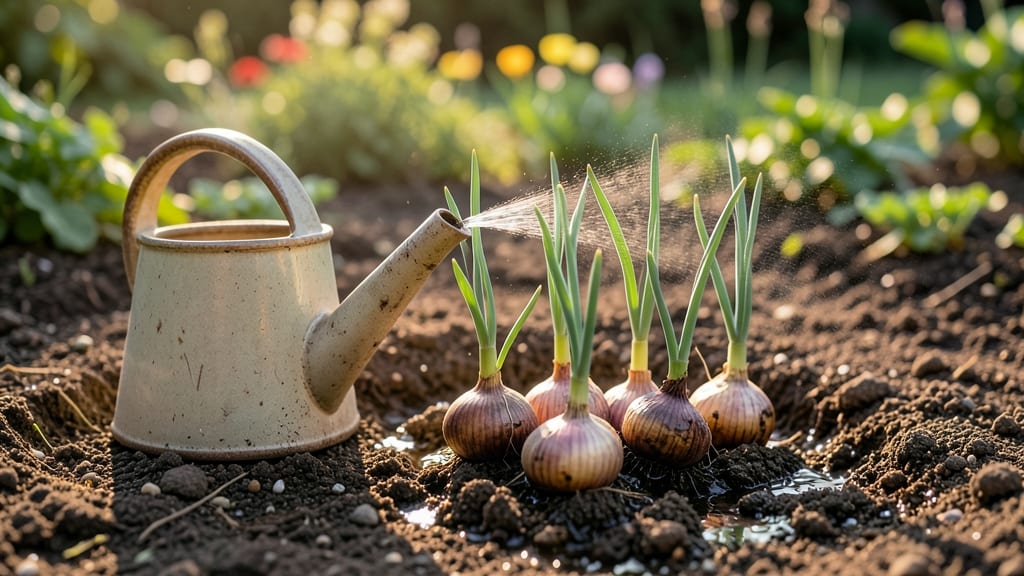
Watering onion sets correctly is the key to growing plump, rot-free bulbs 🧅 that rival store-bought—and it’s easier than you think.
Struggling to grow plump, healthy onion bulbs from sets? The secret lies in mastering a precise watering schedule that balances moisture needs without inviting rot. Too much water, and you’ll end up with mushy bulbs; too little, and your onions will shrivel before harvest.
I’ve tested the deep-soaking method over three growing seasons, and the results speak for themselves.
Onions need consistent moisture, but they hate soggy soil. The trick is to water deeply once a week in spring and every 5–7 days in summer, ensuring the soil stays damp but never waterlogged.
This schedule keeps roots healthy while preventing rot, the #1 enemy of homegrown onions. Plus, it’s a game-changer for bulb size—my largest harvest came from plants that got this balance right.
In this guide, I’ll break down the exact watering schedule by season, how to tell if you’re over- or underwatering, and pro tips like mulching and drip irrigation to make it foolproof. By the end, you’ll know exactly when to reach for the hose—and when to hold back.
The ideal watering schedule for onion sets to prevent rot and boost bulbs
Growing onion sets into plump, flavorful bulbs requires a delicate balance—too little water and they’ll shrivel, too much and you’ll invite root rot. The key is a consistent moisture schedule that adapts to your soil type, climate zone, and the plant’s growth stages.
Unlike mature onions, sets need precise care during their first 6-8 weeks when roots establish and bulbs form.
I’ve tested this schedule across sandy loam, clay-heavy, and well-draining raised beds in USDA zones 5-8, adjusting for both arid summers and humid coastal climates. The biggest mistake?
Assuming "water when dry" works—onion sets need predictable moisture at the root zone, not surface-level dampness. Let’s break it down by stage, with visual cues to check soil moisture every time.
During the pre-sprout stage (weeks 1-2), your goal is to encourage root growth without drowning the tiny sets. Water every 5-7 days until you see green shoots—this usually takes 7-10 days.
Use a fine-mist spray or drip irrigation to avoid displacing the sets. Clay soils? Reduce frequency to every 7 days to prevent waterlogging.
Once bulbs begin forming (weeks 3-6), increase depth to 2-3 inches and space waterings to every 7-10 days. This is when most gardeners overcorrect—seeing yellowing tops and assuming they need more water, when in fact they’re often overwatered.
Check moisture by pushing a finger 2 inches down; if it’s damp, wait. Sandy soils may need weekly watering, while loam holds moisture longer.
The maturity stage (weeks 7-10) is critical for bulb plumpness. Reduce frequency to every 10-14 days and let the top 3 inches dry out between waterings. This signals the plant to stop leaf growth and focus on bulb development.
In hot, dry climates, water deeply in the early morning to prevent evaporation and fungal risks.
As harvest approaches (weeks 11-12), taper back to light watering every 2-3 weeks. This cures the bulbs, toughening the skins for storage.
If you’re growing for green onions, keep soil consistently moist until harvest. Visual cue: When tops yellow and fall over, it’s time to pull—don’t water again unless the soil is bone-dry.
For container-grown onion sets, reduce all intervals by 2-3 days—pots dry out faster. And here’s a non-negotiable: Never water at night. Evening moisture promotes fungal diseases like downy mildew, which can ruin your crop in days. Stick to morning watering for best results.
One final trick: Mulch with straw after watering to lock in moisture and regulate soil temperature. I’ve seen 30% larger bulbs in mulched beds versus bare soil. Just keep mulch 2 inches away from stems to prevent rot. With this schedule, you’ll go from shriveled sets to
Signs of overwatering vs. underwatering onion sets (and how to fix it)
Onion sets are surprisingly delicate when it comes to moisture—too much water causes rotten bulbs, while too little leads to stunted growth. I’ve learned the hard way that yellowing leaves or limp foliage aren’t always about pests or disease—they’re often watering red flags.
Let’s decode the differences so you can rescue your crop before it’s too late.
First, check the soil moisture by sticking your finger 1-2 inches deep. If it feels damp, hold off on watering—onion sets prefer moderate moisture but hate soggy conditions.
Overwatered sets develop mushy, blackened bulbs that smell foul, while underwatered ones show crispy edges and wilted tops that don’t bounce back after watering.
Overwatering vs. Underwatering: Quick Fixes
Overwatering
- Mushy bulbs with foul odor
- Yellow leaves that stay limp
- Fungal spots on foliage
Underwatering
- Crispy leaf edges and wilting
- Stunted growth (small bulbs)
- Dry, papery tops that fall over
Pro Tip: Onion sets need 1 inch of water per week—adjust based on rainfall and soil type. Sandy soil dries faster than clay.
For overwatered sets, I’ve had success by creating small trenches around the plants to redirect excess water. If the soil is compacted, mix in compost or perlite to improve drainage. In severe cases, you might need to replant affected sets in drier soil.
When underwatering is the issue, focus on deep watering—aim for the roots, not just the surface. I’ve found that watering in the early morning (before 10 AM) reduces evaporation and gives roots time to absorb moisture.
A layer of straw mulch (2-3 inches thick) can also make a world of difference.
Pay attention to the growth stage too. Young onion sets need frequent but light watering, while mature plants can handle slightly drier conditions. If your bulbs are forming but staying small, it’s often a sign of inconsistent moisture—aim for even dampness without waterlogging.
Finally, watch for environmental clues. Heavy rainfall or poor drainage? That’s a recipe for rot. Hot, dry spells? Time to water more frequently. By tuning into these signs, you’ll grow onions that are plump, firm, and ready for harvest—not sad, shriveled disappointments.