
How To
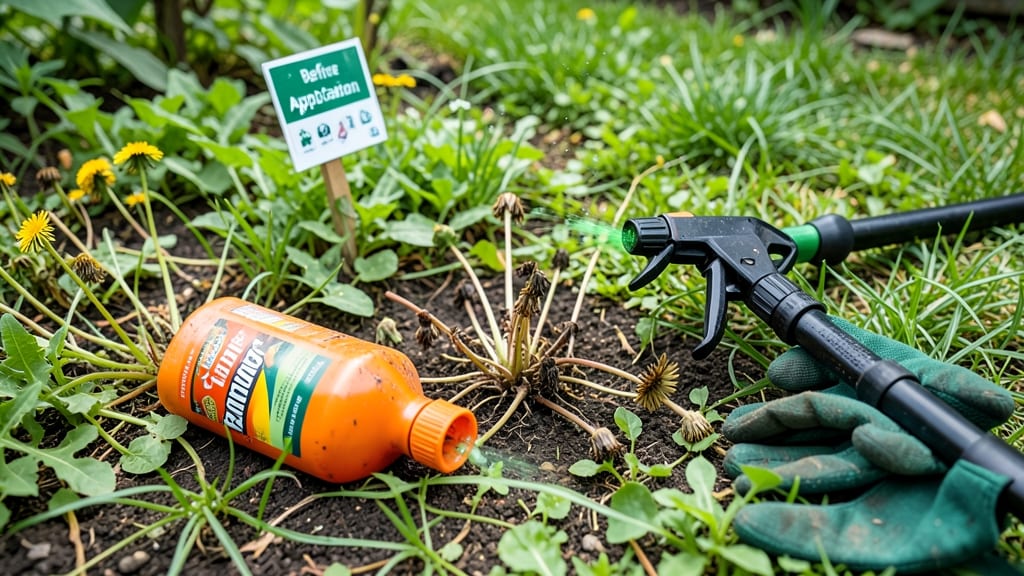
Non-selective weed killers kill any plant they touch—grass, flowers, shrubs, and trees—by disrupting essential cellular functions like photosynthesis. These heavy-duty chemicals excel at clearing overgrown areas but demand precision to protect unintended vegetation and soil ecosystems.
Non-selective weed killers work by targeting a broad spectrum of plant life, often through active ingredients like glyphosate or 2,4-D. These chemicals interfere with plant growth hormones, causing rapid cell death across all contacted foliage. 🌱 While effective for large-scale clearing, they can linger in soil, potentially harming future plantings if not used carefully.
Always follow label instructions for dilution and protective gear to minimize risks.
For targeted areas, consider spot-treating with vinegar-based solutions as a safer alternative. Timing matters too—apply on calm, dry days to prevent drift, and avoid spraying near desirable plants. Understanding these mechanisms helps you balance effectiveness with environmental responsibility.
💡 In This Article
- How Non-Selective Herbicides Work on Plants and Soil
- Safe Application Tips for Non-Selective Weed Killers
How non-selective herbicides work on plants and soil
Non-selective herbicides like glyphosate or paraquat attack plants by disrupting their cellular machinery. Glyphosate, for example, blocks an enzyme called EPSP synthase, which is critical for producing amino acids—building blocks for proteins.
Without these amino acids, plant cells can't grow or repair themselves, leading to rapid desiccation. 🌿 This process affects both broadleaf plants and grasses equally because the enzyme is universal across plant species, unlike selective herbicides that target specific plant traits.
The impact varies by plant type due to differences in leaf structure and chemical absorption rates. Grasses, with their waxy cuticles, often require higher concentrations or repeated applications compared to broadleaf weeds, which absorb chemicals more readily through their thinner leaves.
Trees and shrubs, with thicker bark and deeper root systems, may need direct trunk applications or soil treatment to ensure full absorption. The key factor is leaf surface area—larger leaves absorb more herbicide, accelerating the kill process.
Soil health can take a hit too. While glyphosate breaks down relatively quickly (typically within 6 months), other active ingredients like 2,4-D can persist longer, potentially harming beneficial microbes that decompose organic matter.
Overuse may also lead to herbicide-resistant weeds, where plants develop genetic mutations to survive repeated exposure. 🌱 The soil's organic matter content and pH levels influence how quickly these chemicals degrade—sandy soils drain faster, reducing residue time compared to clay-heavy soils.
Timing matters for effectiveness. Applying herbicides when plants are actively growing (spring or fall) ensures maximum absorption through open stomata (leaf pores). Wind speed and humidity also play roles—high winds can cause drift, while humidity helps chemicals adhere to leaves.
For example, spraying on a calm, dry day with temperatures between 60-85°F optimizes absorption without causing excessive evaporation or plant stress.
Consider the long-term effects on your landscape. While non-selective herbicides clear unwanted vegetation quickly, they can also kill beneficial ground covers like clover or beneficial insects that rely on these plants.
For instance, a single application might eliminate a pollinator-friendly weed patch, disrupting local ecosystems. Always weigh the immediate benefits against potential ecological trade-offs when choosing this approach.
For targeted areas, vinegar-based solutions offer a gentler alternative. A mix of 1 gallon white vinegar, 1 cup salt, and 1 tablespoon dish soap creates a natural herbicide that works by dehydrating plant cells through osmotic pressure.
While less potent than chemical options, it’s safer for small-scale control and breaks down harmlessly in the environment. 🌱 This method is ideal for sidewalks or driveways where you want to avoid soil contamination entirely.