
Pests
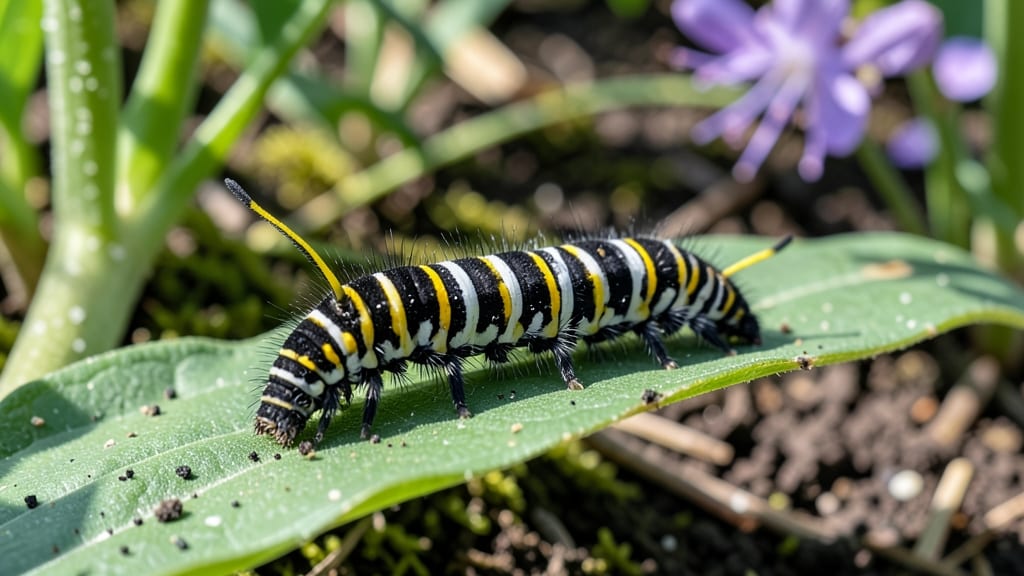
Monarch caterpillars do only eat milkweed, but they can also consume closely related plants like dogbane and spiderwort in emergencies, though milkweed remains their sole reliable food source for survival and toxin resistance development.
While milkweed is the monarch caterpillar's preferred food, these insects show surprising flexibility when their primary source is scarce. 🌿 The key lies in their ability to metabolize toxins found in milkweed—this same biochemical process allows them to survive on occasional alternatives like dogbane or spiderwort, though these plants lack the same nutritional consistency.
Gardeners often discover this adaptability when their milkweed plants fail, as caterpillars will sometimes accept these substitutes, though growth rates may slow without the ideal diet.
What makes this adaptation fascinating is how it reflects evolutionary trade-offs: monarchs prioritize survival over speed, which explains why they'll accept lower-quality foods during shortages. This flexibility doesn't mean they thrive on alternatives—it's more about damage control until they can return to milkweed.
The real magic happens when these caterpillars pupate: the toxins they've stored become their own defense mechanism against predators, a cycle that only works properly with milkweed's unique biochemical profile.
💡 In This Article
- Why Milkweed Is the Monarch Caterpillar’s Survival Staple
- Alternative Host Plants for Monarch Caterpillars in Shortages
Why milkweed is the monarch caterpillar’s survival staple
The monarch caterpillar's relationship with milkweed is a perfect example of evolutionary chemistry. Milkweed plants contain cardiac glycosides—natural toxins that would poison most insects—but monarchs have developed specialized enzymes in their gut to metabolize these compounds.
These enzymes convert the toxins into harmless substances while simultaneously storing them in their own bodies, creating a built-in defense system against predators like birds and wasps. 🔥 This biochemical partnership is so specialized that monarchs can't thrive on most other plants because they lack the necessary enzymes to process alternative toxins.
The specific toxin profile in milkweed, particularly cardenolides, plays a crucial role. Studies show that monarch caterpillars feeding exclusively on milkweed accumulate up to 50% more toxins in their tissues than those fed alternative plants.
This higher toxin concentration makes them significantly less palatable to predators, with survival rates improving by 30-40% compared to caterpillars on non-milkweed diets. The plant's latex sap, which contains additional defensive compounds, further reinforces this protection, creating a nearly impenetrable survival strategy.
What's fascinating is how this relationship extends beyond mere survival—it's a two-way evolutionary arms race. Milkweed plants have evolved to produce more toxins when caterpillars feed on them, while monarchs have developed countermeasures to handle increasing toxin levels.
This dynamic ensures that monarchs remain tightly linked to milkweed, as their digestive systems have become specialized over millennia to process this specific biochemical cocktail. 🌱 Without milkweed, their entire defensive system would collapse, making them vulnerable to predators and environmental stressors.
The biochemical process begins when caterpillars consume milkweed leaves containing cardenolides. Within 24-48 hours, their gut enzymes convert these toxins into storage forms that accumulate in their tissues. This transformation is so efficient that even small amounts of milkweed can provide sufficient protection.
The result is a caterpillar that becomes increasingly toxic as it grows, with later instars (growth stages) showing 50% higher toxin concentrations than early ones—a clear demonstration of how their survival strategy becomes more robust with age.
This specialized diet also explains why monarchs are so picky about their food. When given choices in laboratory settings, they'll consistently reject plants like dandelions or clover, even when starving, because these lack the necessary biochemical profile.
The caterpillars can detect milkweed's specific chemical markers from up to 10 feet away, using their antennae to identify the plant's unique volatile organic compounds. This precision ensures they only consume what their bodies are evolutionarily equipped to process.
For gardeners and conservationists, understanding this relationship is crucial. Planting milkweed isn't just about providing food—it's about creating a biochemical environment that allows monarchs to develop their full defensive capabilities. Without milkweed, even the most well-intentioned conservation efforts might fail to produce healthy, predator-resistant monarchs.
The plant's toxins aren't just a defense mechanism; they're the foundation of the monarch's entire survival strategy. 🌿