
Plants
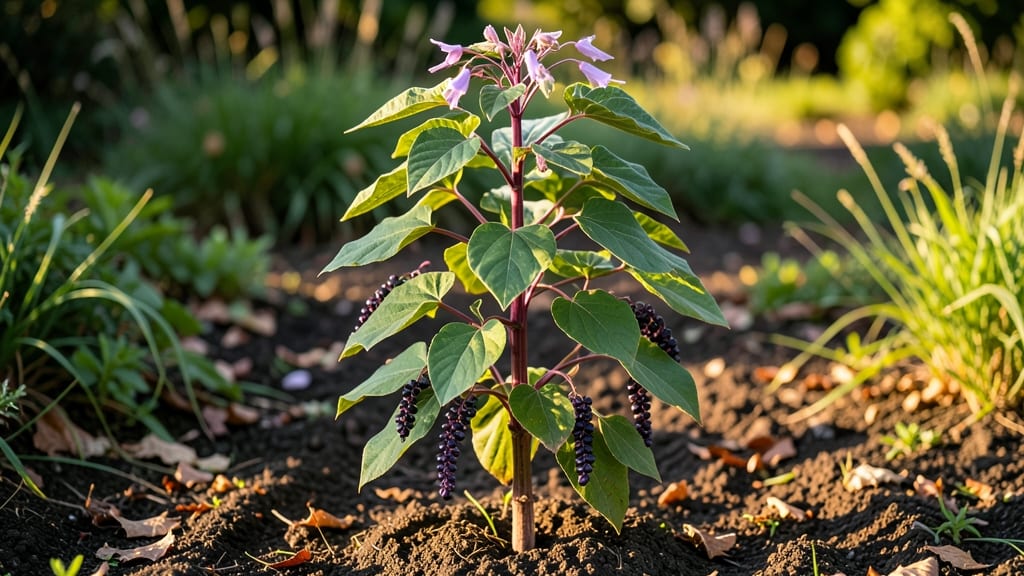
Pokeweed rash looks like clusters of small, fluid-filled blisters on red, inflamed skin, often forming straight-line patterns where the plant sap made contact. Unlike poison ivy, it starts with intense itching and raised bumps that develop into more pronounced blisters within 24-48 hours.
Pokeweed rash typically begins with red, irritated skin that quickly transforms into small, fluid-filled blisters arranged in linear streaks—mirroring how the plant's sap touched your skin. 🌿 The reaction often feels worse than it looks, with severe itching that can last for days.
Unlike poison ivy, which usually appears as smooth, red patches with fewer blisters, pokeweed's rash tends to progress faster and can leave behind scabs if left untreated. The key visual clue? Look for purple berries near the affected area—they're a dead giveaway for pokeweed exposure.
If you suspect pokeweed rash, act quickly: wash the area with soap and water immediately to remove any lingering sap. Over-the-counter hydrocortisone cream can help reduce inflammation, while calamine lotion provides relief from itching.
Avoid scratching, as this can lead to infections and prolong healing. For severe cases, consult a dermatologist—they can prescribe stronger anti-itch creams or oral antihistamines.
💡 In This Article
- Identifying Pokeweed Rash vs Poison Ivy: Key Visual Differences
- Step-by-Step Guide to Treating Pokeweed Rash at Home
Identifying pokeweed rash vs poison ivy: key visual differences
The first clue to distinguishing pokeweed rash from poison ivy lies in the blister formation. Pokeweed's reaction typically starts with intense itching and raised bumps within 6-12 hours of exposure, which then develop into small, fluid-filled blisters within 24-48 hours.
These blisters often form in linear patterns that precisely mirror how the plant's sap touched your skin—whether from brushing against leaves or stems. The skin around these blisters becomes deep red and swollen, sometimes with a slightly shiny appearance due to fluid buildup.
Here's where poison ivy differs: its rash usually appears as smooth, red patches with fewer blisters that develop over 12-48 hours.
The blisters, when they form, tend to be larger and less clustered. 🌿 Another key visual difference is the plant itself—pokeweed has distinctive purple berries that grow in drooping clusters, while poison ivy features groups of three leaflets with a glossy green appearance.
The presence of these berries near the rash site is a strong indicator of pokeweed exposure.
What makes pokeweed's reaction unique is its delayed but intense progression. The plant's sap contains phytolaccatoxin and other irritants that trigger an immune response, causing the skin to react more aggressively than with poison ivy.
The blisters may continue to form for up to 72 hours after exposure, and the itching can persist for 1-2 weeks without proper treatment. This is why many people describe pokeweed rash as feeling "worse than poison ivy" despite similar visual appearances.
Consider these key visual comparison points:
- Blister pattern: Pokeweed forms tight clusters of small blisters; poison ivy creates larger, fewer blisters
- Skin texture: Pokeweed skin appears shinier and more swollen due to fluid buildup
- Plant markers: Look for purple berries (pokeweed) vs three-leaf clusters (poison ivy)
- Timing: Pokeweed itching starts faster but progresses more intensely over time
The severity of the reaction also varies. Pokeweed's sap can cause a second-degree burn-like reaction in sensitive individuals, where the skin may peel after the blisters break. This doesn't typically happen with poison ivy.
The key is to examine both the rash pattern and the surrounding environment—pokeweed's distinctive purple berries and tall, purple-stemmed plants are your best visual clues.
What most people don't realize is that pokeweed's reaction can mimic other conditions like contact dermatitis or even shingles in its early stages. The linear blister pattern is your best diagnostic feature—if you see straight-line clusters of blisters, especially after outdoor exposure, pokeweed is the likely culprit. 🔍