
Plants
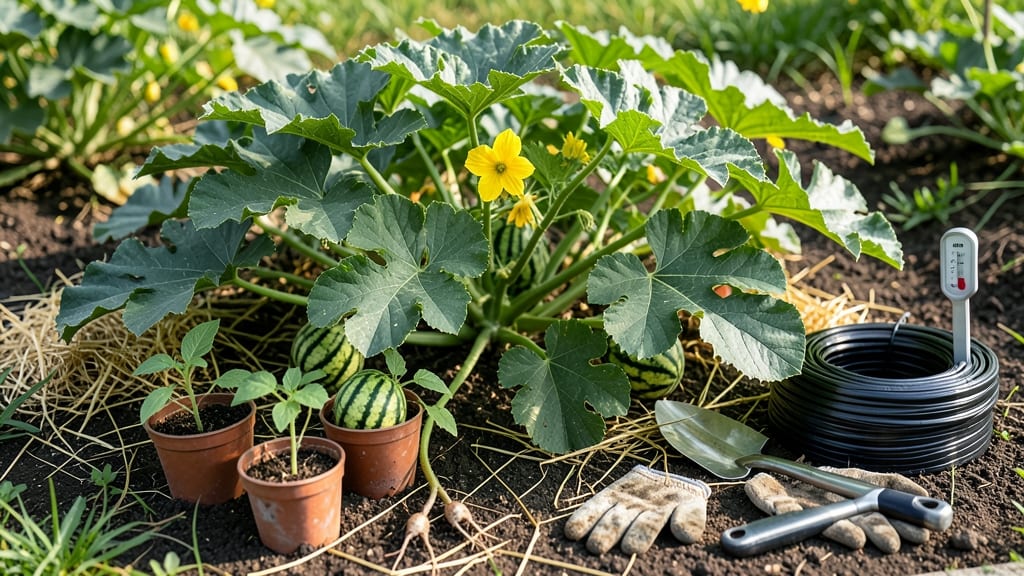
Plant watermelons in Kentucky after your last frost date, when soil temperatures hit 70°F — typically mid-April through early June for most of the state.
If you’ve ever watched your 🍉 vines wilt overnight after a late frost, you know timing is everything. Kentucky’s 6a-7b climate gives you a long growing season, but rushing it means lost plants or stunted fruit.
Northern Kentucky gardeners should wait until mid-May for safety, while southern regions can start as early as late April. The key? Soil warmth and frost-free nights — both critical for watermelon roots to establish before summer heat arrives.
Below, I’ll walk you through exact planting windows by region, soil prep secrets, and how to avoid common Kentucky mistakes like powdery mildew or uneven ripening.
Kentucky watermelon planting dates by region: frost-free zones & heat requirements
Kentucky’s diverse climate zones—from the cooler Northern regions to the warmer Western areas—mean your watermelon planting window can vary by weeks. The key is planting after the last frost date, when soil temperatures hit at least 70°F.
Northern Kentucky gardeners should wait until late April to early May, while Western Kentucky can start as early as mid-April. The difference? Up to 3 weeks of growing time, which matters for fast-maturing varieties.
Watermelons thrive in USDA Zones 6a-7b, but Kentucky’s microclimates create unique challenges. For example, Lexington’s Zone 7a averages 165 frost-free days, while Paducah’s Zone 7b stretches that to 180 days.
This means Lexington gardeners should prioritize early-maturing varieties (like Sugar Baby or Crimson Sweet) to avoid early fall frosts cutting harvests short.
Here’s how to match your region to the perfect planting window, plus heat tolerance tips for varieties that handle Kentucky’s summer humidity without wilting.
The comparison table below breaks down optimal dates by region, including Louisville, Lexington, and Western Kentucky, so you can avoid common mistakes like planting too soon and risking frost damage or waiting too late and missing the harvest window.
Pro Tip: Use a soil thermometer to confirm soil temps are 70°F+ before planting. Cold soil slows germination, and watermelon seeds need warmth to sprout reliably. If your soil is still chilly, opt for black plastic mulch to warm it up faster—a trick I’ve used in Northern Kentucky to shave off 1-2 weeks of waiting time.
| Region | USDA Zone | Avg. Last Frost | Optimal Planting Window | Recommended Varieties | Heat Tolerance Tip |
|---|---|---|---|---|---|
| Northern KY (e.g., Owensboro, Madisonville) | 6a | April 20 | Late April–Early May | Sugar Baby, Crimson Sweet | Use row covers for early starts |
| Central KY (e.g., Louisville, Lexington) | 7a | April 15 | Mid-April–Early June | Charleston Gray, Jubilee | Prioritize disease-resistant seeds |
| Western KY (e.g., Paducah, Henderson) | 7b | April 10 | Early April–Late May | Crimson Sweet, Black Diamond | Extend season with black plastic mulch |
| All Regions (Indoor Start) | N/A | N/A | Mid-March (transplant late May) | Any variety (harden off first) | Use grow lights for seedlings |
If you’re in Northern Kentucky, don’t rush to plant—late April is your safest bet. I’ve seen frost creep back as late as May 1 in years with unpredictable weather, and watermelon seedlings won’t survive even a light freeze. For Central and Western Kentucky,
Soil preparation & pre-planting tips for Kentucky watermelon success
Kentucky’s clay-heavy soils can be a double-edged sword for watermelons—retaining too much moisture while lacking aeration. The key is amending your soil 4-6 weeks before planting to create the ideal growing medium.
Watermelons thrive in loamy, well-draining soil with a pH between 6.0 and 6.8, so let’s break down how to achieve this in your garden.
Start by testing your soil’s pH using a home test kit or sending a sample to your local University of Kentucky Cooperative Extension. If your soil is too acidic (<6.0), add pelletized lime (apply 2-3 months before planting).
For alkaline soils (>6.8), mix in sulfur or peat moss to lower the pH gradually. This adjustment ensures your watermelons can absorb essential nutrients like nitrogen, phosphorus, and potassium efficiently.
🌱 Key Takeaway: Kentucky Watermelon Soil Prep
To improve drainage in Kentucky’s heavy clay soils, till in 2–3 inches of coarse sand or perlite to break up compacted layers. Work this into the top 12 inches of soil using a broadfork or rototiller.
For raised beds, mix in equal parts compost and sand to create a lighter, more fertile growing medium. Watermelon vines spread 6–10 feet, so ensure your amended soil extends at least 3 feet wide around planting areas.
Incorporate 3–4 inches of compost or well-rotted manure into the soil to boost organic matter, which enhances water retention and microbial activity. For an extra nutrient boost, add a balanced fertilizer (10-10-10) at planting time, following package instructions.
Avoid over-fertilizing, as watermelons are more sensitive to excess nitrogen, which can lead to leafy growth at the expense of fruit production.
Companion planting can also enhance watermelon growth while deterring pests. Pair your watermelons with nasturtiums (to repel cucumber beetles) or marigolds (to deter nematodes). Avoid planting near potatoes or squash, as they compete for the same nutrients.
In Kentucky’s humid climate, mulch heavily with straw or black plastic to suppress weeds, retain moisture, and prevent soil-borne diseases like powdery mildew.
Finally, give your watermelons plenty of space—3–4 feet between plants and 6–8 feet between rows. This spacing ensures good airflow, reducing the risk of fungal diseases and allowing vines to spread without crowding.
With these soil prep steps, your Kentucky watermelon patch will be ready for planting by mid-April to early June, setting the stage for a bountiful harvest by summer’s end.