
Pests
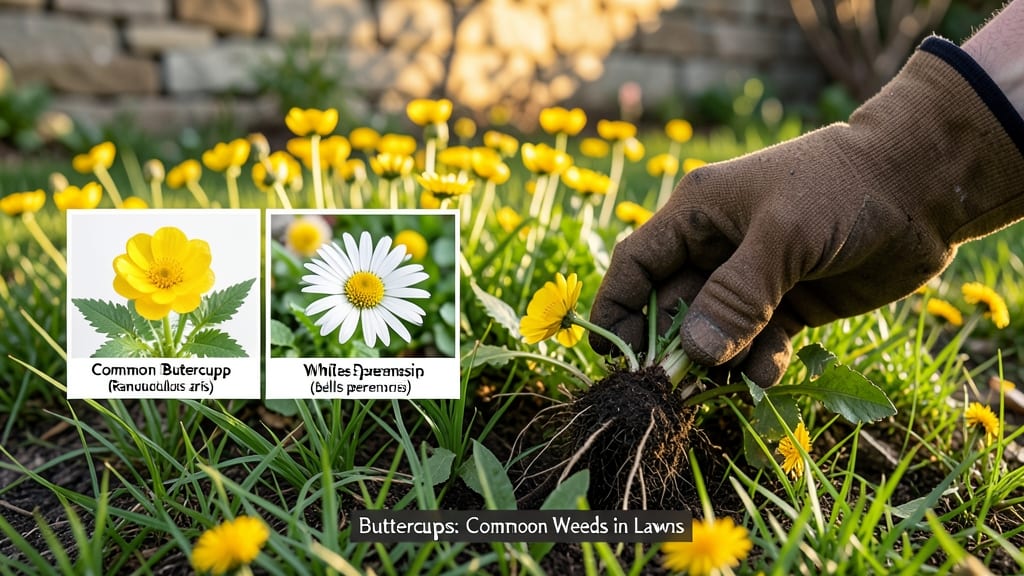
Buttercups aren't true weeds—they're wildflowers with invasive tendencies that spread rapidly in lawns and gardens, creating bright yellow blooms. Whether they're considered weeds depends on whether you prioritize controlled landscaping or welcome their ecological benefits.
Botanically speaking, buttercups (Ranunculus spp.) are native wildflowers that thrive in disturbed soils, making them appear weed-like due to their aggressive growth patterns. 🌼 Their bright yellow blooms attract pollinators, but their prolific seed production can quickly dominate garden spaces, creating a classic "love them or hate them" scenario.
Many gardeners treat them as invasive because they outcompete desirable plants, while others appreciate their early spring color and ecological value.
If you're dealing with a buttercup takeover, the key is timing—pull them when the soil is moist to avoid breaking off the root crown, which can regrow. For larger infestations, consider smothering with thick mulch or using targeted herbicides in late summer when they're actively growing.
Interestingly, some gardeners strategically allow buttercups in one corner of the yard to support beneficial insects while keeping them contained elsewhere.
💡 In This Article
- Botanical Classification: Why Buttercups Are Controversial Wildflowers
- Managing Buttercups in Gardens: Removal Techniques and Alternatives
Botanical classification: why buttercups are controversial wildflowers
Buttercups belong to the Ranunculus genus, which includes over 600 species of flowering plants native to temperate regions worldwide. What makes them botanically controversial is their classification as non-native weeds—they're actually native wildflowers in many regions but spread aggressively in gardens due to their prolific seed production.
A single buttercup plant can produce thousands of seeds per season, which disperse via wind, water, and even animal fur, creating dense colonies that choke out lawn grasses and garden plants.
The confusion stems from their growth habits: buttercups thrive in disturbed soils with full sun exposure, a trait they share with true weeds like dandelions.
Their fibrous root system allows them to quickly establish in lawns, while their bright yellow blooms (containing toxic ranunculin compounds) make them visually striking yet ecologically disruptive. Unlike true weeds, however, buttercups don't have hollow stems or deep taproots—key identifiers that separate them from plants like crabgrass or creeping Charlie.
Ecologically, buttercups play a dual role: they provide early-season nectar for bees and other pollinators, but their dominance can reduce biodiversity by outcompeting native wildflowers.
The seed dispersal mechanism is particularly efficient—each seed has a fine, hair-like structure that catches wind currents, allowing them to travel hundreds of feet from the parent plant. This explains why buttercups often appear in patches after just one growing season, even with minimal human intervention.
Gardeners' perceptions vary dramatically based on regional norms. In the UK, where many buttercup species are native, they're often considered beneficial wildflowers and protected under conservation laws. In North America, however, they're frequently treated as nuisance plants due to their rapid spread in cultivated landscapes.
The key difference lies in whether you view them as ecosystem participants or landscaping obstacles—a debate that hinges on your gardening philosophy.
What most people don't realize is that buttercups' toxicity isn't just a defense mechanism—it's an evolutionary adaptation. The ranunculin compound in their sap makes them unpalatable to most herbivores, which is why you'll rarely see animals grazing on them.
This chemical defense allows buttercups to dominate spaces where other plants might be eaten away. Their sap can also cause skin irritation, making them less desirable for direct garden contact compared to non-toxic alternatives like clover.
Consider this: if you're growing a pollinator-friendly garden, buttercups might be worth tolerating in one corner where they won't spread uncontrollably. But if you're maintaining a manicured lawn, their aggressive growth makes them a persistent challenge.
The classification debate ultimately comes down to whether you prioritize ecological diversity or landscape control—a choice that defines your approach to garden management.