
Light Requirements
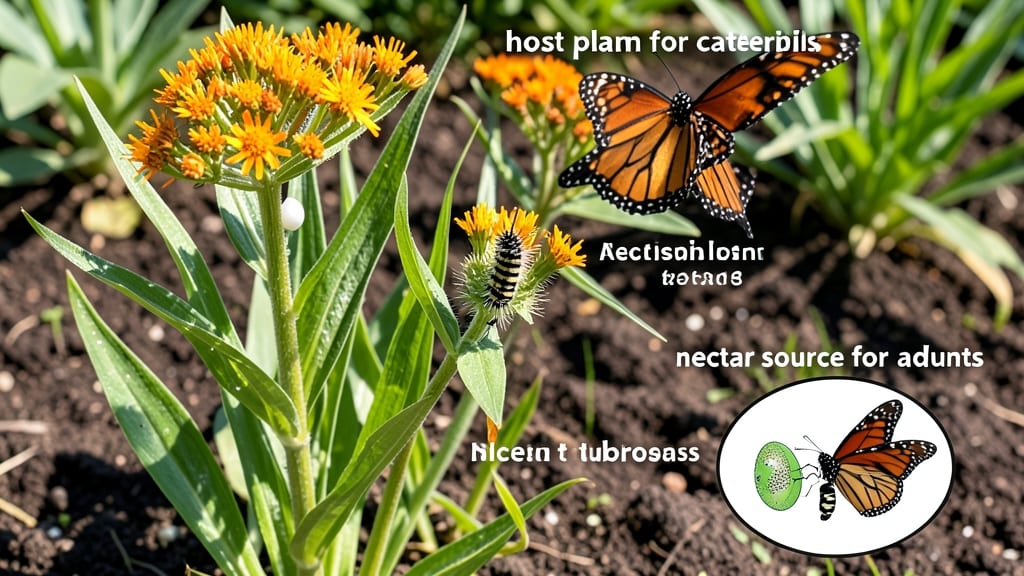
Monarch butterflies need milkweed because it's their exclusive host plant for reproduction, providing the only food source for caterpillars and containing vital compounds like cardenolides that deter predators while fueling their growth through metamorphosis.
Milkweed isn't just any plant—it's the lifeline monarchs rely on at every stage of their development. 🌿 Without it, female butterflies wouldn't lay eggs, and caterpillars would starve before completing their transformation.
The cardenolides in milkweed give caterpillars a bitter taste that repels birds and other predators, while also supporting their rapid growth. This specialized relationship explains why monarch populations decline when milkweed disappears from landscapes.
What's fascinating is how this dependency extends beyond nutrition. Monarchs have evolved to recognize milkweed's scent and appearance, making them highly selective about where they lay their eggs. In gardens, planting native milkweed species creates safe havens that directly support monarch conservation efforts.
💡 In This Article
- Monarch Butterfly Life Cycle Dependence on Milkweed
- How to Grow Milkweed for Monarch Butterflies
Monarch butterfly life cycle dependence on milkweed
Monarch caterpillars are biological specialists—they eat only milkweed (genus Asclepias) from the moment they hatch until they pupate. This exclusivity isn't random: milkweed contains cardenolides, toxic compounds that make caterpillars unpalatable to predators like birds and spiders.
These chemicals accumulate in the caterpillar's body, creating a natural defense mechanism that deters up to 90% of potential threats in the wild. Without milkweed, monarch caterpillars would starve or become easy prey within days.
The relationship starts with egg-laying. Female monarchs use specialized sensory organs to detect milkweed's unique chemical signature—specifically alkaloids and phenolic compounds in the leaves—before depositing eggs on the underside of leaves. This precision ensures caterpillars have immediate access to their sole food source.
What's remarkable is how milkweed's toxicity actually benefits monarchs: while these compounds would be deadly to most insects, monarchs have evolved enzymes to metabolize them, converting them into growth hormones that accelerate their development from egg to chrysalis in just 14-18 days.
During metamorphosis, milkweed's role becomes even more critical. The caterpillars' rapid growth—gaining 2,000 times their initial weight—requires the plant's high-protein, nutrient-dense leaves. The cardenolides continue protecting them even in their chrysalis stage, where they remain toxic to predators.
This chemical defense system is so effective that some predators actually learn to avoid monarchs after just one bad experience, creating a feedback loop that benefits the entire population.
What makes this dependency even more fascinating is how milkweed's seasonal availability aligns perfectly with monarch migration patterns. In North America, monarchs time their breeding cycles to coincide with milkweed's peak growth in spring and summer, ensuring caterpillars always have fresh food.
This synchronized relationship explains why monarch populations plummet when milkweed habitats shrink due to development or herbicide use—without the plant, the entire life cycle collapses.
Here's what happens when monarchs encounter non-milkweed plants: they simply ignore them. In experiments where researchers offered caterpillars alternative plants like dandelions or cabbage, the monarchs would starve within 48 hours despite the plants being equally nutritious.
This absolute requirement demonstrates how deeply monarch biology has evolved around milkweed over millions of years—a perfect example of coevolution in nature.
The cardenolides in milkweed work like a natural pesticide, but with a twist: they're stored in the caterpillar's body and transferred to adult butterflies, where they continue serving as a deterrent. This means even adult monarchs carry this chemical protection, making them less vulnerable to predators throughout their entire lives.
It's a brilliant survival strategy that showcases how plant-animal relationships can drive evolutionary specialization.
For gardeners wanting to support monarchs, understanding this dependency is key. Planting native milkweed species isn't just about providing food—it's about recreating the entire ecosystem monarchs need to survive and thrive.
The plant's unique chemistry makes it irreplaceable in the wild, proving that sometimes in nature, the most specialized relationships are the most essential.