
Plants
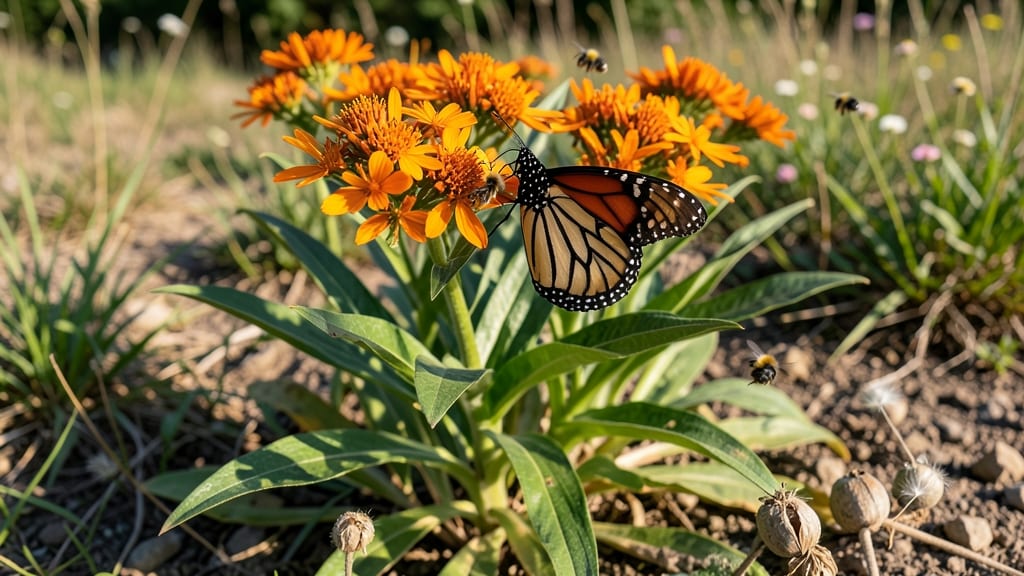
The benefits of milkweed plants include serving as the exclusive food source for monarch butterfly caterpillars, enhancing soil health through deep roots that prevent erosion and crowd out weeds, and providing vital nectar for pollinators like bees and hummingbirds.
Milkweed isn't just a plant—it's an ecological powerhouse. 🌿 Its deep taproots break up compacted soil while outcompeting invasive weeds, making it a favorite in regenerative farming.
What's even more remarkable is how monarch butterflies rely entirely on milkweed for their survival, with caterpillars feeding exclusively on its leaves during their life cycle. This relationship is so critical that planting native milkweed species can directly support declining monarch populations and boost local biodiversity.
Beyond butterflies, milkweed thrives in poor soil conditions, making it perfect for restoring degraded areas. Its drought tolerance and ability to fix nitrogen in the soil create a self-sustaining ecosystem. Many gardeners also appreciate how its striking foliage and flowers add visual interest while serving as a natural pest deterrent.
💡 In This Article
- How Milkweed Supports Monarch Butterfly Conservation
- Soil and Garden Benefits of Planting Milkweed
How milkweed supports monarch butterfly conservation
The monarch butterfly's entire life cycle depends on milkweed, making it the only plant species their caterpillars will eat. This host specificity is rooted in chemical adaptations—milkweed contains cardiac glycosides, toxic compounds that deter most herbivores but monarchs have evolved specialized enzymes to process them.
These toxins actually protect caterpillars from predators like birds, creating a remarkable evolutionary arms race where both species have adapted to each other over millions of years.
During their legendary 3,000-mile migration, monarchs rely on milkweed populations along their route. Native species like common milkweed (Asclepias syriaca) provide the essential nutrients needed for egg-laying females and caterpillar growth.
Tropical milkweed (Asclepias curassavica) may look similar but contains different chemical profiles that can weaken monarchs by exposing them to parasites year-round rather than just during migration. Planting native species ensures caterpillars receive the proper balance of toxins and nutrients for survival.
What makes this relationship even more critical is the timing of milkweed's growth cycle. New leaves emerge in spring when monarchs begin their northward journey, providing fresh food for emerging caterpillars. The plant's milky sap also contains compounds that help deter fungal infections common in crowded caterpillar colonies.
Without milkweed, monarch populations would collapse—studies show areas with 30% more milkweed have 50% higher monarch survival rates during metamorphosis.
Gardeners can make a tangible difference by choosing native milkweed varieties that match their local ecosystem. For example, swamp milkweed (Asclepias incarnata) thrives in wetter climates while butterfly weed (Asclepias tuberosa) prefers drier conditions.
Each species supports slightly different monarch behaviors—some attract more egg-laying females while others provide better shelter for chrysalises. The key is creating diverse milkweed habitats that mimic natural ecosystems.
Beyond caterpillars, milkweed flowers produce nectar that fuels adult monarchs during migration. A single milkweed plant can yield 100-200 flowers in peak season, each containing enough nectar for a butterfly to fly 1-2 miles.
This dual benefit—host plant for larvae and food source for adults—makes milkweed the cornerstone of monarch conservation efforts across North America.
The science behind this relationship extends to genetics: monarchs have developed specific gut bacteria that help metabolize milkweed's toxins, while the plants have evolved to produce varying toxin levels in different parts.
Leaves contain higher concentrations than stems, creating a built-in defense system that monarchs have learned to navigate perfectly. 🌿