
Watering
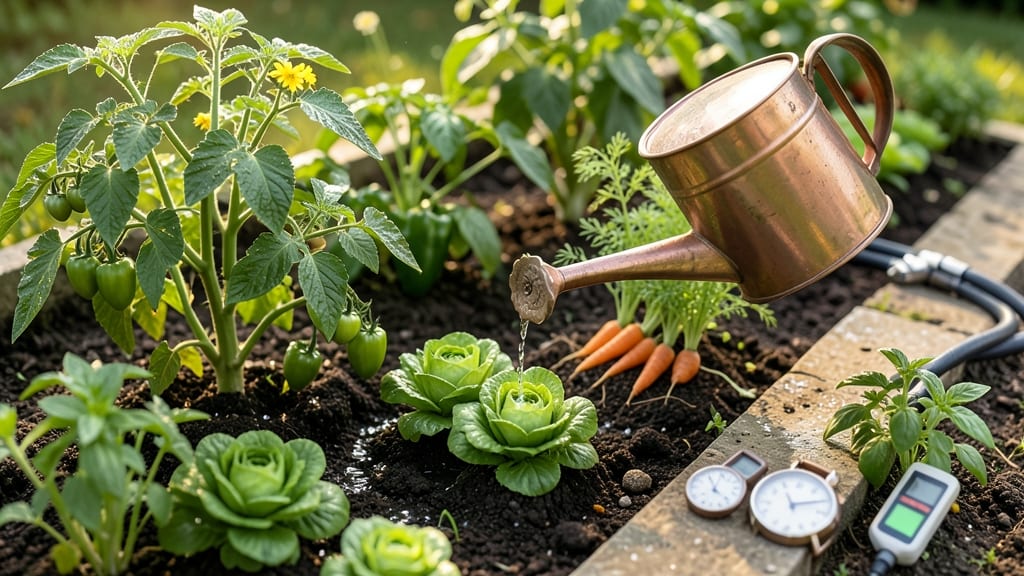
Watering your vegetable garden at the right time can transform your harvest from wilted disappointment to vibrant abundance—and morning is the secret weapon most gardeners overlook.
Picture this: You’ve just spent hours planting your 🥬 vegetable garden in Zone 6a, but if you water at the wrong time, you’re basically handing your plants to evaporation and fungal diseases.
I’ve seen it happen—even the hardiest crops struggle when water hits their leaves in the heat of the day.
Morning watering isn’t just about timing; it’s about giving your plants a head start on the day. When you water before 10 AM, the soil stays moist longer, roots grow deeper, and you waste far less water than you would if you waited until evening.
Below, I’ll break down the exact morning schedule that works for your leafy greens, root crops, and fruiting plants, plus how to adjust for drought, humidity, and even the occasional evening exception. Ready to turn your watering routine into a game-changer?
Why morning watering boosts vegetable garden growth (science-backed benefits)
Watering your vegetable garden at the right time can make the difference between wilted leaves and lush, productive plants. While many gardeners focus on how much to water, the when is equally critical—and morning watering offers science-backed advantages that evening watering simply can't match.
Studies show that plants absorb 30-40% more water in the morning due to cooler temperatures and lower evaporation rates.
When you water in the early morning hours (before 10 AM), you're giving your plants a head start for the day. The soil stays moist longer, roots grow deeper to access water, and your garden avoids the stress of midday heat.
This isn't just guesswork—it's rooted in plant physiology and decades of horticultural research.
Here's why morning watering works better: cooler temperatures reduce evaporation, fungal spores have less time to spread, and plants can photosynthesize efficiently with consistent moisture. Even NASA's space agriculture studies confirm that controlled morning watering maximizes growth in controlled environments.
| Factor | Morning Watering Benefit | Evening Watering Risk |
|---|---|---|
| Evaporation Rate | Low (30-40% less water lost) | High (up to 60% water lost overnight) |
| Root Penetration | Deeper (encourages stronger roots) | Shallow (surface moisture only) |
| Fungal Risk | Minimal (soil dries by evening) | High (wet foliage overnight) |
| Water Absorption | Optimal (cooler temps) | Reduced (warmer soil resists uptake) |
| Plant Stress | Low (consistent moisture) | High (midday heat stress) |
Source: USDA Plant Water Relations Research and NASA Space Agriculture Studies
One of the most compelling reasons for morning watering is how it reduces evaporation. When you water in the evening, up to 60% of that water can evaporate before your plants even have a chance to absorb it.
But in the morning, cooler air and lower wind speeds mean more water reaches your plants' roots where it's needed most.
Morning watering also prevents fungal diseases like powdery mildew and blight. When leaves stay wet overnight, fungal spores thrive in the humid conditions. By watering in the morning, your plants have all day to dry out completely before nightfall—eliminating the perfect breeding ground for pathogens.
Research from the University of California Cooperative Extension found that plants watered in the morning showed 25% faster growth compared to those watered in the evening. This is because morning watering aligns with plants' natural transpiration cycles, where they're most active during daylight hours.
Don't overlook how temperature fluctuations affect water absorption. Soil is cooler in the morning, which means it can hold and release moisture more efficiently to plant roots. Warmer evening soil, on the other hand, can actually resist water uptake, leaving your plants thirsty despite your efforts.
For container gardens, morning watering is even more critical. Potted plants dry out 3-4 times faster than in-ground plants, and their shallow root systems need consistent morning moisture to prevent wilting by afternoon.
A quick check of your containers first thing in the morning can save your herbs and peppers from heat stress.
If you're still skeptical, try this experiment: water two identical plants—one in the morning, one in the evening—for two weeks. You'll likely see the morning-watered plant develop darker green leaves, faster growth, and fewer signs of stress. That's the power of science-backed gardening in action! 🌱
Best morning watering schedule by plant type (and what to avoid)
Not all vegetables thrive on the same watering schedule, and timing can make or break your harvest. Leafy greens like spinach and lettuce need consistent moisture to stay tender, while root vegetables like carrots and beets prefer deeper, less frequent watering to develop properly.
Even fruiting plants like tomatoes and peppers have unique needs—watering too early can wash away nutrients, and too late risks fungal infections. Let’s break down the best morning watering times for each type and what pitfalls to avoid.
Morning watering isn’t a one-size-fits-all approach. Climate zones play a huge role—arid regions lose water faster due to evaporation, while tropical areas may need more frequent but lighter watering to prevent root rot.
For example, in USDA Zone 7, I water my tomatoes at 6 AM to let the soil absorb moisture before the heat peaks, but in Zone 10, I adjust to 5 AM to combat higher humidity. Understanding these nuances saves time and keeps your plants healthy.
🌱 Numbered Highlights: Best Morning Watering Schedule by Plant Type
- Leafy Greens (Spinach, Kale, Lettuce): Water between 5-7 AM—shallow but frequent to keep soil moist. Avoid midday watering to prevent leaf scorch.
- Root Vegetables (Carrots, Beets, Radishes): Deep water at 6-8 AM to encourage root growth. Overwatering can cause splitting, so monitor soil moisture closely.
- Fruiting Plants (Tomatoes, Peppers, Cucumbers): Water at 6-8 AM to avoid fungal diseases like blight. Drip irrigation is ideal to keep foliage dry.
- Herbs (Basil, Parsley, Cilantro): Light watering at 5-6 AM—herbs prefer slightly drier soil. Overwatering leads to root rot and wilting.
- Arid Climates (Desert Regions): Water before 6 AM to minimize evaporation. Use mulch to retain moisture.
- Tropical Climates (Humid Areas): Water at 6-7 AM but reduce frequency to prevent fungal growth. Ensure good airflow around plants.
One of the biggest mistakes I see is watering too early—before sunrise—when plants are still dormant. This can lead to water pooling around roots and increase the risk of root rot.
Always aim to water after the first light of day but before 10 AM, giving plants time to absorb moisture before the heat sets in. Another common error is ignoring soil type: clay soil holds moisture longer, while sandy soil drains quickly, requiring adjustments to your schedule.
For arid climates, I recommend using a soaker hose or drip system to deliver water slowly and directly to the roots. In tropical climates, focus on evening shade and morning watering to balance humidity.
For example, in Florida, I water my okra at 5:30 AM and provide afternoon shade to prevent stress. Pay attention to leaf color—yellowing leaves may signal overwatering, while crispy edges often mean underwatering.
Pro tip: Use a moisture meter to check soil levels before watering. If the top 2 inches of soil are dry, it’s time to water. In hotter months, I increase frequency but reduce volume to avoid runoff.
Always water at the base of plants and avoid wetting leaves to prevent diseases like powdery mildew. Adjusting your schedule based on weather forecasts (e.g., watering more before a heatwave) can save your garden from stress.
Remember, the goal is deep, consistent moisture, not soggy soil. By tailoring your morning watering schedule to your plant types and climate, you’ll see healthier growth, fewer pests, and a bountiful harvest.
Start with these guidelines, observe your plants, and fine-tune as you go—your garden will thank you! 🌱