
Diseases
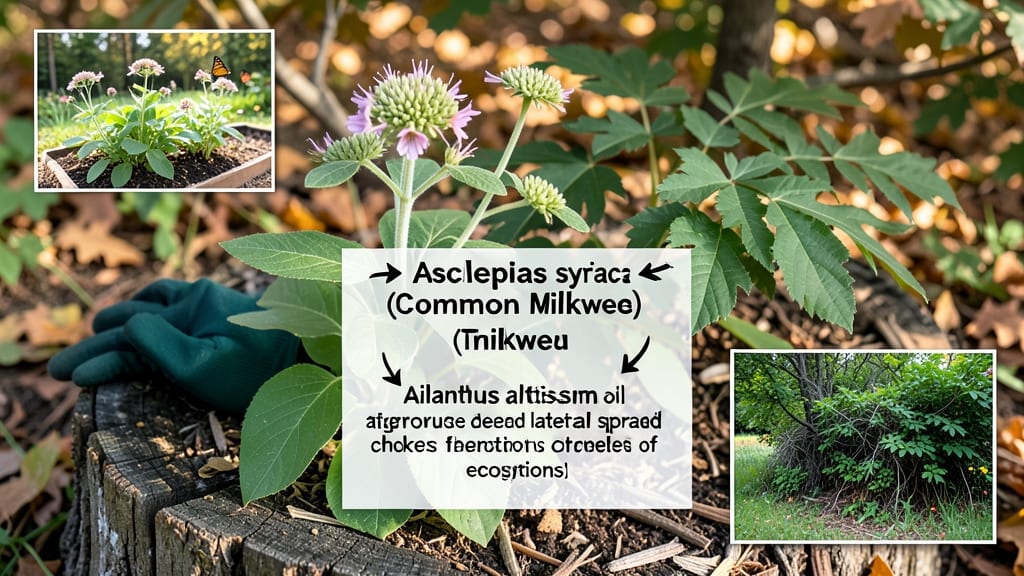
Milkweed isn't considered invasive in most parts of the country, though it can become overly aggressive in specific climates like the Southeast and Midwest, where it multiplies quickly and may crowd out native plants. Despite this potential, its critical role in supporting monarch butterflies usually justifies its presence unless you're actively managing garden spaces.
This plant's behavior depends heavily on local ecosystems.
In drier western regions, milkweed often stays contained, while in humid eastern areas, its extensive root systems and prolific seed production can create dense patches. 🌱 The key difference lies in moisture availability—wet soils accelerate its spread, which is why gardeners in the Midwest frequently report unchecked growth.
Interestingly, milkweed's adaptability makes it both an ecological asset and a management challenge, especially when balancing monarch conservation with garden aesthetics.
For those concerned about its spread, targeted pruning in early spring removes flower stalks before seeding while preserving the plant's monarch benefits. I've found that planting milkweed near native grasses helps contain its expansion by competing for resources.
The real trade-off? Letting milkweed thrive supports declining monarch populations, but in small gardens, strategic placement and occasional thinning can maintain both beauty and biodiversity.
💡 In This Article
- How Milkweed Spreads in Different U.S. Regions
- Balancing Milkweed Benefits for Monarchs and Garden Management
How milkweed spreads in different u.s. regions
Milkweed's spread depends on a perfect storm of biology and climate. Its seeds contain a fluffy, parachute-like structure that allows them to travel up to 100 feet on wind currents, but the real spread happens through underground rhizomes—horizontal roots that can stretch 10-15 feet per plant.
In the Southeast, where humidity stays high year-round, these rhizomes grow aggressively, creating dense colonies that outcompete native wildflowers. The moist soil acts like a growth accelerator, allowing milkweed to establish itself quickly after disturbances like logging or construction.
Contrast that with the Southwest, where milkweed often remains contained. Here, the arid climate limits rhizome expansion, and plants rely more on seed dispersal. A single mature milkweed pod can release 200-400 seeds, but dry conditions slow germination rates.
In Midwestern prairie regions, the story changes again—rich, fertile soils combined with regular rainfall create ideal conditions for both seed production and rhizome spread. This is why farmers and gardeners in states like Illinois and Missouri often see milkweed pop up unexpectedly in fields and garden edges.
The plant's adaptability stems from its deep taproot system, which can reach 4-6 feet underground.
This root structure allows milkweed to access water during droughts, making it resilient in areas with seasonal moisture fluctuations. 🌱 In disturbed soils—like construction sites or abandoned farmland—milkweed thrives because its roots quickly establish dominance over less competitive native species.
The key factor isn't just moisture, but how well the plant can exploit disturbed ecosystems where native competitors haven't yet reclaimed space.
Climate also affects milkweed's growth cycle. In warmer southern regions, milkweed may produce multiple flower stalks per season, each capable of generating seeds. In cooler northern climates, plants focus energy on rhizome expansion rather than seed production, creating a different spread pattern.
This regional variation explains why milkweed might be considered "invasive" in some gardens but perfectly benign in others—it's all about the local ecological context.
One fascinating mechanism is milkweed's relationship with ants. The plant produces nectar-rich extrafloral nectaries that attract ants, which then prune away competing plants by cutting their stems.
This symbiotic relationship gives milkweed a competitive edge in areas where ant populations are high. 🔥 In urban gardens, this can lead to milkweed forming nearly impenetrable thickets if not managed, as the ants act as unwitting gardeners working for the milkweed's benefit.
Understanding these regional differences helps explain why milkweed might be a welcome addition in some areas but a nuisance in others. For example, in California's coastal regions, milkweed often stays localized due to the Mediterranean climate's dry summers, while in Florida's wetlands, its spread is nearly unchecked.
The plant's success hinges on finding the right balance between moisture availability, soil quality, and the presence of its natural allies like ants.