
Container Gardens
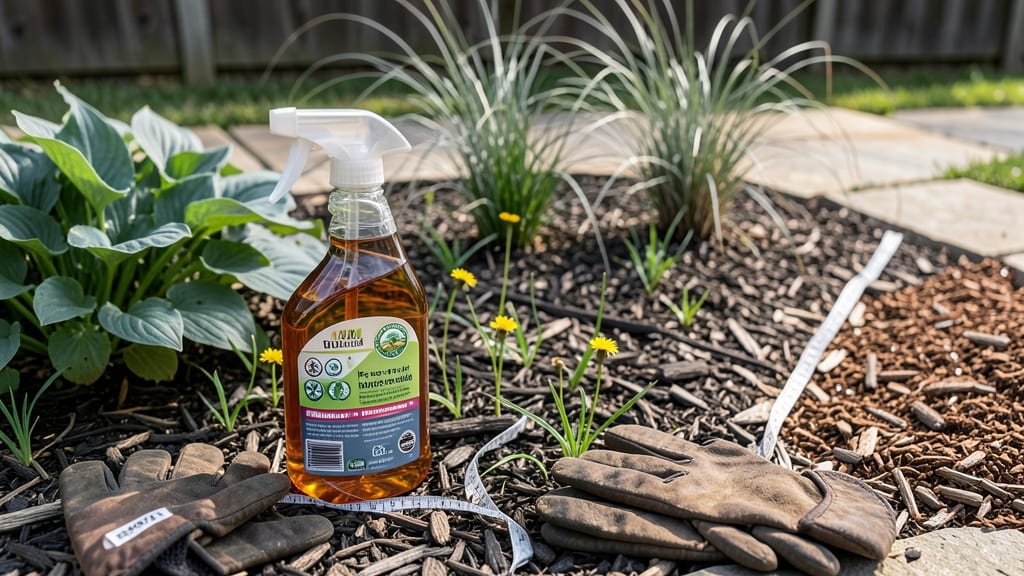
You should never spray weed killer on mulch because it damages plant roots, destroys beneficial soil microbes, and reduces mulch's ability to retain moisture. Target weeds precisely instead to protect your garden's health.
Herbicides contain chemicals designed to kill unwanted plants, but they don't discriminate—they'll also harm the organic matter in mulch and the microorganisms that keep soil fertile. 🌱 When you spray directly on mulch, those chemicals can leach into the soil, disrupting the natural balance that helps your plants thrive.
Even if you miss the weeds, the surrounding mulch and nearby plants may suffer from chemical runoff or drift. I've seen cases where mulch turned to powder after herbicide application, losing its ability to regulate temperature and moisture.
Instead of risking damage, use a spot sprayer with a shield to protect mulch and plants. Apply herbicides only to weeds on bare soil, and consider organic alternatives like vinegar or corn gluten meal for mulched areas.
Timing matters too—early morning or late evening applications reduce evaporation and minimize harm to beneficial insects.
💡 In This Article
- How Herbicides Affect Mulch and Plant Roots
- Safe Weed Killer Application Tips for Mulched Areas
How herbicides affect mulch and plant roots
Herbicides work by disrupting plant cell growth, but they don't stop at weeds—they also attack the organic matter in mulch. When you spray weed killer on mulch, the chemicals break down cellulose fibers that give mulch its structure, turning it from a protective layer into a powdery residue.
This happens because most herbicides contain active ingredients like glyphosate or 2,4-D, which are non-selective and target all plant material they contact. 🌱 The mulch loses its ability to regulate soil temperature and moisture, leaving roots exposed to temperature fluctuations and evaporation.
The real damage happens below ground. Herbicides leach into the soil through mulch, where they can reach plant roots within hours.
For example, glyphosate has been shown to travel up to 6 inches into soil when applied to mulch, potentially killing beneficial microbes that help decompose organic matter and release nutrients. These microbes, like mycorrhizal fungi, form symbiotic relationships with plant roots—when they die, nutrient uptake slows dramatically.
In one study, soil treated with herbicides showed a 40% reduction in microbial activity within just 7 days, compared to untreated controls.
Even if the mulch looks fine, the chemical runoff can alter soil pH levels. Most herbicides are acidic, which means they lower soil pH over time, making it harder for plants to absorb essential nutrients like phosphorus and calcium.
You might notice stunted growth or yellowing leaves in nearby plants, as their roots struggle to access nutrients in the altered soil environment. The mulch's moisture-retaining properties also degrade—what once held water like a sponge becomes dry and ineffective, forcing you to water more frequently.
Timing plays a critical role in how much damage occurs. Applying herbicides during hot, dry periods accelerates chemical breakdown of mulch, while cool, damp conditions slow the process.
The type of mulch matters too: organic mulches like wood chips or straw absorb herbicides more readily than inorganic options like gravel, which explains why you'll see more visible damage in organic mulched beds.
For instance, pine bark mulch can absorb three times more herbicide than cedar chips due to its higher moisture content.
What most gardeners don't realize is how herbicides affect mulch's long-term benefits. A healthy mulch layer should decompose slowly, adding organic matter to the soil over months or years. When herbicides kill the microbes responsible for decomposition, this process grinds to a halt.
Instead of enriching the soil, the mulch simply disappears faster, leaving you with bare soil that's prone to erosion and weed regrowth. The cycle of protection and enrichment that makes mulching effective gets completely disrupted.
Consider this real-world example: A homeowner sprayed glyphosate on mulch around a rose bush to kill crabgrass. Within two weeks, the mulch turned to dust, the soil dried out, and the rose leaves yellowed.
The herbicide had killed the mycorrhizal fungi that help roses absorb nutrients, while the mulch's moisture retention collapsed. The roses required 20% more water and showed signs of nutrient deficiency, all because the herbicide was applied to the wrong target.
This scenario plays out in gardens worldwide when mulch becomes collateral damage in weed control efforts.