
Pests and Diseases
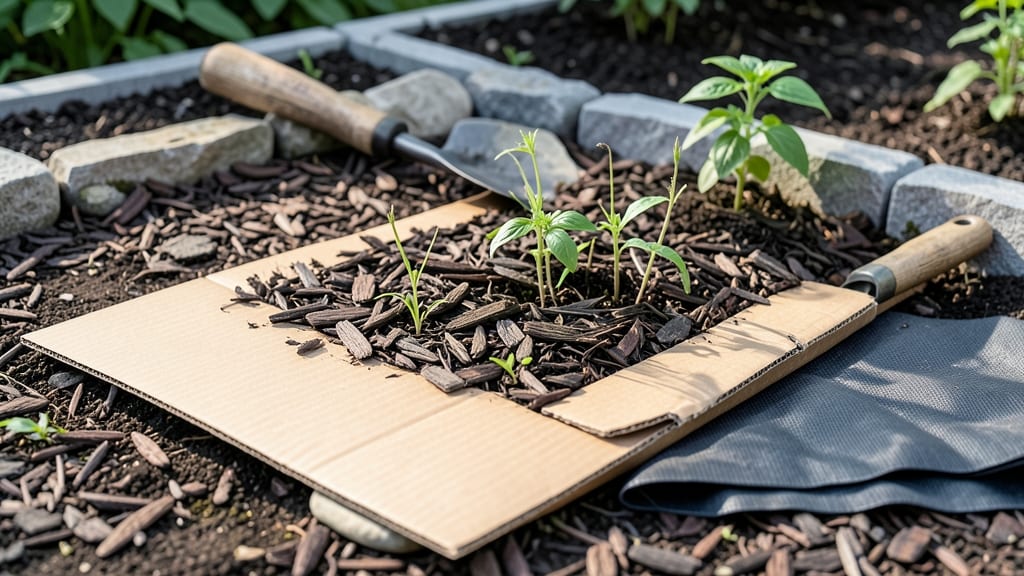
You can use cardboard as a weed barrier effectively by blocking sunlight, but it decomposes within 6 to 12 months depending on thickness and moisture. Bury edges and remove debris before planting to maximize its weed-suppressing benefits.
Cardboard works as a weed barrier by smothering existing weeds and preventing new ones from sprouting by blocking sunlight—a technique called light deprivation.
The thicker the cardboard, the longer it lasts, but moisture and soil contact speed up decomposition. 🌱 I’ve found that corrugated cardboard breaks down faster than solid sheets, so layering it can extend its effectiveness.
The key is proper placement: burying edges prevents weeds from growing around the sides, and removing debris ensures it stays effective until you’re ready to plant.
For best results, use plain (unlaminated) cardboard and place it directly on the soil, then cover with mulch or compost. This method works well for short-term projects or areas you’ll replant soon. If you need long-term weed control, consider combining cardboard with landscape fabric or opting for organic mulch instead.
💡 In This Article
- How Cardboard Blocks Weeds and Decomposes Over Time
- Preparing Cardboard for Optimal Weed Control
How cardboard blocks weeds and decomposes over time
Cardboard suppresses weeds primarily through light deprivation, a natural process where blocking sunlight prevents photosynthesis. Weeds need light to grow, and cardboard cuts off about 90-95% of sunlight when laid flat. This works best for annual weeds like crabgrass or chickweed, which can’t survive without light.
The decomposition process begins when moisture and soil microbes break down the cellulose fibers in cardboard—a process called cardboard biodegradation. Thicker corrugated cardboard (with fluted layers) lasts 6-9 months in dry climates, while solid cardboard sheets can persist 12 months or longer in cooler, wetter conditions.
The breakdown speed depends on three key factors: moisture, temperature, and soil contact. In humid climates, cardboard decomposes in as little as 3-4 months because moisture accelerates microbial activity. Conversely, in arid regions, it may last 12-18 months unless buried.
Burying edges (at least 2-3 inches deep) prevents weeds from sprouting around the perimeter and slows decomposition by shielding the cardboard from direct sunlight and wind. The decomposition process releases nutrients into the soil, which can benefit plants when the cardboard eventually breaks down.
What most people don’t realize is that cardboard’s effectiveness depends on its composition. Plain, uncoated cardboard decomposes faster than glossy or laminated types, which contain plastic coatings that resist breakdown.
For example, a 1/8-inch thick plain cardboard sheet in a garden bed with moderate moisture will typically last 8-10 months, while a laminated box might persist for 18 months or more.
This is why it’s critical to check the cardboard’s surface—any shiny or waxy coating means it won’t decompose as intended and could even harm soil health.
Temperature also plays a surprising role. In regions with freezing winters, cardboard can last longer because cold temperatures slow microbial activity. However, in tropical climates, the rapid breakdown means you’ll need to replace it more frequently.
For instance, in Florida’s humid climate, cardboard may only last 4-6 months, while in Colorado’s drier air, it could endure 12-15 months. Understanding these variables helps you plan when to lay down new layers or transition to alternative weed barriers.
Here’s what happens beneath the surface: As cardboard decomposes, it forms a spongy layer that traps moisture and creates a microclimate where beneficial fungi and bacteria thrive. This process enriches the soil with organic matter, but it also means the cardboard’s structure weakens over time.
If you’re planting bulbs or perennials, you’ll want to remove the cardboard 3-6 months before planting to allow the soil to reintegrate fully. For annuals, you can plant directly through the decomposing cardboard, but be prepared to pull out any remaining fragments.
For a visual example, imagine a garden bed where you’ve laid down two layers of corrugated cardboard in early spring. By midsummer, the top layer may have broken down significantly, especially if it’s been watered regularly.
The bottom layer, however, might still retain its shape, acting as a temporary barrier until you’re ready to plant. This layered approach extends the weed-suppressing benefits while gradually enriching the soil.