
Landscaping
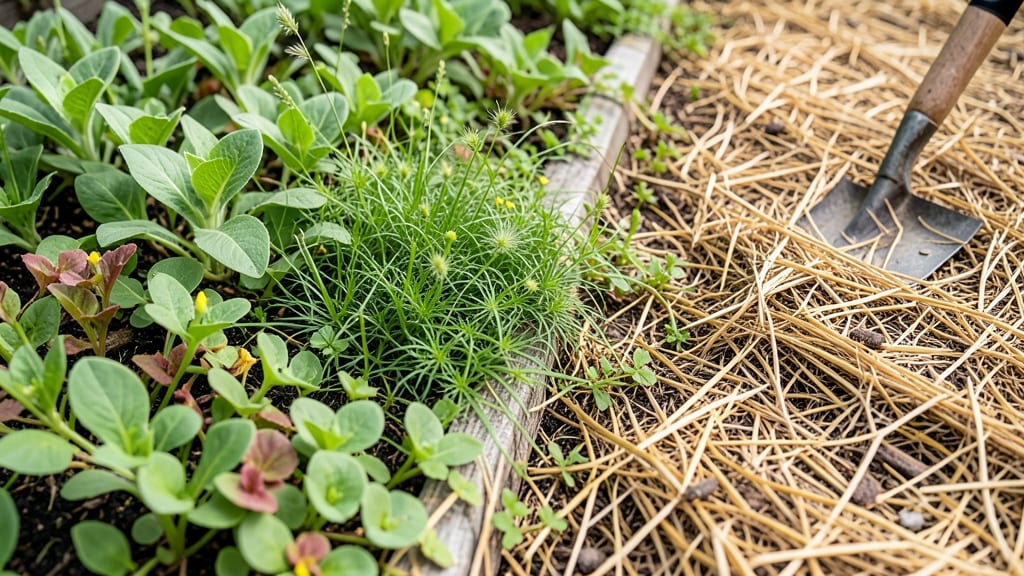
Mulch does prevent weeds from growing by blocking sunlight, disrupting seed germination, and creating a physical barrier that smothers emerging seedlings while retaining soil moisture and enriching the soil over time.
Mulch works as a natural weed deterrent primarily by starving weeds of the sunlight they need to grow.
A 3-4 inch layer of organic mulch—like wood chips or straw—creates a dense barrier that blocks about 90% of light, preventing weed seeds from sprouting. 🌱 The breakdown of organic mulch also releases natural compounds that further inhibit weed growth while improving soil health over time.
In my experience, the thicker the mulch layer, the fewer weeds you'll see popping up in your garden beds.
Beyond light deprivation, mulch helps by stabilizing soil moisture and temperature. When soil stays consistently moist, weed seeds struggle to germinate because they need alternating wet-dry cycles to break dormancy.
Plus, organic mulches like wood chips or leaves gradually decompose, adding nutrients to the soil that benefit your plants while creating an even more inhospitable environment for unwanted weeds.
💡 In This Article
- How Organic Mulch Stops Weeds at the Root
- Best Mulch Types for Weed Control in Gardens
How organic mulch stops weeds at the root
Organic mulch disrupts weed growth primarily through light deprivation. Weed seeds require sunlight to germinate, and a 3-4 inch layer of mulch blocks about 90% of light from reaching the soil surface.
This is especially effective for annual weeds like crabgrass or chickweed, whose seeds lie dormant until exposed to light. 🌿 When you apply mulch, you're essentially creating a dark, stable environment where these seeds can't trigger germination.
Studies show that even a 2-inch layer can reduce weed emergence by up to 80% compared to bare soil.
The science gets even more interesting with soil temperature regulation. Organic mulches like wood chips or straw act as insulators, keeping soil temperatures 5-10°F cooler than exposed ground during summer heat. Many weed seeds require specific temperature fluctuations to break dormancy—something mulch prevents by maintaining steady conditions.
For example, purslane seeds often need rapid temperature shifts to sprout, but a thick mulch layer keeps temperatures stable, effectively starving them of the cues they need to grow. 🌡️
Organic mulches also release allelopathic compounds as they decompose. These natural chemicals—found in materials like cedar chips or pine straw—can inhibit weed growth by interfering with their metabolic processes. For instance, walnut tree leaves contain juglone, a compound that suppresses many common weeds.
While not all organic mulches have strong allelopathic effects, the gradual decomposition process improves soil structure and microbial activity, creating an environment where your desired plants thrive while weeds struggle to establish. 🌱
Thickness matters more than most gardeners realize. A 1-inch layer might reduce weeds by 30%, but doubling that to 2 inches can cut weed growth by 70% or more. The key is maintaining consistent coverage—even small gaps allow light to reach the soil.
I've noticed that in vegetable gardens, where soil is often disturbed, maintaining a 4-inch layer during peak growing seasons (spring and summer) keeps weeds nearly nonexistent. The trade-off? Thicker layers take longer to decompose but provide longer-term weed suppression. 🌱
Another critical factor is moisture retention. Mulch creates a microclimate that keeps soil consistently moist, which many weed seeds can't tolerate. Unlike garden plants that have established root systems, weed seeds often need alternating wet-dry cycles to germinate.
A mulched bed stays evenly hydrated, preventing these germination triggers. For example, in my drought-prone climate, mulched beds stay weed-free for months longer than unmulched areas because the stable moisture conditions prevent annual weed seeds from sprouting. 💧
Finally, consider the physical barrier effect. As mulch breaks down, it forms a dense mat that smothers emerging weed seedlings before they can develop roots. This is particularly effective against broadleaf weeds like dandelions or clover, whose young shoots can't penetrate the mulch layer.
The decomposition process also gradually incorporates organic matter into the soil, improving its structure and fertility—making it harder for weeds to establish long-term. Over time, this creates a self-sustaining ecosystem where your plants dominate. 🌿