
Companion Plants
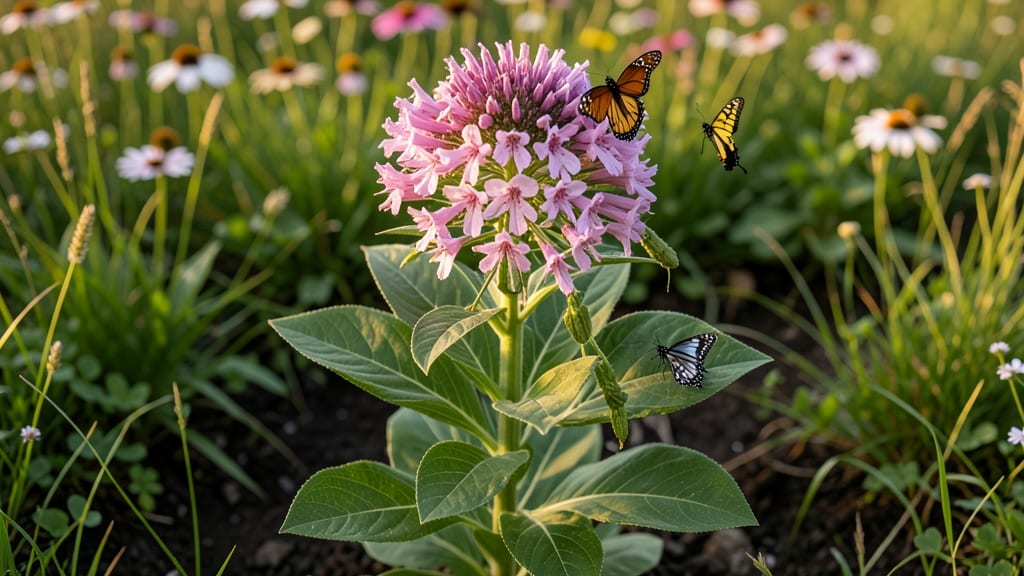
Milkweeds attract butterflies—especially monarchs—by serving as their sole host plant for laying eggs and providing essential nectar for adult butterflies, making them critical to their life cycle and survival.
Milkweeds act like a butterfly magnet because monarchs rely on them exclusively for their caterpillars' survival. 🌿 The plants contain specialized compounds called cardenolides that deter predators while fueling rapid caterpillar growth. Without milkweed, monarch populations would plummet—these plants are the foundation of their entire ecosystem.
I've seen gardens explode with monarch activity after adding just a few milkweed stems, proving how vital they are for these iconic butterflies.
What's fascinating is how this relationship works both ways: adult monarchs feed on milkweed nectar while their caterpillars feast on the leaves.
This two-stage dependency creates a perfect life cycle support system. 🦋 For gardeners looking to boost butterfly populations, planting native milkweed species is one of the most effective strategies you can use—it's like opening a five-star hotel for monarchs.
💡 In This Article
- Why Milkweed Is Essential for Monarch Butterfly Survival
- How to Grow Milkweed for Butterfly Gardens
Why milkweed is essential for monarch butterfly survival
The magic of milkweed lies in its chemical defense system, particularly cardenolides—natural toxins that make monarch caterpillars unpalatable to predators like birds and spiders.
These compounds accumulate in the caterpillar's body, creating a bitter taste that deters would-be attackers. 🔥 What's remarkable is how monarchs have evolved to not only tolerate but thrive on these toxins, which most other insects would find deadly.
This unique adaptation allows monarch caterpillars to grow rapidly on milkweed leaves, reaching their full size in just 2-3 weeks compared to other butterflies that take months.
Milkweed's role extends beyond just feeding caterpillars—it's the only plant monarchs will lay their eggs on. Female monarchs use specialized sensory receptors to detect milkweed's unique chemical signature from up to 3 miles away. This precision ensures their offspring have access to the perfect food source.
Without milkweed, monarch eggs would hatch into starving caterpillars with no suitable leaves to eat, leading to near-certain death. 💫 The plant's fibrous leaves provide both nutrition and protection, creating a survival advantage that's hard to match in nature.
This ecological dependency creates a beautiful feedback loop: more milkweed means more monarchs, which means more pollination and seed dispersal for the plants. I've observed gardens where milkweed patches become temporary monarch nurseries, with dozens of caterpillars visible at once.
The adult butterflies then pollinate the milkweed flowers while feeding on their nectar, completing the cycle. This mutualistic relationship is why conservationists often call milkweed the "cornerstone" of monarch ecosystems.
What makes this relationship even more fascinating is how milkweed's toxins persist through the caterpillar's metamorphosis. When monarchs emerge as adults, they retain traces of cardenolides in their wings, making them less appealing to predators throughout their entire 4-6 month lifespan.
This chemical protection spans generations, creating a built-in survival advantage that's rare in nature. 🌟 The result is one of the most specialized and effective plant-insect relationships in the natural world.
However, this dependency also makes monarchs vulnerable to milkweed decline. Habitat loss has reduced milkweed populations by 50% in some regions, directly correlating with monarch population drops. The good news? Even small garden plots can make a difference.
A single milkweed plant can support dozens of caterpillars and attract hundreds of adult butterflies during migration season, proving that conservation starts with individual actions.
For those curious about the science, milkweed's cardenolides work by interfering with sodium-potassium pumps in animal cells, causing muscle contractions that make predators gag. This same mechanism is what makes milkweed sap mildly toxic to humans—though generally harmless unless ingested in large quantities.
The plant's ability to balance this toxicity with nutritional value for monarchs demonstrates nature's incredible precision in evolutionary adaptations. ✨