
Flowers
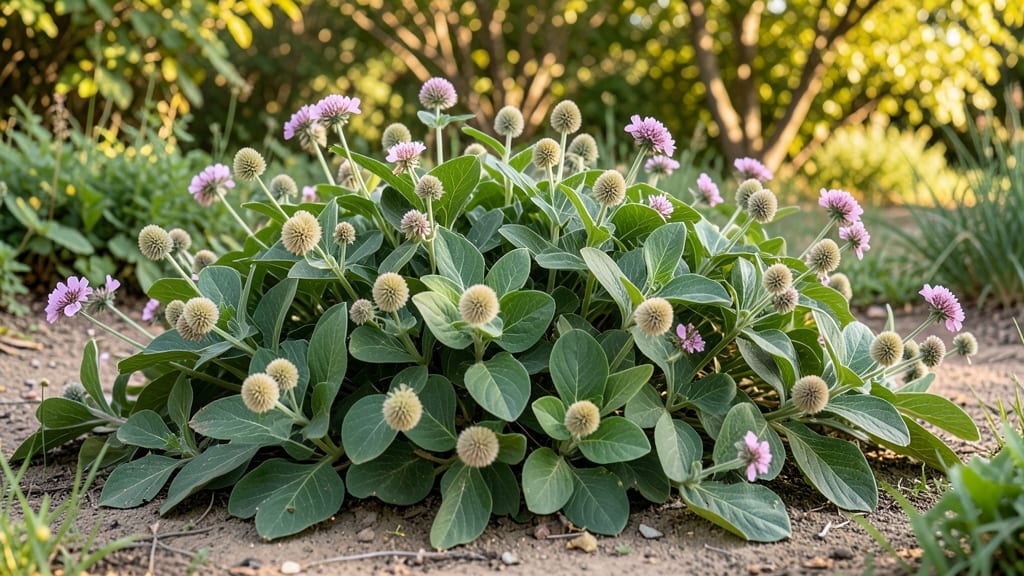
Removing Harry balls milkweed requires targeting its extensive root system, which spreads aggressively underground. Cut roots at the soil line with a sharp knife, treat exposed roots with vinegar or herbicide, and monitor for regrowth over 6-12 months.
Harry balls milkweed earns its reputation through its rhizomatous root system, which can stretch up to 10 feet horizontally and regenerate from even small fragments. 🌱 Unlike shallow-rooted weeds, its deep taproots make traditional digging ineffective—you'll just end up with more plants.
The key to success lies in cutting roots cleanly at the soil line (where they're thickest) and following up with a systemic herbicide like glyphosate, which travels through the plant's vascular system to kill it from within.
Timing matters too—spring or early summer is ideal when the plant is actively growing. After cutting, apply herbicide directly to the stumps and watch for new shoots. If you see regrowth within a year, repeat the process until the area stays clear.
For stubborn cases, consider a mulch barrier or landscape fabric to prevent future spread.
💡 In This Article
- Why Harry Balls Milkweed Roots Are So Hard to Remove
- Step-by-Step Harry Balls Milkweed Root Removal Guide
Why harry balls milkweed roots are so hard to remove
Harry balls milkweed (Asclepias curassavica) earns its stubborn reputation from its specialized rhizomatous root system, which combines deep vertical taproots with sprawling horizontal rhizomes. These rhizomes can extend up to 10 feet laterally while sending roots 3-4 feet deep—far beyond the reach of most garden forks.
The root segments contain dormant buds that can sprout into new plants, even from tiny fragments left in the soil.
The plant's survival strategy relies on its ability to regenerate from any root piece containing a bud, which explains why pulling or digging often backfires.
When you disturb the roots, you create more growth points rather than removing the source. 🌱 The thick, fibrous root structure also resists decomposition, persisting in the soil for years.
Unlike annual weeds that die back each winter, milkweed's roots store energy to fuel rapid regrowth in spring, making it resilient against seasonal disturbances.
Botanically, this growth habit is called vegetative reproduction, where new plants grow from existing roots rather than seeds. A single root fragment as small as 1 inch can produce a mature plant within a growing season.
This explains why even partial removal efforts often lead to more plants popping up around your garden. The plant's aggressive spread isn't just about quantity—it's about its ability to exploit every opportunity for regrowth.
What makes this particularly challenging is the plant's vascular system, which transports nutrients and water efficiently. When you cut the roots, the plant redirects its energy to any remaining buds, accelerating regrowth.
This is why simple cutting without follow-up treatment rarely works—you're essentially giving the plant more energy to spread. The solution requires both mechanical removal (cutting) and chemical intervention (herbicide) to disrupt this life cycle.
Seasonal growth patterns also play a role in its persistence. Milkweed grows most aggressively during spring and summer, when temperatures average between 70-85°F and soil moisture is adequate. During these periods, the plant allocates maximum energy to root expansion, making it harder to control.
In contrast, cooler months slow its growth, but the roots remain dormant yet viable in the soil, ready to sprout when conditions improve.
Understanding these biological mechanisms helps explain why traditional gardening methods fail. The plant's root system isn't just extensive—it's designed to outlast most removal attempts.
This is why professionals recommend a two-phase approach: first cutting the roots to expose them, then applying a systemic herbicide that travels through the plant's vascular system to kill it from within. Without this dual approach, you're essentially playing a game of whack-a-mole with nature's most persistent weeds.