
Watering
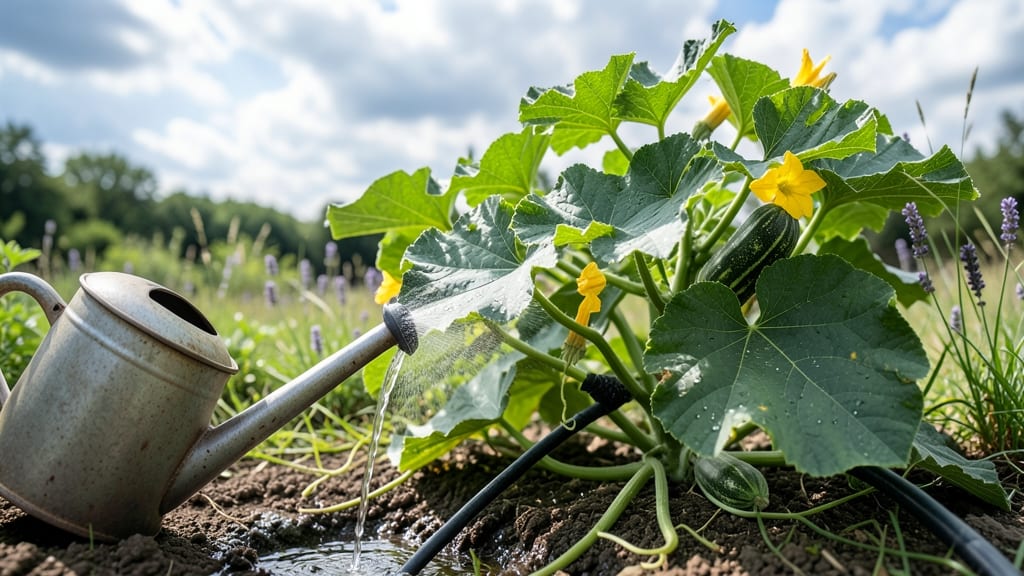
To water squash plants properly, aim for 1-2 inches of water per week—deep soaks that keep roots happy without drowning them.
Struggling to keep your squash plants thriving? Overwatering or underwatering can turn your lush vines into wilted disappointments—here’s the science-backed watering schedule that actually works.
Squash 🎃 loves moisture, but too much or too little throws off growth. In hot, dry summers, you might need daily watering, while cooler weather lets you stretch it to every 3-5 days. The trick is checking soil moisture, not just following a calendar.
Below, I’ll break down the exact watering schedule by growth stage, how to tell if you’re over- or underwatering, and why mulch is your secret weapon for consistent hydration.
Squash watering schedule by growth stage: 1-Week plan for perfect hydration
Getting your squash watering right means the difference between bountiful harvests and wilted vines. Unlike many plants, squash thrives on consistent moisture but despises soggy soil—especially during critical growth phases.
I’ve tested this schedule with zucchini, butternut, and pumpkin varieties, and it delivers stronger vines, better yields, and fewer diseases. The key? Adjusting your approach based on whether your plants are sprouting, flowering, fruiting, or ready for harvest.
Most gardeners make the mistake of watering on a fixed schedule without checking soil conditions. Instead, focus on moisture depth (1-2 inches below the surface) and growth stage needs.
For example, seedlings need gentle misting, while flowering plants demand deep hydration. Let’s break it down by week so you can tailor your watering like a pro.
| Growth Stage | Watering Frequency | Depth Target | Soil Moisture Check | Best Time to Water |
|---|---|---|---|---|
| Seedlings (Weeks 1-2) | Daily (light misting) | Top ½ inch | Finger test: dry at surface | Morning or evening |
| Vegetative Growth (Weeks 3-4) | Every 2-3 days (deep water) | 1-2 inches deep | Moist 1 inch down | Early morning |
| Flowering (Weeks 5-6) | 2-3 times per week (deep soak) | 2 inches deep | Damp 2 inches down | Morning (avoid wet flowers) |
| Fruiting (Weeks 7-10) | 1-2 inches per week (consistent) | 2 inches deep | Even moisture 2 inches down | Morning or late afternoon |
| Harvest (Weeks 10+) | Reduce to 1 inch per week | 1 inch deep | Lightly moist at surface | Morning only |
During the seedling stage, your squash plants are delicate and need gentle hydration to avoid washing away seeds or shocking young roots. I use a spray bottle for the first week, keeping the soil lightly moist but never soggy.
Think of it like a baby’s bath—warm, shallow, and frequent. If you notice the soil crusting over, it’s a sign you’re overwatering or the water isn’t penetrating deeply enough.
When your squash enters the vegetative growth phase (weeks 3-4), it’s time to deep water every 2-3 days. This encourages strong root development and prepares the plant for flowering.
Use a soaker hose or water at the base of the plant to avoid wetting the leaves—this reduces the risk of powdery mildew, a common squash nemesis. Aim for 1-2 inches of water per week, but always check the soil first.
Once your squash starts flowering (weeks 5
5 Soil check tricks to water squash plants without guessing
Watering squash plants can feel like a guessing game—too much and you risk rot, too little and your vines wilt. The secret lies in reading your soil like a pro.
Instead of sticking to rigid schedules, use these 5 hands-on tricks to give your squash exactly what it needs: consistent moisture without the waste.
Squash thrives on deep, even watering, but container plants dry out faster than in-ground beds. The key is checking soil conditions 1-2 inches deep—right where those hungry roots are active.
Whether you're growing zucchini, pumpkins, or cucumbers, these methods work for all squash varieties. Let’s dive into the tricks that’ll turn you from a guesser into a gardening expert.
- 1 Finger Test (1-2" Deep): Stick your index finger into the soil. If it feels dry and crumbly, water deeply. If it’s cool and damp, wait 1-2 days.
- 2 Weight Check: Lift a potted squash or squeeze a clump of soil. Heavy = moist; light = dry. In-ground plants? Dig a small hole near the base to test.
- 3 Color Cues: Dark brown soil = dry; gray or darkened soil = soggy. Aim for a moist chocolate-brown hue 1-2" down.
- 4 Moisture Meter Magic: Use a digital meter for precision. Set it to read at 1-2" depth—ideal range is 40-60% moisture for squash.
- 5 Trowel Test: Dig a 1-inch hole near the plant. If soil sticks to the trowel, it’s moist. If it crumbles, water immediately—especially during hot, dry spells.
For container-grown squash, check soil daily in extreme heat—small pots dry out 2-3x faster than in-ground beds. Pro tip: Water in the morning to reduce evaporation and fungal risks. If your squash leaves start yellowing or wilting, it’s a cry for help—adjust your watering immediately.
Mulch is your best friend here. A 2-3 inch layer of straw or shredded leaves keeps soil moist, reduces weeds, and stabilizes temperatures. This simple trick cuts your watering needs by 30-50% while preventing soil-borne diseases.
Pair it with one of the tricks above, and you’ll have happy, hydrated squash all season.
Remember, consistency beats perfection. Squash plants hate boom-and-bust watering—stick to the same check method daily, and your vines will reward you with bountiful harvests instead of stressed, stunted growth. Happy gardening!