
Plants
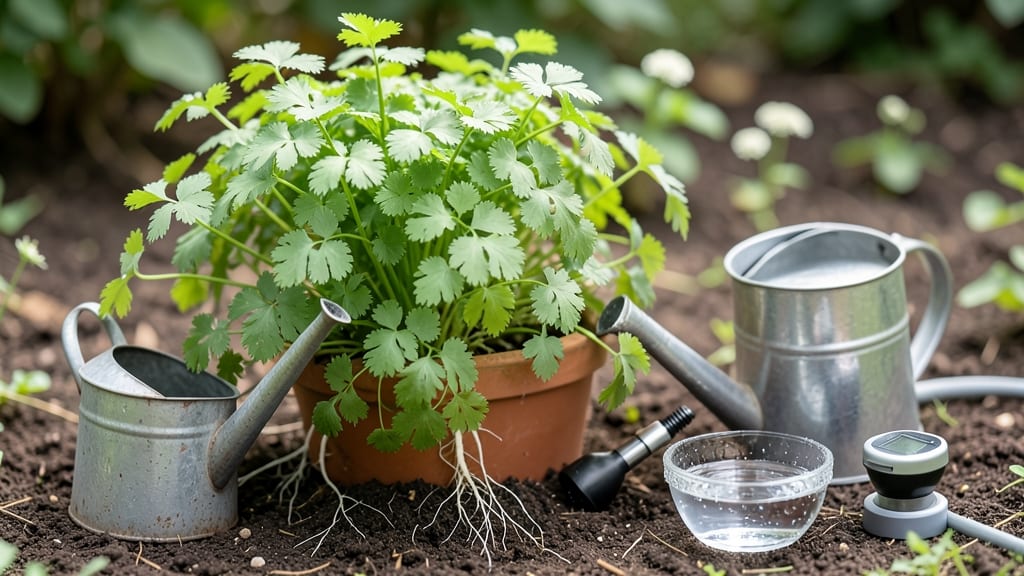
A cilantro plant needs about 1 inch of water per week to stay fresh and flavorful, though your soil type and climate can change that number fast.
Picture this: you’ve just planted your cilantro seeds, eager for that bright, zesty harvest, only to watch them bolt or wilt before they even get a chance to thrive.
The truth? Cilantro is a moisture-loving herb, but it’s also delicate—too much water and you’ll drown the roots, too little and you’ll stress the plant into early flowering.
In well-draining soil, cilantro prefers consistent moisture but hates soggy conditions. Sandy soil dries out faster, so you’ll need to water every 2-3 days, while clay soil holds moisture longer, meaning you can stretch it to every 4-5 days.
Containers dry out quicker than garden beds, so check the top inch of soil daily—if it’s dry, it’s time to water.
Below, I’ll break down exactly how to adjust your watering schedule based on your soil, climate, and whether your cilantro is snug in a pot or sprawling in the ground.
You’ll learn the signs of over- and under-watering, plus pro tips to keep your cilantro lush and ready for harvest all season.
Weekly watering schedule for cilantro by soil type: sandy vs clay vs loamy
Cilantro’s water needs change dramatically depending on your soil type. Sandy soil drains too quickly, while clay holds moisture like a sponge—both extremes stress cilantro. Loamy soil, the Goldilocks of gardening, provides the perfect balance for consistent growth.
Let’s break down exactly how much water your cilantro needs weekly for each soil type to avoid bolting or root rot.
First, check your soil’s moisture level by sticking your finger 1 inch deep. If it feels dry, it’s time to water.
For sandy soil, you’ll need to water more frequently, while clay soil may require less but deeper watering. Loamy soil falls right in the middle, making it the easiest to manage. Understanding these differences ensures your cilantro stays hydrated without drowning.
Soil moisture indicators are your best friend. Sandy soil will feel dry at the surface, clay will stay damp longer, and loamy soil will hold moisture evenly. Adjust your watering routine based on these clues to keep your cilantro thriving. For example, in hot summer months, sandy soil may need watering every 1-2 days, while clay soil might only need it every 4-5 days.
Here’s a quick comparison to help you visualize the differences:
In sandy soil, cilantro’s roots struggle to retain moisture, so watering lightly but frequently is key. Aim for ½ inch of water every 1-2 days, especially during hot, dry spells.
Use a drip irrigation system or watering can to deliver moisture directly to the roots without disturbing the soil. This method mimics natural rainfall and prevents the soil from drying out too quickly.
For clay soil, the challenge is avoiding waterlogging. Water deeply but infrequently, ensuring the water penetrates at least 3 inches deep. Let the top 1-2 inches of soil dry out between waterings to prevent anaerobic conditions that lead to root rot.
If your clay soil feels compacted, consider amending it with compost or sand to improve drainage.
If you’re growing cilantro in containers, sandy or loamy soil is ideal. Containers dry out faster, so check the moisture level daily during hot weather. A self-watering pot can help maintain consistent moisture, especially if you’re away from home.
For in-ground cilantro, mulch around the base to retain moisture and regulate soil temperature, which is particularly helpful in clay-heavy soils.
Seasonal adjustments are crucial. In spring and fall, cilantro typically needs watering every 3-4 days, regardless of soil type. However, during summer heatwaves, increase frequency to every 1-2 days for sandy soil or every 2-3 days for loamy and clay soils.
Always water in the early morning to reduce evaporation and fungal risks.
Watch for visual cues like yellowing leaves or wilting stems, which signal underwatering. Conversely, mushy stems or leaves turning brown at the edges indicate overwatering. Adjust your schedule based on these signs, and don’t hesitate to amend your soil if it’s not draining well.
A little organic matter can make a world of difference for cilantro’s health.
Remember, cilantro is sensitive to both drought stress and waterlogged roots. By tailoring your watering routine to your soil type and monitoring moisture levels, you’ll keep your cilantro lush, flavorful, and productive all season long. Happy gardening!
Signs your cilantro is overwatered or underwatered (and how to fix it)
Cilantro is sensitive to watering extremes—too much or too little can spell disaster for your herb garden. Overwatered cilantro often shows signs like yellowing leaves and mushy stems, while underwatered plants develop crispy edges and droop.
Both conditions stress the plant, reducing flavor and yield. Let’s diagnose the issue and restore your cilantro to peak health.
First, check the soil moisture by sticking your finger 1-2 inches deep. If it feels damp, you’re likely overwatering. If dry, it’s time to hydrate. Cilantro roots need consistent moisture but hate soggy conditions.
Adjusting your watering routine based on these clues can save your plants before they bolt or rot.
Cilantro thrives with 1-1.5 inches of water weekly, but adjust based on soil type:
- Sandy soil: Water every 1-2 days—dries out fast.
- Loamy soil: Water every 2-3 days—ideal balance.
- Clay soil: Water every 3-4 days—retains moisture longer.
If your cilantro leaves are yellowing and wilting, it’s likely overwatered. Root rot often follows, turning stems mushy and black. To fix this, reduce watering frequency and improve drainage by adding perlite or compost to heavy soil.
Let the top 1 inch of soil dry between waterings to prevent soggy roots.
On the flip side, crispy leaf edges and dry, brown patches signal underwatering. Cilantro’s shallow roots can’t reach deep moisture, so water deeply but infrequently. Aim for 1 cup of water per plant in containers or 1 inch weekly in garden beds.
Water at the base of the plant to avoid leaf burn.
For container-grown cilantro, check soil moisture daily—pots dry out faster. If the soil feels bone-dry within an inch of the surface, it’s time to water. Terracotta pots wick moisture faster, so monitor them closely.
In-ground cilantro may need less frequent watering, especially in loamy or clay soils, which hold moisture longer.
To keep cilantro thriving, mulch around the base with straw or shredded leaves to retain moisture and regulate soil temperature. Avoid watering at night, as damp foliage invites pests and diseases. With these adjustments, your cilantro will stay vibrant and productive for weeks of fresh harvests.
Remember, cilantro’s water needs shift with seasons. In hot summer months, you may need to water daily, while cool spring or fall requires less. Always adapt to your local climate and soil type for the best results.