
How To
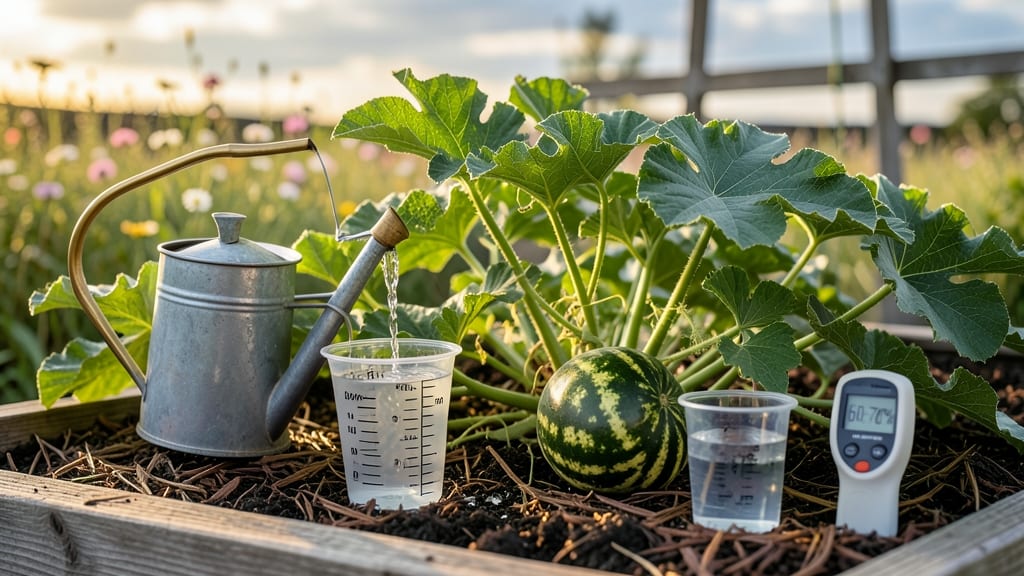
To grow a juicy, ripe watermelon 🍉, you need to water it just the right amount—not too much, not too little—but the perfect balance for flavor and yield.
Picture this: you’ve spent weeks tending to your watermelon patch, only to watch your fruit shrivel or split at the vine. The culprit? Overwatering or underwatering, both of which can ruin your harvest before it even ripens.
Watermelons thrive with 1-2 inches of water per week, but timing and technique matter just as much. Too little, and the vines wilt; too much, and the rind cracks.
Below, I’ll break down the science-backed schedule—from seedlings to harvest—so you can avoid common mistakes and grow melons that burst with sweetness.
You’ll learn when to water, how to spot signs of stress, and the best methods (like drip irrigation) to keep your plants happy without wasting a drop. Let’s make this your most productive watermelon season yet!
Watermelon water requirements by growth stage: from seedling to harvest
Growing watermelons requires more than just sunshine—it’s all about precision watering at the right stages. Watermelons are 90% water, so their hydration needs shift dramatically from seedling to harvest. Too little water stunts growth, while too much causes fruit splitting or fungal diseases.
Let me break down the exact watering schedule you need for each critical phase, so you can grow melons that are both sweet and plump.
First, let’s address the most common question: how much water does a watermelon need? The answer changes as your plant matures. Seedlings need gentle moisture, while flowering and fruiting plants demand deep, consistent hydration.
I’ll show you exactly how much to water at each stage, plus visual cues to monitor soil moisture so you never guess again.
💧 Key Rule: Always water deeply—aim for 1-2 inches of moisture per week—but adjust based on rainfall, soil type, and heat. Sandy soil dries faster than clay, so check moisture levels with your finger: 1-2 inches deep should feel damp, not soggy.
Now, let’s dive into the stage-by-stage watering guide with a clear breakdown of what your watermelon vines need at every growth phase. This summary table will give you a quick reference, but I’ll expand on each stage below to help you troubleshoot and optimize.
During the seedling stage (0-3 weeks), your watermelon plants are tiny and delicate. Overwatering here is just as harmful as underwatering. Aim to keep the top 1 inch of soil moist, but avoid soggy conditions.
I water mine every 2-3 days, using a gentle spray or drip irrigation to prevent disturbing the seeds. If the leaves look slightly wilted in the afternoon, it’s time to water—don’t wait until they’re crispy!
Once your plants hit the vegetative stage (3-6 weeks), they’ll start spreading their vines aggressively. This is when you can increase watering to every 3-5 days, ensuring the soil stays 1-2 inches deep damp.
Check moisture by sticking your finger into the soil: if it feels dry past your first knuckle, water deeply. Yellowing leaves at this stage usually mean overwatering, while slow growth signals thirst. Mulching with straw helps retain moisture and keeps roots cool.
The flowering stage (6-8 weeks) is critical because watermelons need consistent hydration to set fruit. Flowers are sensitive to moisture stress, so I water daily or every other day, aiming for 2+ inches of deep moisture.
Look for wilted flowers as a sign of thirst, or cracked soil if it’s time to water. This is also when you’ll see the first baby melons form—never let them dry out or they’ll drop off. A soaker hose works wonders here to deliver water right to the roots.
When your watermelons enter the fruiting stage (8-12 weeks), their water needs peak. Now, you’re growing 90% water, so deep, consistent hydration is non-negotiable. Water every 2-3 days, soaking the soil 2-3 inches deep.
The biggest risk here is fruit splitting, which happens when soil moisture fluctuates wildly. I monitor soil moisture closely and water in the early morning to reduce evaporation. If you see dull rinds or cracks, adjust your watering immediately.
Finally, as you approach harvest (12+ weeks), you can reduce watering slightly to concentrate sugars in the fruit. Switch to weekly deep watering, ensuring the soil stays 1-2 inches deep moist. The vines will start yellowing naturally, and you’ll focus water on the remaining melons.
Harvest when the tendril near the stem turns brown and crispy, and the melon sounds hollow when tapped. Overwatering at this stage can dilute flavor, so balance is key!
Pro tip: Use a moisture meter or the finger test to avoid guesswork. Stick your finger 1-2 inches deep—if it feels dry, water thoroughly. And always water at the base of the plant, not the leaves, to prevent fungal diseases like powdery mildew. With this precise approach, you
Signs of overwatering vs underwatering: how to fix common watermelon irrigation mistakes
Watermelons are finicky about water—give them too much, and their leaves yellow like autumn leaves. Too little, and they shrivel like a prune. The key is finding that sweet spot where the soil stays consistently moist but never soggy.
I’ve seen blossom-end rot and split melons from both extremes, and trust me, neither is pretty.
Start by checking the soil 1-2 inches deep. If it’s damp but not drenched, you’re on track. Yellowing leaves with mushy stems? That’s overwatering. Wilted leaves that perk up at night? Underwatering. Both are fixable, but you need to act fast to save your crop.
⚠️ How Much Water Does a Watermelon Need?
- Seedlings: Keep soil moist but not wet (1 inch per week)
- Flowering Stage: 1-1.5 inches of water weekly (deep soak)
- Fruiting Stage: 1.5-2 inches weekly (adjust for heat)
- Avoid: Watering at night (fungal risk) or shallow sprinkles (encourages surface drying)
💧 Pro Tip: Use a moisture meter or stick your finger in the soil—if it feels like a damp sponge, you’re golden.
Overwatered watermelons show yellow leaves that start at the bottom and work upward. The rind may crack from rapid growth, and you might spot mold or fungus on the soil surface.
If your plants look like they’ve been drowned, stop watering immediately and let the top 2-3 inches of soil dry out before resuming.
Underwatered watermelons wilt dramatically during the day but recover at night when humidity rises. The leaves may curl inward or develop a dull, grayish hue. Worse yet, the fruit can shrink or develop hard rinds.
To fix this, water deeply once or twice a week (early morning) and mulch to retain moisture.
Blossom-end rot is a classic sign of watering inconsistency. It looks like a sunken, brown spot on the blossom end of the melon. This happens when the plant can’t absorb enough calcium due to uneven moisture.
To prevent it, water consistently and consider adding calcium-rich compost or crushed eggshells to the soil.
Split melons are another heartbreaker, usually caused by sudden heavy watering after a dry spell. Once a melon splits, it’s unusable, but you can prevent future splits by watering deeply but evenly and avoiding late-season irrigation.
If your vines are sprawling, use drip irrigation to deliver water directly to the roots.
Remember, watermelons need 1-2 inches of water per week, but adjust for your climate. In hot, dry regions, you may need daily watering during peak heat.
In humid areas, reduce frequency to prevent fungal issues. Pay attention, and your watermelons will reward you with sweet, juicy perfection instead of sad, shriveled disappointments. 🍉