
How To
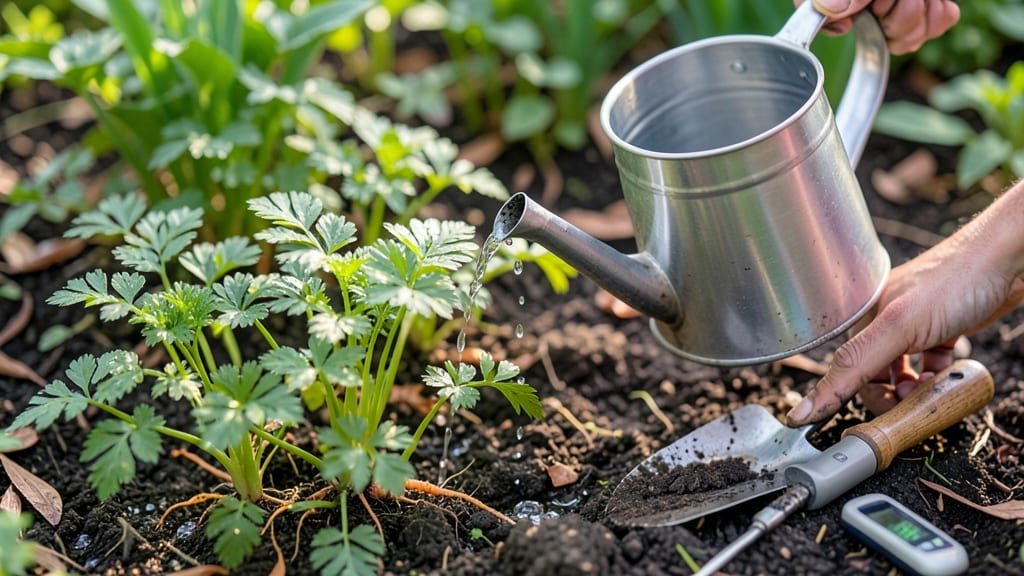
Watering carrot seedlings too often or too little can ruin your harvest before it even starts—yet most gardeners don’t know the right timing for crisp, healthy roots.
Overwatering or underwatering turns your 🥕 seedlings into a mushy mess or stunted failures. The key? A simple soil dry test that keeps moisture just right without inviting rot.
In this guide, I’ll show you exactly how often to water based on soil type, weather, and growth stage—plus the signs to watch for so you never guess again.
You’ll learn the morning vs. evening rule, how to adjust for heatwaves, and when to taper back as your carrots mature for a perfect harvest.
The perfect watering schedule for carrot seedlings based on soil conditions
Carrot seedlings need consistent moisture to grow straight and sweet, but overwatering can drown their delicate roots. The key is checking soil moisture daily using the 'finger test'—stick your finger 1 inch deep into the soil.
If it feels dry, it's time to water. This simple method prevents both root rot and stunted growth from dryness.
Morning watering is ideal because it allows excess moisture to evaporate during the day, reducing fungal risks. Avoid evening watering, as damp leaves overnight invite blight and other diseases. Aim for deep, infrequent waterings rather than light daily sprinkles to encourage strong root development.
| Soil Type | Watering Frequency | Depth Check | Seasonal Adjustments |
|---|---|---|---|
| Sandy | Every 1-2 days | 1-2 inches deep | Increase in summer |
| Loamy | Every 2-3 days | 1-1.5 inches deep | Reduce in fall |
| Clay | Every 3-4 days | 1.5-2 inches deep | Avoid waterlogging |
| Container | Daily (small pots) | Top inch dry | Monitor closely |
In spring and summer, carrot seedlings need more frequent watering due to higher evaporation rates. Water every 1-2 days in sandy soil or during heatwaves, but reduce to every 3 days in cooler fall weather.
Always water at the soil level, not over the leaves, to prevent disease. A drip irrigation system or soaker hose delivers water directly to roots for best results.
Watch for signs of overwatering, like yellowing leaves or mushy stems, which indicate root rot. Underwatered seedlings will have wilted foliage and dry, cracked soil around them. Adjust your schedule based on these visual cues—carrots are resilient but need consistent moisture to develop properly.
Mulching with straw or grass clippings helps retain soil moisture and reduces evaporation. Apply a 2-inch layer around seedlings, keeping it 2 inches away from stems to prevent rot. This simple step can cut your watering frequency by 20-30% while keeping roots happy.
For container-grown carrots, check soil moisture daily since pots dry out faster. Use a moisture meter or your finger to test the top 1 inch of soil.
If it's dry, water thoroughly until it drains from the bottom. Avoid letting seedlings sit in saucers of water, as this leads to root suffocation.
Seasonal changes require adjustments: in hot summer, water in the early morning to prevent rapid evaporation, while in cool fall, you can space waterings to every 4-5 days. Always prioritize deep watering over shallow sprinkles to encourage strong root penetration.
Signs of healthy carrot seedlings include vibrant green leaves and firm stems. If you notice yellowing leaves or stunted growth, reassess your watering routine.
A quick fix is to loosen the soil around roots with a fork to improve drainage, then adjust your watering schedule based on the soil test.
Remember, carrots grow best in loose, well-draining soil. If your soil compacts easily, mix in compost or sand before planting to improve aeration. This helps roots grow straight and prevents forking, a common issue caused by uneven moisture or poor soil conditions.
With these science-backed tips, you'll master the art of watering carrot seedlings—keeping them hydrated without drowning for a bountiful harvest of crisp, sweet roots. 🥕💧
5 Common mistakes that kill carrot seedlings (and how to fix them)
Carrot seedlings are delicate, and even small watering mistakes can stunt their growth or invite deadly fungal diseases. I’ve seen uneven moisture turn lush green tops into limp, yellowing plants overnight.
The worst offenders? Inconsistent watering, hard soil crust, and poor drainage—all of which strangle young roots before they even get started.
Let’s tackle the top 5 mistakes that sabotage your seedlings, plus the easy fixes to save your crop. The key is consistency—carrots hate dry spells or soggy soil, but most gardeners swing between the two without realizing it.
⚠️ Watering Carrot Seedlings WRONG
Most gardeners water too frequently or too deeply at once, drowning tender roots. The fix? Water lightly but often—aim for 1/4 inch per week in the first 2 weeks, then gradually increase to 1/2 inch as seedlings mature. Morning watering is critical to prevent fungal rot from evening moisture.
Test soil moisture daily: Stick your finger 1 inch deep—if it’s dry, water; if damp, wait. Overwatering is just as deadly as underwatering.
Mistake #1: Skipping soil prep leads to a hard crust that blocks seedlings from emerging. I’ve planted carrots in compacted soil only to watch them sprout crooked or fail entirely.
The fix? Loosen soil to 6 inches deep before planting, and mix in compost or sand to improve drainage. A fine sift of coarse sand works wonders for sandy soils.
Mistake #2: Poor drainage turns your garden into a swamp, inviting rot. Heavy clay soils are the worst culprits. To fix this, raise beds or amend soil with perlite or coconut coir.
Always plant carrots on a slight slope to encourage runoff. If your soil feels sticky when wet, it’s time to act.
Mistake #3: Uneven watering causes uneven growth, leading to forked or stunted carrots. I’ve seen entire rows of seedlings collapse because of drip irrigation leaks or haphazard hose watering.
Use a soaker hose or drip system to deliver water slowly and evenly. Water at the base of plants, never the leaves.
Mistake #4: Ignoring mulch lets soil dry out too fast or bake in the sun. A 1-inch layer of straw or shredded leaves locks in moisture and keeps roots cool.
Mulch also suppresses weeds, which compete for water. For extra protection, top with black plastic sheeting in hot climates to retain moisture.
Mistake #5: Overcrowding seedlings steals nutrients and water, stunting growth. Thin seedlings to 2-3 inches apart when they’re 2 inches tall. This might seem cruel, but crowded carrots split the soil and grow gnarled. Use sharp scissors to avoid disturbing roots—pulling can damage nearby plants.