
Watering
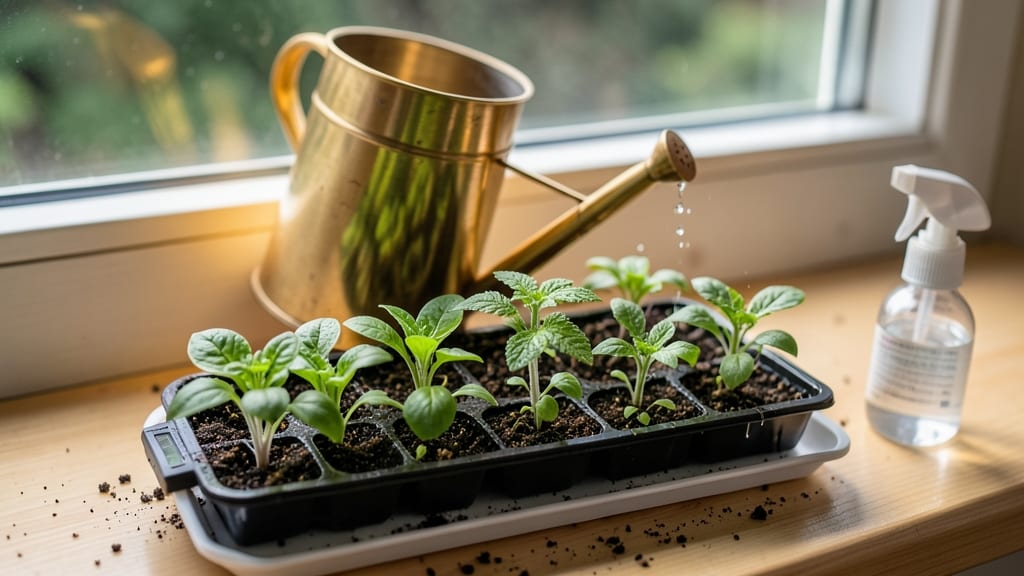
Watering seedlings in a tray the right way keeps them thriving—not drowned or parched—while you wait for those first true leaves to pop.
Overwatering or underwatering seedlings in trays can stifle growth—or worse, kill your plants before they even sprout. The right moisture balance is the secret to strong roots and thriving seedlings, but most gardeners guess wrong.
Instead of relying on a rigid schedule, focus on keeping the soil moist but never soggy. A simple finger test—dipping your index finger an inch deep—tells you whether it’s time to water again. Too dry? Add water. Too wet? Hold off until the top layer dries slightly.
In this guide, you’ll learn the science-backed watering frequency for different soil types, how to spot signs of over- or under-watering, and the three most common mistakes that turn trays into seedling graveyards. Let’s get those roots growing strong.
The perfect watering schedule for seedlings in trays by soil type
Your seedlings' survival depends on soil moisture balance, but different soil mixes hold water differently. Peat-based mixes dry faster than coconut coir, while soil-less mixes need precise timing to avoid root rot. The tray material—plastic vs. biodegradable—also affects evaporation rates, making adjustments essential for consistent moisture.
Humidity levels play a critical role too. In low-humidity environments (below 40%), seedlings dry out faster, requiring daily watering. In high-humidity conditions (above 60%), you may only need watering every 2-3 days. Let’s break down the science-backed watering schedules tailored to your soil type and tray material.
🌱
| Soil Type | Tray Material | Watering Frequency | Humidity Adjustments | Key Signs |
|---|---|---|---|---|
| Peat-Based Mix | Plastic Tray | Every 1-2 days | Low humidity: daily High humidity: every 2 days |
Top 1/4 inch dry Wilting leaves |
| Peat-Based Mix | Biodegradable Tray | Every 2 days | Low humidity: every 2 days High humidity: every 3 days |
Top 1/2 inch dry Soil pulls away from edges |
| Coconut Coir | Plastic Tray | Every 2-3 days | Low humidity: every 2 days High humidity: every 3-4 days |
Top 1/2 inch dry Slower wilting |
| Coconut Coir | Biodegradable Tray | Every 3 days | Low humidity: every 2-3 days High humidity: every 4 days |
Top 3/4 inch dry Stiff stems |
| Soil-Less Mix | Plastic Tray | Every 1 day | Low humidity: daily High humidity: every 2 days |
Top 1/8 inch dry Immediate wilting |
| Soil-Less Mix | Biodegradable Tray | Every 1-2 days | Low humidity: daily High humidity: every 2 days |
Top 1/4 inch dry Crusty surface |
For peat-based mixes, water when the top 1/4 inch feels dry—these mixes dry out fastest due to their fibrous structure. Use a spray bottle for gentle application to avoid displacing seeds. Plastic trays retain moisture longer than biodegradable ones, so reduce watering frequency by 20-30% if using plastic.
If your seedlings are in coconut coir, wait until the top 1/2 inch is dry before watering. Coir holds moisture longer but can compact, reducing airflow.
Gently fluff the soil with a chopstick or small fork to maintain porosity. Biodegradable trays allow more evaporation, so increase watering slightly compared to plastic.
For soil-less mixes, consistency is key—water lightly daily to prevent clumping. These mixes lack organic matter, so they dry out quickly and offer poor insulation. Place trays on a seedling heat mat (set to 70°F) to maintain even moisture and encourage root growth.
Adjust your schedule based on environmental cues. If condensation forms on the tray lid or window surfaces, your humidity is too high—reduce watering by 50%. Conversely, if the soil feels bone-dry within 24 hours, increase frequency but use bottom-watering to prevent fungal spores from splashing onto seedlings.
💧
Always water in the morning to allow excess moisture to evaporate during the day. Avoid evening watering, as damp leaves overnight create ideal conditions for damping-off disease. Use room-temperature water to prevent shocking delicate roots.
For high-humidity climates, consider adding a small fan on low setting to improve air circulation without drying out the soil.
Test your watering routine by lifting the tray—if it feels heavy, you’re overwatering; if it feels light, increase frequency. Aim for a consistently moist (not soggy) environment to give your seedlings the best start. With these adjustments, you’ll avoid the most common pitfalls and watch your seedlings thrive.
Moisture check method: 3 signs your seedlings need water (without overdoing it)
Determining when seedlings need water can feel like guessing—until you learn these 3 foolproof signs. Overwatering smothers roots, while underwatering stunts growth, but these visual and tactile cues will help you strike the perfect balance.
I’ve used these methods to rescue dozens of seedlings from both dehydration and root rot, and they work every time.
Instead of relying on a rigid schedule (which varies by soil type, humidity, and tray material), focus on these early warning signals your seedlings send. The key is checking moisture daily, especially in the first 2 weeks, when roots are still shallow and vulnerable.
Trust your senses—your seedlings will thank you with robust stems and vibrant leaves.
- 1 Finger Test (Top 1 Inch): Stick your index finger 1 inch deep into the soil. If it feels dry and crumbly, it’s time to water. If it’s cool and damp, wait another day.
- 2 Weight Assessment: Lift the tray—dry soil feels light, while moist soil has noticeable weight. Compare it to when you last watered; a 20-30% weight loss signals thirst.
- 3 Visual Wilting: Check for early morning droop (normal) vs. permanent wilting (emergency). Also watch for yellowing leaves or soil pulling away from tray edges—both mean it’s too late.
Pro tip: Water in the morning to let excess moisture evaporate during the day, reducing fungal risks. Avoid evening watering, as damp leaves overnight invite damping-off disease. I’ve lost count of seedlings to this silent killer—trust me, timing matters!
For plastic trays, condensation on the bottom signals overwatering, while biodegradable pots dry out faster. Adjust your checks accordingly—coconut coir mixes hold moisture longer than peat-based blends. When in doubt, underwater slightly; seedlings recover faster from dryness than from soggy roots.
Watch for mold or foul smells—these are red flags for root rot. If you see fuzzy white growth on soil, act fast: remove affected seedlings, repot healthy ones in fresh, sterilized mix, and reduce watering frequency by half until the soil dries slightly between waterings.
Mastering these 3 moisture checks will transform your seedling survival rate. Start today—grab a tray, dig your finger in, and let your plants guide you. Your future garden’s strength starts with these tiny, thirsty signals. 🌱