
How To
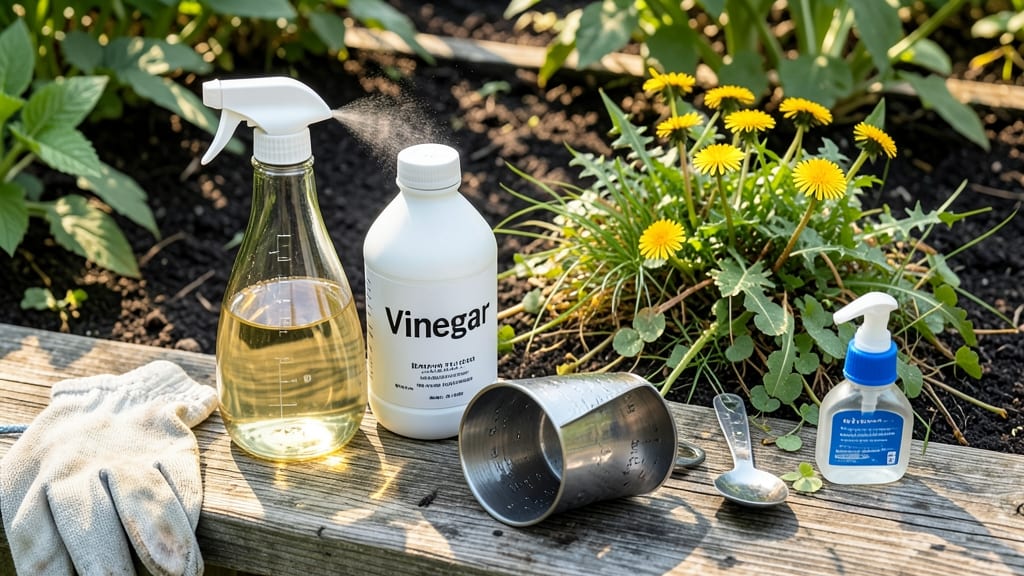
To make weed killer using vinegar, combine one gallon of white vinegar with one cup of dish soap and optionally add salt for stronger effects. Apply directly to weeds on sunny days while avoiding surrounding plants and soil.
This homemade weed killer leverages vinegar's 5-10% acetic acid to break down weed cell walls, essentially cooking them from the inside out. 🔥 The dish soap acts as a surfactant, helping the solution cling to leaves and penetrate more effectively.
For tough weeds like dandelions, adding ½ cup of salt creates a hypertonic solution that pulls moisture from the plant. I always recommend testing on a small weed patch first—some plants may need multiple applications, especially if they're established.
Timing matters just as much as the mix. Spray on bright, sunny days when weeds are actively photosynthesizing—their metabolic processes make them more vulnerable. Avoid windy conditions to prevent drift onto desirable plants.
For best results, apply when weeds are young and tender, as mature plants with thick stems may require stronger concentrations or repeated treatments.
💡 In This Article
- Vinegar Weed Killer Science: Why It Works on Weeds
- Step-by-Step Vinegar Weed Killer Application Guide
Vinegar weed killer science: why it works on weeds
White vinegar's effectiveness as a weed killer stems from its 5-10% acetic acid concentration, which acts as a natural herbicide. When sprayed on weeds, the acetic acid penetrates leaf cuticles and disrupts cellular membranes, causing rapid dehydration and cell death.
This process is similar to how salt draws moisture from plant tissues, but vinegar works faster—typically killing weeds within 24-48 hours of contact.
The key mechanism is the acetic acid's ability to lower the pH of plant cells to around 2-3, far below the optimal 5.5-6.5 range for most plants. 🔥
The dish soap plays a crucial role by acting as a surfactant that breaks surface tension, allowing the vinegar solution to spread evenly and adhere to leaves. Without soap, vinegar would bead up and roll off the waxy surfaces of many weed leaves.
For tougher weeds like crabgrass or clover, adding ½ cup of salt creates an osmotic effect—drawing water out of plant cells through osmosis, accelerating the wilting process. This combination creates a 3-part chemical attack: acid damage, dehydration, and cell membrane disruption.
Sunlight significantly enhances vinegar's effectiveness because weeds actively photosynthesize during the day, making their cells more metabolically active and vulnerable. The heat from sunlight also helps evaporate excess moisture from the vinegar solution, concentrating the acetic acid on the leaf surfaces.
I've observed that weeds treated in direct sunlight show visible wilting within 6-12 hours, compared to 24 hours when applied in shade. This is why early morning applications (before 10 AM) often yield the best results—plants are hydrated but haven't yet developed protective mechanisms against heat stress. 💫
One important scientific detail is that vinegar weed killer works best on broadleaf weeds rather than grassy weeds. This is because grass has a waxy cuticle that's more resistant to acetic acid penetration.
For grassy weeds like crabgrass, you'll need to increase the vinegar concentration to 20% or higher (using commercial-grade vinegar) or apply multiple treatments. The acetic acid concentration in household vinegar (5%) is typically sufficient for most broadleaf weeds but may require reinforcement with salt for tougher species.
What most people don't realize is that vinegar weed killer primarily affects the parts it contacts. Unlike systemic herbicides that move through plant tissues, vinegar works on a contact-only basis. This means you'll need to thoroughly coat all leaves, including the undersides, for complete effectiveness.
The solution also breaks down quickly in soil, making it safer for garden beds compared to many chemical herbicides. However, it won't prevent weed regrowth from seeds or underground rhizomes—you'll need to apply it repeatedly as new growth appears. ✨
For maximum effectiveness, consider these chemical interactions: The acetic acid in vinegar denatures proteins in weed cells, while the soap disrupts the plant's protective cuticle layer. Together, they create a dual-action herbicide that's both fast-acting and environmentally benign.
The salt component adds an additional osmotic stress factor that can be particularly effective against weeds with thick leaves, like dandelions or plantain. This combination explains why homemade vinegar weed killers can be 80-90% effective on young weeds when applied correctly.