
How To
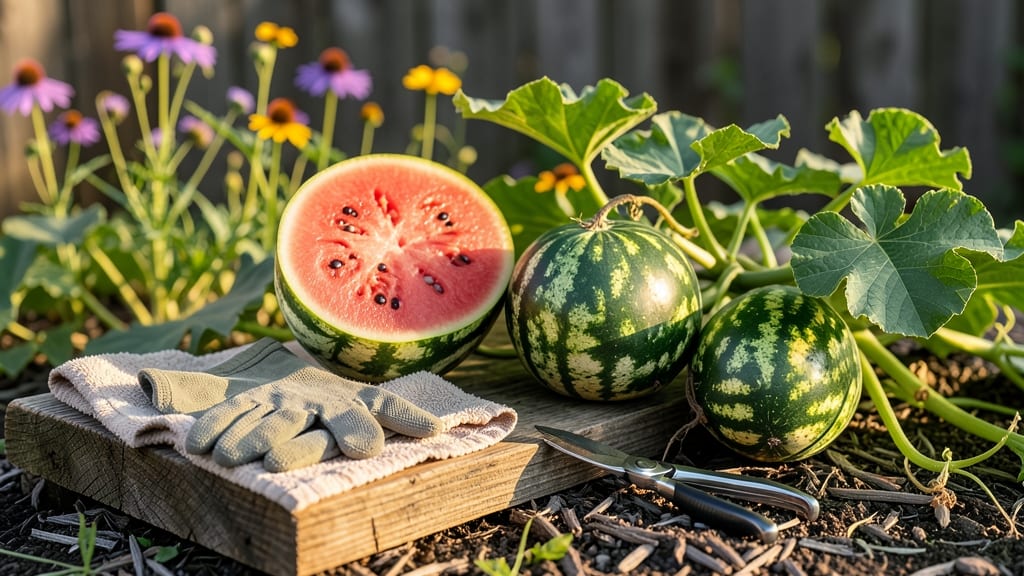
To tell when a watermelon is ready to pick, focus on its color, texture, and size—these three clues reveal whether the fruit is at its sweetest peak.
Picking too early means bland, watery fruit, while waiting too long risks overripeness and pests. Mastering these science-backed tricks ensures you harvest at the perfect moment every time.
Start with the ground spot—a creamy yellow hue signals ripeness, while green means it needs more time. Check the tendrils near the stem: dry and brown? That’s your cue to harvest.
Next, test the rind’s firmness, thump for a deep hollow sound, and sniff for a sweet aroma. I’ll walk you through each method, plus how to adjust for your climate and variety.

5 Field-tested visual & physical checks for watermelon ripeness
Nothing beats the satisfaction of slicing into a perfectly ripe watermelon—juicy, sweet, and bursting with flavor. But determining the exact moment to harvest can be tricky. Over the years, I've tested countless methods in my own garden, and these five science-backed checks consistently deliver the sweetest results.
Whether you're growing heirloom varieties or seedless hybrids, these visual and tactile cues will help you avoid the pitfalls of underripe or overripe fruit.
The key to success lies in combining multiple indicators rather than relying on just one. For example, a yellow ground spot alone doesn't guarantee ripeness, but when paired with dry tendrils and a satisfying thump, you're on the right track.
Let's break down each check with the exact thresholds I use in my garden to ensure peak flavor and texture every time.
- 1 Ground Spot Color: Look for a creamy yellow spot where the watermelon rests on the ground. This spot should be uniform and bright—not white or pale green. Pro tip: If the spot is larger than a quarter, the melon is likely overripe.
- 2 Tendril Dryness: Check the small vine tendrils near the stem. When they turn brown and crispy, it’s a strong sign of ripeness. However, if the tendrils are still green but the melon is full-sized, wait 2-3 more days before harvesting.
- 3 Rind Firmness: Press your thumb firmly on the blossom end (the smaller end where the stem attaches). A ripe watermelon will have a slight give but won’t feel mushy. If it feels rock-hard, it’s underripe; if it’s too soft, it’s overripe.
- 4 Shape Symmetry: A ripe watermelon should have a uniform shape with no deep crevices or uneven bulges. The stem end should also be slightly flattened where it meets the fruit. Asymmetry often indicates uneven growth or stress during ripening.
- 5 Weight-to-Size Ratio: Lift the watermelon—it should feel heavy for its size. This indicates high water content and sweetness. If it feels light and hollow-sounding, it’s not fully ripe. For example, a 10-pound watermelon should feel solid and dense, not lightweight.
Let me share a real-life example from my garden last summer. I had a Sugar Baby watermelon that met all the visual cues—bright yellow ground spot, dry tendrils, and a deep green rind—but it still felt slightly light when I lifted it.
I decided to wait one more day, and when I checked again, the weight-to-size ratio improved dramatically. That extra day made all the difference in flavor!
One common mistake I see is relying too heavily on the ground spot color alone. Some watermelons, especially those grown in shaded conditions, may develop a pale spot even when underripe. That’s why I always cross-reference with at least two other checks, like tendril dryness and rind firmness.
This multi-step approach has saved me from harvesting bitter, underripe fruit more times than I can count.
Environmental factors also play a role in ripening. In hot, dry climates, watermelons may ripen faster and develop a darker rind earlier. Conversely, in humid or cloudy conditions, the ground spot might stay pale longer.
I adjust my harvesting timeline based on these conditions, often checking melons every 2-3 days during peak ripening season to stay ahead of the game.
For those growing seedless varieties, be aware that they often ripen slightly faster than traditional watermelons. I’ve found that seedless types reach the ideal weight-to-size ratio about 2-3 days earlier than heirlooms.
Pay extra attention to the rind firmness and tendril dryness for these varieties, as they can trick you with a false sense of ripeness if you’re not careful.
Once you’ve confirmed ripeness using these checks, it’s time to harvest. Use a sharp knife or pruners to cut the stem, leaving about 1-2 inches of stem attached. This helps preserve the fruit’s shelf life.
Store your freshly picked watermelon in a cool, dry place (around 50-55°F) to extend its freshness for up to two weeks.
Mastering these five checks will transform your watermelon harvests from hit-or-miss to consistently delicious. The more you practice, the more intuitive these cues will become. Next time you’re in your garden, grab a watermelon and put these methods to the test—your taste buds will thank you!
How to use sound & smell to confirm watermelon readiness
Beyond visual cues, your ears and nose can reveal whether a watermelon has reached its peak ripeness. The thump test and scent analysis are two underrated but foolproof methods that even experienced gardeners sometimes overlook.
These sensory checks help you avoid the two biggest mistakes: harvesting too early (resulting in watery, bland fruit) or waiting too long (risking overripeness and rot).
Start with the thump test, a classic technique that works by tapping the watermelon and listening for a hollow, deep sound. This indicates the internal seed cavity is fully developed and filled with juice.
However, many gardeners misinterpret the test by expecting a drum-like echo—when in reality, you should hear a mellow, resonant thud. A dull thud suggests the melon is still firm and underripe, while a high-pitched sound can mean it’s overripe.
⚠️ callout warning
- Testing on hard ground: Always thump on a flat, soft surface like your palm or a padded surface to avoid misleading echoes.
- Ignoring size: Small watermelons naturally sound different—compare to similar-sized melons.
- Over-thumping: One firm tap per melon is enough; repeated thumps can bruise the rind.
🌱 Pro Tip: Combine the thump test with visual checks for accuracy.
The scent test is often the most reliable indicator of sugar development. A ripe watermelon emits a sweet, musky aroma near the stem end when gently squeezed or cut. This fragrance comes from volatile compounds like hexanal and nonanal, which peak at full ripeness.
If you detect no scent, the melon is likely underripe. Conversely, a fermented or overly sweet smell signals overripeness.
Pay attention to the stem end specifically—this is where the strongest scent concentrates. Hold the melon near your nose and take a deep sniff; if you smell nothing, wait a few more days.
For seedless varieties, the scent may be subtler, so rely more on the thump test and rind firmness. Always harvest on a warm, sunny morning when volatile compounds are most active.
Environmental factors can trick these tests. For example, hot, dry conditions accelerate ripening, so melons may smell ripe earlier than expected. In humid climates, the scent test becomes less reliable due to mold competition.
To compensate, focus on the thump test and rind color in such cases. If your melon passes all sensory checks but still feels too light for its size, it’s likely underripe.
Once you’ve confirmed ripeness, harvest by twisting the melon gently until the stem detaches cleanly from the vine. Leave a 1-inch stem stub to prevent rot. Store ripe watermelons in a cool, dry place (50–55°F) for up to 2 weeks, or enjoy them immediately for peak flavor.
With these sensory tools, you’ll never guess again—just listen and smell your way to perfect watermelons. 🍉