
How To
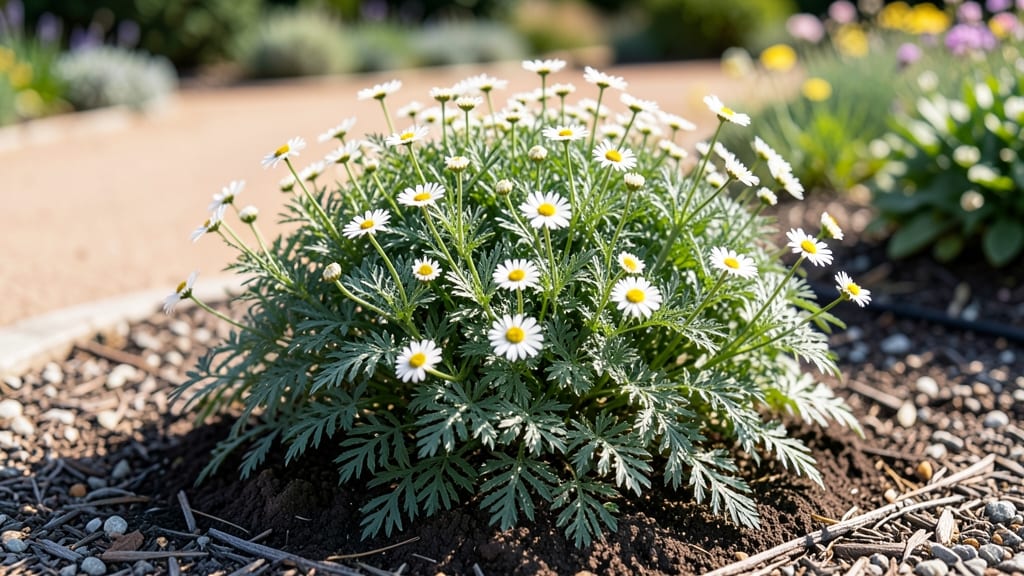
Feverfew isn’t a weed—it’s a valuable perennial herb in the daisy family (Asteraceae), known for its medicinal benefits and ornamental appeal, though its tendency to self-seed can make it seem invasive in gardens.
Feverfew (Tanacetum parthenium) is actually a cultivated herb with a long history in herbal medicine, often used for headaches and inflammation. 🌿 While it may spread easily, its deliberate cultivation—rather than accidental growth—distinguishes it from true weeds.
Many gardeners grow it intentionally for its feathery foliage and small white flowers, but its aggressive self-seeding can turn it into an unwanted guest if left unchecked.
What often confuses people is its ability to thrive in disturbed soils, similar to weeds, but feverfew lacks the chaotic, uncontrolled growth pattern of invasive species. Its controlled spread makes it more of a garden maintenance challenge than a true ecological nuisance.
💡 In This Article
- Botanical Classification: Why Feverfew Isn’t a Weed
- Managing Feverfew’s Self-Seeding Tendencies in Gardens
Botanical classification: why feverfew isn’t a weed
Feverfew (Tanacetum parthenium) belongs to the daisy family (Asteraceae), sharing its botanical lineage with chrysanthemums and chamomile rather than true weeds like dandelions or crabgrass. 🌼 The key distinction lies in its intentional cultivation—feverfew has been used for centuries in herbal medicine, particularly for migraines and arthritis, thanks to its active compound parthenolide.
Unlike weeds, which thrive without human intervention, feverfew's growth is often managed by gardeners who value its delicate, fern-like leaves and small white daisy-like flowers.
Botanically, feverfew is classified as a perennial herb, meaning it grows back each year from its root system rather than dying annually like many weeds. Its growth habit is upright and clumping, reaching 1-2 feet tall, with a spread of 1-2 feet under ideal conditions.
This controlled growth contrasts sharply with weeds, which typically exhibit rapid, sprawling, or invasive behaviors. For example, creeping charlie (a true weed) spreads via underground runners, while feverfew relies on seed production and root division—both of which can be managed with proper horticultural techniques.
The confusion often arises because feverfew produces thousands of tiny seeds per plant, which can scatter easily and germinate in disturbed soil.
However, this self-seeding behavior is a trait shared by many ornamental perennials, like coreopsis or black-eyed Susan, rather than an indicator of weed status. 🌱 What truly defines a weed is its ability to outcompete desirable plants and disrupt ecosystems—a behavior feverfew does not exhibit when grown in balanced garden conditions.
Its ecological role is actually beneficial, as it attracts pollinators like bees and butterflies without becoming aggressive.
Historically, feverfew was cultivated in monastery gardens during the Middle Ages for its medicinal properties, long before modern botanical classifications. Its deliberate inclusion in herb gardens and medicinal plots underscores its value as a cultivated plant, not a weed.
Even today, it's grown commercially for essential oils and dried herb markets, further cementing its status as a valuable garden plant rather than an unwanted intruder. The term "weed" is often subjective, but botanically and horticulturally, feverfew doesn’t fit the criteria.
One telling difference is how feverfew responds to human intervention. Weeds typically thrive in poor, compacted, or disturbed soils with minimal care, while feverfew performs best in well-draining, moderately fertile soil with regular watering. This dependency on garden maintenance is another hallmark of a cultivated herb rather than a weed.
For instance, in a neglected garden, feverfew might spread more vigorously, but it lacks the tenacity of weeds like bindweed, which can penetrate concrete and survive extreme conditions.
To put it simply: feverfew is a garden plant with a self-seeding habit, not a weed. The distinction lies in intent—gardeners who cultivate it for its beauty and benefits actively manage its spread, while weeds are generally unwanted and require eradication.
This nuance is crucial for understanding why feverfew deserves a place in both medicinal gardens and ornamental landscapes.