
Companion Plants
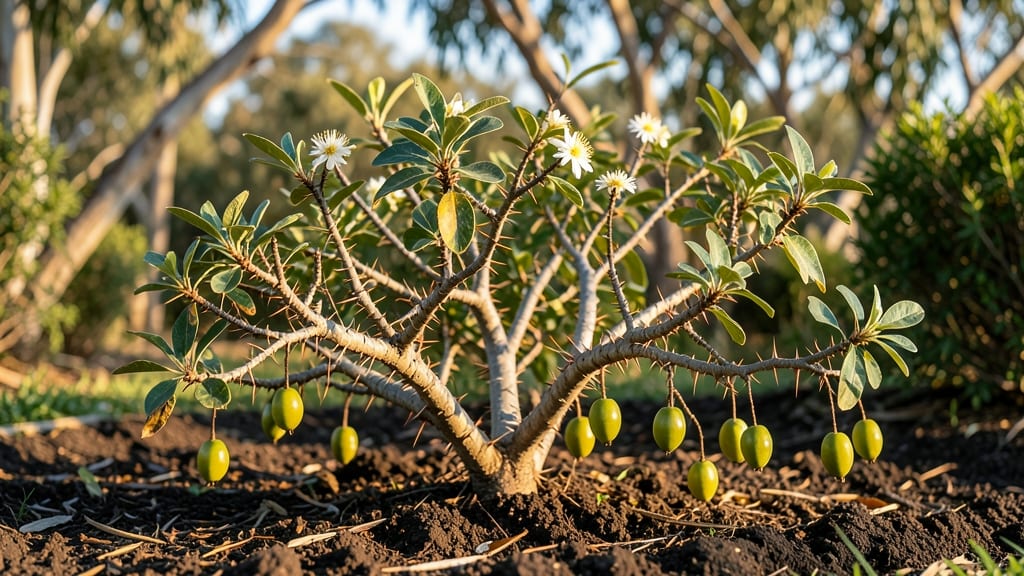
Soda apple noxious weed thrives as an invasive root system that resists traditional hand-pulling, requiring targeted herbicides like triclopyr or glyphosate for effective eradication. Its deep taproots demand persistence to prevent regrowth.
This aggressive invader spreads through a complex underground network that can extend 10-15 feet deep, making it nearly impossible to remove by hand. 🌱 The plant's saponin toxins further complicate matters by inhibiting microbial breakdown of its roots, which is why even well-intentioned gardeners often see regrowth after pulling.
Unlike surface weeds, soda apple's root structure allows it to survive drought conditions and outcompete native vegetation, making chemical control the only reliable long-term solution.
What sets soda apple apart from other weeds is its ability to regenerate from even small root fragments left in the soil. This means spot treatments won't work—you need a systematic approach that targets the entire root zone.
The herbicides triclopyr and glyphosate are specifically formulated to translocate through the plant's vascular system, ensuring the roots absorb enough chemical to die back completely. Without this systemic action, you're essentially playing whack-a-mole with an underground fortress.
💡 In This Article
- Why Soda Apple’s Root System Defies Manual Removal
- Herbicide Strategies for Soda Apple Eradication
Why soda apple’s root system defies manual removal
The soda apple's underground dominance stems from its primary taproot that plunges 10-15 feet deep, far exceeding the reach of most hand tools. Unlike shallow-rooted weeds that can be pulled with garden forks, this root system anchors the plant like a skyscraper's foundation, making mechanical removal nearly futile.
The root's thickness—often 1-2 inches in diameter—creates resistance that snaps tools rather than uproots the weed. 🌱
This biological fortress is further fortified by saponins, natural toxins that deter herbivores and microbial decomposition. These compounds create a chemical barrier that prevents soil microbes from breaking down the roots, which is why pulled fragments often resprout.
The plant's ability to regenerate from even 1-inch root segments means spot treatments create more problems than solutions. Unlike surface weeds that die when their tops are removed, soda apple's survival strategy relies entirely on its subterranean network.
What makes this weed particularly insidious is its secondary root system that spreads horizontally up to 10 feet from the main taproot. These lateral roots create a dense underground web that connects to neighboring plants, allowing the weed to share nutrients and regrow from multiple points.
This interconnected system explains why hand-pulling often results in 50-70% regrowth within 30-60 days—the plant simply taps into its existing root network to regenerate.
The weed's drought tolerance further complicates manual control. While shallow-rooted plants wilt under dry conditions, soda apple's deep roots access water from 20-30 feet below the surface. This allows it to outcompete native vegetation even during prolonged dry spells, making it the ecological equivalent of a bulldozer in your garden.
The combination of depth, toxin production, and drought resistance creates a perfect storm against mechanical eradication methods. 💥
Contrast this with more manageable weeds like dandelions, which have fibrous root systems that can be partially removed with tools. Soda apple's single, massive taproot makes it impossible to extract cleanly—any remaining root fragment will simply regrow into a new plant.
This biological advantage explains why gardeners often report failed eradication attempts after months of hand-pulling, only to see new shoots emerge from the soil.
Understanding this root system's structure helps explain why chemical control becomes necessary. Herbicides like triclopyr and glyphosate work by translocating through the plant's vascular system, allowing them to reach and kill the roots.
Without this systemic action, you're essentially trying to remove a skyscraper's foundation with a butter knife—ineffective and frustrating. The weed's design ensures that any method short of complete root system destruction will ultimately fail. ✨