
Pests
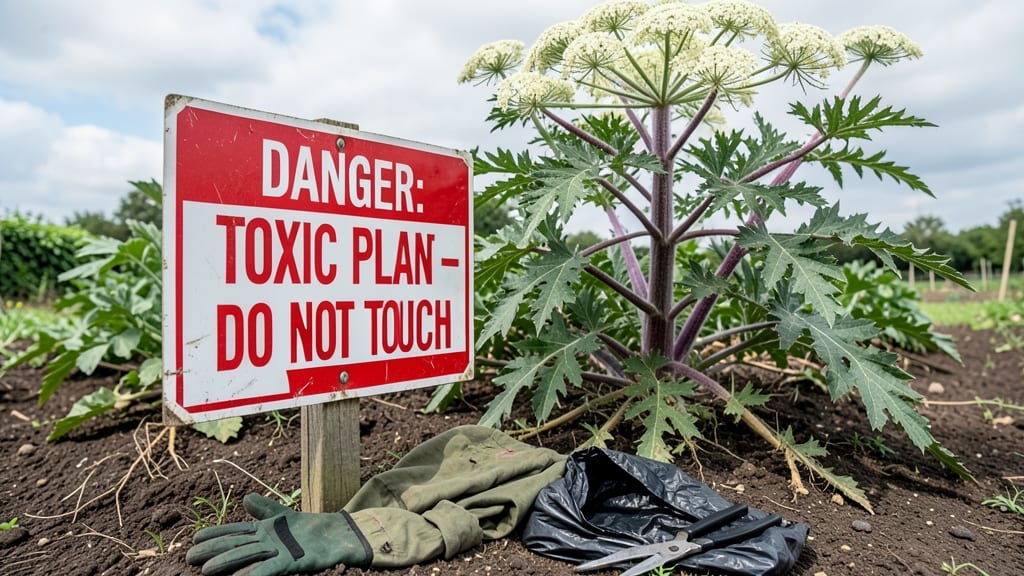
Identifying toxic giant hogweed means looking for its massive 5-14 ft stems, broad compound leaves with 3-7 leaflets, and large white flower clusters that look like Queen Anne's lace. Handling this plant demands protective gear, precise cutting at the base, and proper disposal to avoid severe skin burns or accidental spread.
This invasive plant isn't just a nuisance—it's dangerous. 🌿 The sap contains phototoxins that cause painful blisters when exposed to sunlight, and one encounter can leave you with burns for weeks.
I've seen gardeners accidentally confuse it with harmless Queen Anne's lace, so always check for purple-spotted stems and coarse hairs on leaves. The key is acting fast: remove it before it flowers, or you risk spreading seeds across your yard.
Once you've confirmed it's giant hogweed, protection is non-negotiable. Long sleeves, gloves, and goggles aren't optional—they're your first line of defense against those phototoxins. Cut the stems at ground level with pruners, then double-bag everything before disposal.
Some areas even require special permits for handling this plant, so check local regulations before you start pulling.
💡 In This Article
- How to Identify Giant Hogweed vs Non-Toxic Lookalikes
- Step-by-Step Giant Hogweed Removal Safety Protocol
How to identify giant hogweed vs non-toxic lookalikes
The most critical difference between giant hogweed and its harmless lookalikes lies in its sheer size and stem markings. Giant hogweed's stems reach 5-14 feet tall—about the height of a basketball hoop—while cow parsnip (its closest mimic) typically maxes out at 6 feet.
Look for deep purple spots or streaks on the stems, a telltale sign absent in similar plants. These spots contain the phototoxic compounds that cause severe burns when exposed to sunlight.
The leaf structure provides another key clue. Giant hogweed leaves are 3-5 feet wide with 3-7 leaflets, each measuring 6-18 inches long.
The edges have coarse, bristly hairs that create a rough texture when touched, unlike the smooth leaves of wild carrot or Queen Anne's lace. 🌿 The sap itself is another warning: when crushed, giant hogweed releases a milky white liquid that turns yellowish when exposed to air—a chemical reaction triggered by the plant's defensive compounds.
Flower clusters offer the final piece of the identification puzzle. Giant hogweed's blooms form 5-12 inch wide umbrella-shaped clusters of tiny white flowers, similar to Queen Anne's lace but 3-5 times larger.
The stems supporting these flowers are hollow and often 3-5 inches in diameter at the base, while cow parsnip stems remain slender. What most people miss is that giant hogweed flowers appear 4-6 weeks later than its lookalikes, typically blooming in June-July rather than May.
Here's a quick comparison to remember:
- Giant Hogweed: Purple-spotted stems, hollow stems 3-5 inches thick, coarse hairy leaves, milky sap
- Cow Parsnip: Green stems, smooth leaves, similar flower shape but half the size
- Queen Anne's Lace: Lacy flower centers, slender stems, no purple markings
What makes this identification crucial is the plant's phototoxic sap. When exposed to sunlight after contact, this sap triggers a chemical reaction in your skin that creates blisters within 15-30 minutes.
The burns can last for weeks and may leave permanent scarring. This is why distinguishing it from harmless plants isn't just academic—it's a matter of safety.
One pro tip: if you're unsure, take a photo and compare the stem thickness and leaf structure against these guidelines. The 3-inch diameter rule is a good benchmark—if the stem is thicker than your wrist, it's likely giant hogweed. And always remember: when in doubt, don't touch! 💫