
Pests
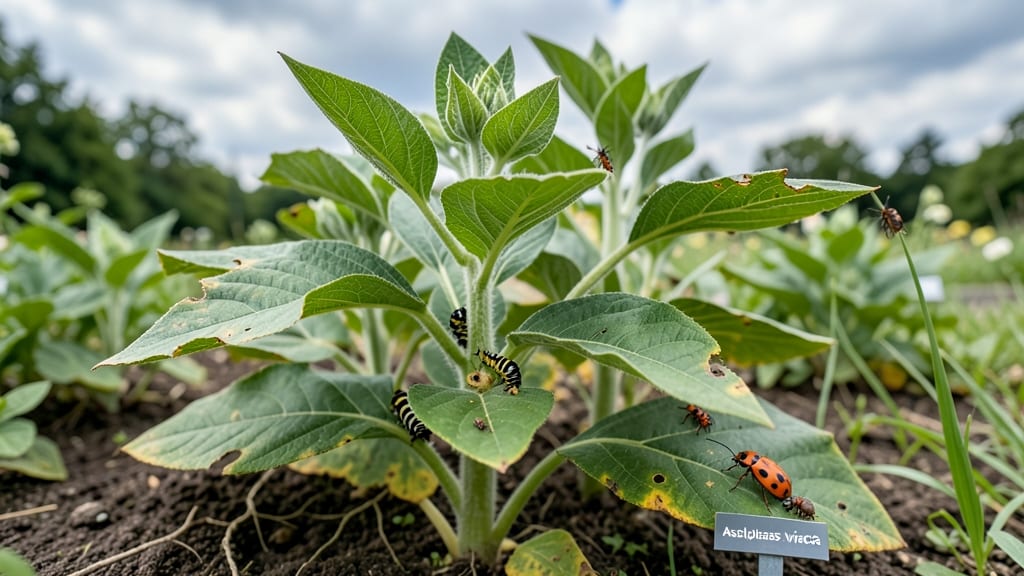
Monarch caterpillars are the primary consumers of milkweed leaves, requiring them for survival, while deer, rabbits, and certain beetles also eat the plant. The leaves' toxic sap deters most herbivores, creating a specialized food source for specific wildlife.
Monarch caterpillars have evolved to thrive on milkweed thanks to their ability to process the plant's toxic cardenolides, which would poison most other creatures. 🌿 This unique adaptation allows them to store toxins in their bodies, making them unpalatable to predators—a clever survival strategy.
While deer and rabbits may nibble on milkweed, they're less efficient at handling its defenses, so monarchs dominate the diet. The plant's ecological role extends beyond caterpillars, supporting pollinators and serving as a key food source during monarch migration.
Gardeners often face a dilemma: protect milkweed for monarchs while preventing overconsumption by deer or rabbits. Planting companion flowers like marigolds or lavender nearby can help deter larger herbivores, while installing physical barriers (like chicken wire) around young plants gives them time to establish roots.
The trade-off is worth it—milkweed's toxic defenses actually make it a natural pest deterrent for many gardeners.
💡 In This Article
- Why Monarch Butterflies Depend on Milkweed Leaves
- Managing Milkweed Consumption in Gardens
Why monarch butterflies depend on milkweed leaves
The monarch butterfly's survival hinges on milkweed's toxic cardenolides, a class of compounds that act like natural pesticides. These chemicals disrupt the sodium-potassium pumps in animal cells, causing heart irregularities in most creatures.
Yet monarch caterpillars have evolved specialized enzymes that modify these toxins into harmless byproducts, effectively turning milkweed's defenses into a survival advantage. 🌿 This chemical adaptation allows them to consume up to 100 times their body weight in milkweed leaves during their larval stage.
Monarch caterpillars don't just tolerate the toxins—they store them. When they metamorphose into butterflies, these stored cardenolides remain in their bodies, making adult monarchs unpalatable to predators like birds.
This chemical camouflage works so well that even birds that have eaten toxic monarchs will avoid them in the future, creating a powerful ecological feedback loop. The plant's bright green leaves provide both food and protection, while their milky sap contains additional defensive compounds that deter casual browsers.
The life cycle timing is equally precise. Monarchs time their egg-laying to coincide with milkweed's peak growth periods, typically in late spring and summer when leaves are most tender. A single female can lay 300-400 eggs in her lifetime, but her success depends entirely on finding suitable milkweed patches.
During their 2,000-mile migration to Mexico, adult monarchs rely on stored energy from milkweed consumption during their larval stage—a journey that would be impossible without this specialized diet.
What makes this relationship remarkable is the mutualism at play. While monarchs benefit from milkweed's toxicity, the plant gains protection through its unpalatability. Deer and rabbits may nibble at milkweed, but they typically avoid it after the first taste due to the bitter compounds.
This selective pressure has shaped milkweed's evolution, making it one of nature's most fascinating examples of co-evolution. The plant's latex sap, which contains additional defensive compounds, often causes irritation in mammalian mouths, further discouraging consumption.
Ecologically, milkweed serves as a keystone species in North American ecosystems. Its presence supports not just monarchs but also other insects like milkweed beetles and aphids that share its chemical defenses. The plant's deep root system also prevents soil erosion and improves water retention, creating microhabitats that benefit numerous species.
Without milkweed, monarch populations would collapse, demonstrating how specialized plant-animal relationships maintain entire ecosystems.
Interestingly, scientists have observed that monarchs show preference learning—they can distinguish between different milkweed species and choose those with higher concentrations of beneficial nutrients. This behavioral adaptation ensures they get the most nutritional bang for their caloric buck, while also maximizing their toxin intake for protection.
The bright orange coloration of adult monarchs serves as an aposematic signal, warning predators of their toxic nature—a visual cue that only works because of their milkweed-based diet.