
Pests and Diseases
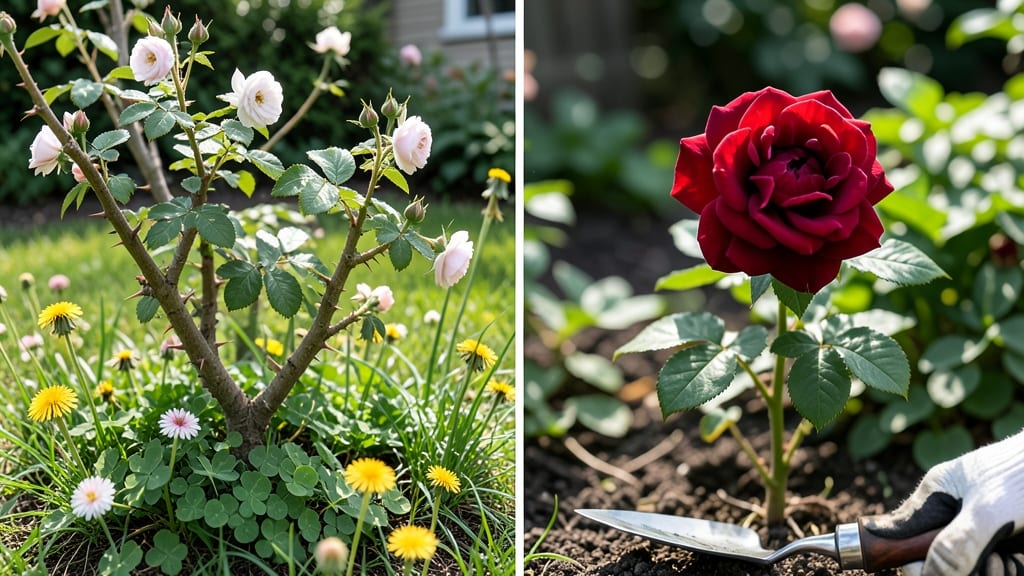
Roses aren't weeds by botanical definition—they're prized perennials with ornamental and commercial value—but they can spread uncontrollably through suckering or self-seeding, making them garden nuisances when neglected.
Botanically, roses are classified as cultivated plants with specific horticultural value, unlike true weeds that thrive in disturbed soils and lack intentional cultivation. 🌹 The confusion arises because roses reproduce aggressively through underground runners (suckers) and seed pods, behaviors that mimic invasive plants.
Many gardeners face this dilemma when hybrid roses escape their designated beds, creating dense thickets that crowd out other plants.
What sets roses apart is their intentional breeding for beauty and fragrance—traits weeds lack. However, their aggressive growth habits require proactive management. Without regular pruning and barrier installation, even the most prized rose varieties can transform your garden into a tangled mess within seasons.
This dual nature explains why roses occupy a gray area in gardening: they're cherished when contained but become problematic when left to their own devices. The key difference lies in human intervention—weeds spread naturally, while roses spread because we've selectively bred them to thrive.
💡 In This Article
- Botanical Classification: Why Roses Aren’t Weeds
- Controlling Rose Spread: When Cultivated Plants Act Like Weeds
Botanical classification: why roses aren’t weeds
Botanically speaking, roses belong to the genus Rosa and are classified as perennial flowering plants—cultivated for their beauty, fragrance, and commercial value. True weeds, however, are typically defined as unwanted plants that grow aggressively in cultivated areas, often lacking intentional breeding or horticultural purpose.
The key distinction lies in their reproductive strategies: weeds rely on rapid, uncontrolled seed dispersal and adaptability to disturbed soils, while roses reproduce through a mix of seeds and vegetative growth (like suckers), which humans have selectively enhanced over centuries.
The confusion stems from roses' aggressive growth habits. Hybrid tea roses, for example, can produce hundreds of seed pods annually if not pruned, each containing 5-10 seeds that germinate readily.
Meanwhile, their root systems send out underground suckers that can spread 6-10 feet from the parent plant, creating dense thickets. These traits mirror weeds, but roses differ in one critical way: their deliberate cultivation for aesthetic and economic value, like cut flowers or landscaping.
Consider the wild rose (Rosa rugosa)—a species often mistaken for a weed. While it spreads prolifically via suckers and seeds, it’s prized for its hardiness and erosion control.
This duality highlights the gray area: roses are not weeds by definition, but their growth patterns can dominate gardens if unmanaged. The thorny stems and fragrant blooms further separate them from weeds, which typically lack these ornamental traits.
Scientifically, weeds thrive in ecological niches with minimal competition, often forming monocultures. Roses, however, are cultivars bred for specific traits, like disease resistance or vibrant colors. Their "weed-like" spread is a side effect of selective breeding for vigor, not an adaptive survival strategy.
For instance, the Knock Out® rose was developed to bloom continuously but produces fewer seed pods than wild types, reducing its invasive potential.
Here’s the paradox: roses require human intervention to flourish, while weeds thrive without it. A rose’s lifespan of 50+ years and deep taproot system (reaching 6-10 feet) contrast with weeds’ short-lived, shallow roots.
This structural difference underscores why roses are cultivated perennials, not weeds—even when they spread uncontrollably.
The Rosaceae family, which includes roses, apples, and strawberries, further clarifies this. Most family members are orchard crops or ornamentals, not weeds.
The only exception? Multiflora rose (Rosa multiflora), a highly invasive species in some regions, bred for hedgerows but now classified as a noxious weed due to its uncontrolled spread. This rare case proves the rule: roses are not weeds by default—their behavior depends on human management.