
Landscaping
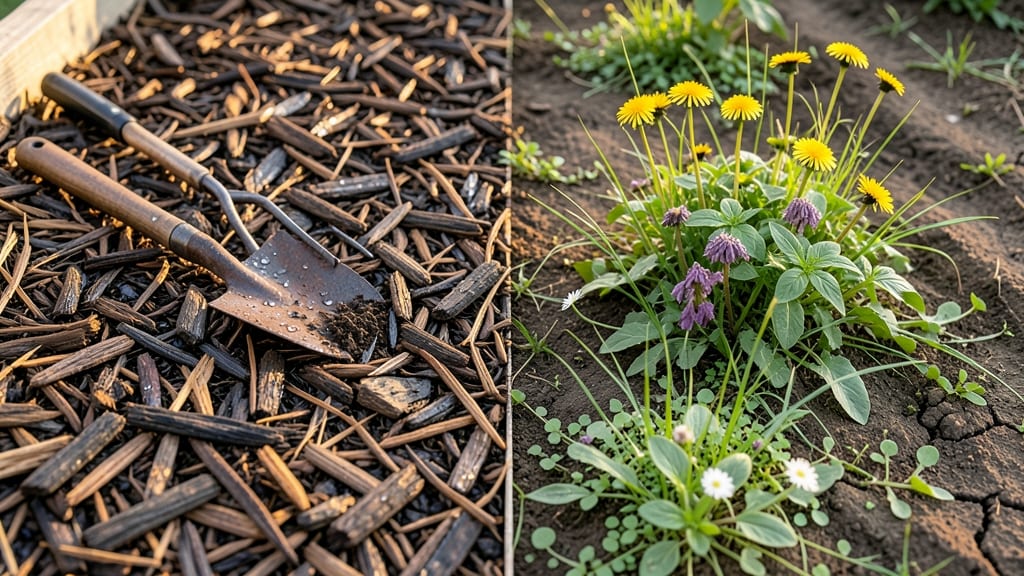
Mulch stops weeds from growing by blocking sunlight, which prevents weed seeds from germinating, while also suppressing existing weeds by creating a physical barrier. Organic mulches further improve soil health over time, but no mulch is 100% effective alone.
Mulch works primarily by smothering weeds through light deprivation—weeds need sunlight to photosynthesize, and a thick layer (at least 2-3 inches) cuts off that access. 🌱 Organic mulches like wood chips or straw also break down over time, adding nutrients to the soil while keeping it moist—dry soil gives weeds a competitive edge.
However, mulch alone won’t eliminate every weed, especially persistent types like crabgrass, which is why many gardeners combine it with pre-emergent herbicides or regular hand-pulling for stubborn patches.
For best results, apply mulch consistently—thin layers or gaps let weeds sneak through. Inorganic options like gravel or landscape fabric block light too, but they don’t improve soil quality.
I’ve found that pairing mulch with a 3-inch layer of newspaper or cardboard beneath organic mulch creates an extra barrier against weeds, especially in high-traffic garden areas.
💡 In This Article
- How Mulch Prevents Weeds: Sunlight Blocking and Soil Mechanics
- Best Mulch Types and Techniques for Weed Control
How mulch prevents weeds: sunlight blocking and soil mechanics
Mulch disrupts weed growth primarily by creating a physical barrier that blocks 50-70% of sunlight from reaching the soil surface. Weeds rely on photosynthesis to grow, and when mulch cuts off this light—especially with a 3-inch layer or thicker—it starves existing weeds and prevents new seeds from germinating.
This is why mulch works best in areas where weeds are already struggling, like shady gardens or under dense plantings where light competition is already fierce.
The type of mulch matters too. Organic mulches like wood chips or straw break down over time, creating a nutrient-rich layer that improves soil health while maintaining moisture.
This moisture retention is critical—dry soil conditions actually encourage weed seeds to germinate, as they often have deeper root systems that survive drought better than many plants.
In contrast, inorganic mulches like gravel or landscape fabric block light but don’t improve soil quality, making them less effective long-term unless combined with other methods.
Here’s the science: Weed seeds need light to trigger germination, and mulch disrupts this process by maintaining a dark, stable environment. For example, crabgrass seeds require light to sprout, so a 4-inch layer of mulch can reduce their emergence by up to 90% compared to bare soil.
However, mulch alone won’t stop weeds like bindweed or nutgrass, which have deep roots or rhizomes that can penetrate even thick layers.
Moisture plays a secondary but crucial role. Organic mulches absorb and retain water, keeping the soil consistently damp. Weeds often outcompete desirable plants in dry conditions because their roots can tap into deeper moisture reserves.
By maintaining even moisture levels, mulch helps your plants thrive while suffocating weed seedlings before they get a foothold. 🌱
For maximum effectiveness, apply mulch when weeds are just starting to sprout—this gives you the best chance to smother them before they establish.
In my experience, pairing mulch with a pre-emergent herbicide (applied before weed seeds germinate) can boost control by up to 75%, especially in high-weed areas like vegetable gardens or lawn edges.
One common mistake is using mulch too thinly—anything under 2 inches leaves gaps where weeds can push through. Thicker layers (like 4-6 inches) work better but may require more frequent replenishment as organic mulches decompose.
The key is consistency: a uniform, unbroken layer is far more effective than patchy coverage.